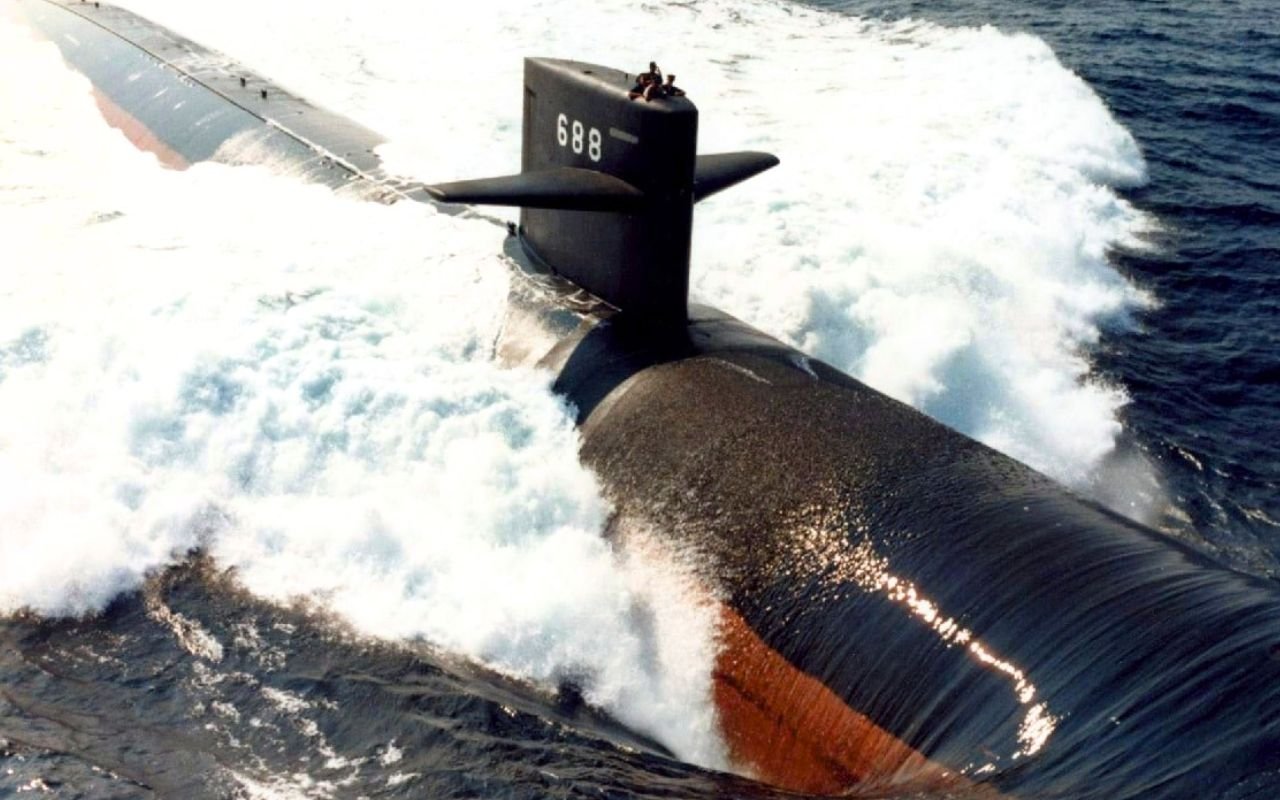
The U.S. Navy is confronting a daunting challenge as it accelerates the retirement of its legendary Los Angeles-class nuclear attack submarines, with dozens already going offline amid a critical need for advanced undersea capabilities.
As the backbone of the U.S. Navy’s undersea fleet for over four decades, the Los Angeles-class submarines have proven their prowess in countless missions, including recent combat actions. Despite their continued effectiveness, these vessels are aging rapidly, and the Navy faces pressures to phase them out in favor of the more technologically adept Virginia-class submarines. The retirement plan sparks intense debate over fleet readiness, industrial capacity, and the shifting strategic landscape in the Indo-Pacific region.
The historic role and unmatched legacy of Los Angeles-class attack submarines in U.S. naval dominance
The Los Angeles-class submarines, commissioned starting in the early 1980s, have long epitomized American naval power beneath the waves. Originally designed during the Cold War, their primary mission was to counter the Soviet Union’s formidable submarine and surface fleets. With speed, stealth, and endurance as core attributes, they played pivotal roles tracking Soviet ballistic missile submarines and safeguarding carrier strike groups. At the program’s peak, a total of 62 Los Angeles-class boats were launched, making it one of the largest nuclear attack submarine classes in history. These vessels shaped U.S. undersea warfare through the end of the Cold War and well beyond. Remarkably, even four decades later, some remain frontline assets. Just recently, a Los Angeles-class submarine conducted the first U.S. submarine sinking of an enemy warship in 80 years during Operation Epic Fury, underscoring their enduring combat relevance. However, their longevity is balanced against the reality of advancing threats. Technological leaps by potential adversaries, particularly China, along with evolving detection techniques, have gradually exposed vulnerabilities in these older boats, emphasizing the need for modernization or replacement. This historical foundation reflects not only the submarines’ past achievements but sets the scene for debates about their future role in a changing security environment.
Technological challenges and industrial limitations hampering a smooth transition to Virginia-class submarines
The Navy’s roadmap aims to retire its Los Angeles-class boats gradually as it introduces the newer Virginia-class submarines. Yet, this transition highlights significant industrial bottlenecks and operational challenges. The Virginia-class boasts superior stealth capabilities, enhanced sonar suites, and advanced electronic warfare systems, making it better suited for confronting China’s growing anti-submarine warfare (ASW) measures in the Indo-Pacific. However, the U.S. currently operates only two shipyards capable of building nuclear submarines, which also maintain existing fleet vessels, slicing into the potential production rate for Virginias. This manufacturing bottleneck means the Virginia-class fleet has not yet reached the scale necessary to fully replace the Los Angeles boats slated for retirement. Consequently, the Navy risks a temporary shortage in attack submarine availability. For instance, 19 Los Angeles submarines are planned for decommissioning soon, including the USS Newport News, USS Alexandria, and USS Scranton in 2026 alone. Balancing retirements with new commissions has become a delicate juggling act. Adding to this complexity, extending the life of Los Angeles-class submarines is costly, particularly because the nuclear reactors powering them require refueling or extensive overhauls after about 35 to 40 years of service. These processes can cost hundreds of millions of euros, diverting funds and effort from building or operating newer, more capable vessels. Such financial and industrial constraints compel the Navy to make tough trade-offs between maintaining older, albeit battle-tested platforms, and accelerating the deployment of cutting-edge submarines with modernized capabilities.
Strategic imperatives driving the accelerated retirement plan amid intensifying Indo-Pacific competition
Geopolitically, the Indo-Pacific has become the epicenter of naval competition, with China’s naval modernization and expansion posing a major strategic threat to U.S. interests. The Los Angeles-class submarines, while still operationally relevant, are increasingly vulnerable to emerging anti-submarine warfare technologies, including seabed monitoring networks, satellite tracking, and enhanced sonar systems. The Navy recognizes that sustaining technological superiority under the sea is critical to maintaining deterrence and operational freedom. Virginia-class submarines are better adapted to counter these advances, equipped with improved stealth and enhanced electronic warfare systems. They also offer greater flexibility in land-attack missile capabilities, crucial for broader power projection missions. In this light, the retirement of Los Angeles-class submarines is more than a fleet management issue; it is a strategic pivot toward a future where undersea dominance will be shaped by stealth, sensors, and strike reach. Maintaining sufficient fleet size during the transition remains a concern, as the temporary reduction in attack submarines could affect operational coverage and increase strain on remaining vessels. Nonetheless, the Navy’s long-term vision prioritizes platforms that can effectively meet the challenges posed by China’s evolving naval capabilities, ensuring that the U.S. remains a dominant force beneath the oceans.
Modernization efforts on Los Angeles-class submarines: balancing service extension against escalating costs
While the transition to the Virginia class moves forward, the Navy has sought to extend the viability of some Los Angeles-class submarines through significant modernization upgrades. These refits aim to keep select boats relevant into the late 2030s or beyond by updating key systems and maintaining hull integrity. The USS Cheyenne stands as a prominent example, having undergone a major overhaul that enables the submarine to remain operational against current threats. Such upgrades include improvements to sonar arrays, electronic warfare suites, and propulsion systems designed to enhance stealth and combat effectiveness. However, these modernization programs come with steep price tags and increasing technical complexity. Nuclear reactor refueling remains the largest hurdle, often rendering refits financially impractical for many older vessels. Moreover, the physical limits of hull designs and onboard systems cap the extent to which Los Angeles-class subs can be transformed into cutting-edge assets. These factors have led to a pragmatic policy approach: modernize selectively while aggressively investing in new Virginia-class builds. This balancing act preserves fleet capability without diverting excessive resources from future-ready platforms.
The impact of phased retirements on U.S. naval force readiness and operational strategy
The gradual drawdown of Los Angeles-class submarines necessitates a carefully managed retirement schedule to prevent capability gaps. The Navy has committed to retiring older boats as new Virginias become operational, striving to maintain a minimum active force of approximately 48 attack submarines. Retiring too many Los Angeles boats too quickly risks a shortfall in underwater presence, especially in hotspots like the Indo-Pacific, where submarine patrols are critical for intelligence gathering and deterrence. This could increase operational tempo and stress on the remaining submarines, adversely affecting crew readiness and maintenance cycles.
To illustrate, here is the expected 2026 retirement schedule for the Los Angeles-class submarines:
| Submarine name | Retirement Date | Years in Service |
|---|---|---|
| USS Newport News (SSN 750) | January 2026 | 38 |
| USS Alexandria (SSN 757) | June 2026 | 37 |
| USS Scranton (SSN 756) | November 2026 | 37 |
The Navy’s approach ensures that retirements are phased to preserve fleet readiness and minimize operational disruption. Supporting personnel training, maintenance funding, and accelerated Virginia-class production remain critical enablers of a smooth transition.
- Maintain steady Virginia-class construction to offset retirements
- Extend life of select Los Angeles-class through modernization
- Enhance crew training and lifecycle maintenance programs
- Balance budgets to support costly nuclear reactor refueling
- Prioritize deployment in strategically sensitive regions like Indo-Pacific
These measures aim to uphold the U.S. Navy’s undersea superiority during a period of historic transformation.
Formal transitions in naval power are always complex but strategically necessary, requiring precision timing and resource management that will define U.S. submarine combat efficacy in years to come.
Emerging threats and future submarine fleet considerations amid global naval power shifts
Looking ahead, the U.S. Navy’s submarine strategy must anticipate not only China’s expanding naval capabilities but also rapid advances in undersea detection technologies. These include sophisticated seabed sensor arrays, long-range passive sonar networks, and AI-augmented electronic warfare systems that challenge traditional submarine stealth. To counter these evolving threats, the advanced Virginia-class subs are designed with modular upgrades that allow integration of emerging technologies over their service lives. This flexibility stands in stark contrast to the aging Los Angeles class, whose older systems are less adaptable to rapid innovation. The ongoing naval arms competition is driving investments in next-generation submarine designs, potentially including unmanned underwater vehicles (UUVs) and highly stealthy attack subs with enhanced endurance and sensor capabilities. In this high-stakes environment, the Navy’s plan to retire its Los Angeles-class fleet reflects both a recognition of unavoidable obsolescence and a commitment to preserving undersea dominance through cutting-edge platforms and strategic innovation.
Why is the U.S. Navy retiring the Los Angeles-class submarines?
The submarines are reaching their nuclear reactor life limits, and refueling is prohibitively expensive. Additionally, newer Virginia-class submarines offer advanced stealth and capabilities necessary to counter modern threats.
Can the Los Angeles-class submarines be upgraded instead of retired?
Some boats, like the USS Cheyenne, have been modernized to extend service. However, high costs, reactor aging, and technological limits make widespread upgrades impractical.
How does the transition affect U.S. naval readiness?
Phased retirements are managed to balance fleet size, but temporary shortages might occur until Virginia-class submarines reach required numbers, especially for Indo-Pacific missions.
What makes the Virginia-class submarines superior?
Virginia-class boats include enhanced sonar, electronic warfare suites, stealth technologies, and increased missile capabilities, addressing emerging threats more effectively.
Are there enough shipyards to build new submarines quickly?
Only two U.S. shipyards currently build nuclear submarines, limiting production rates and complicating rapid fleet expansion.
