The upcoming retirement of the U.S. Navy’s Ticonderoga-class Tomahawk missile cruisers signals more than just the end of an era—it unveils a glaring strategic firepower gap with no clear replacement in sight.
Since their 1980s debut, the Ticonderoga-class cruisers have been pivotal missile carriers and multi-role defense assets in the U.S. Navy’s arsenal. But as their decommissioning accelerates toward 2027, the fleet faces a pressing dilemma: newer ships stepping into their role possess notably fewer missile cells, limiting overall strike capacity. This article untangles the complex strategic, operational, and industrial challenges emerging from this shift amid intensifying global maritime competition.
How the loss of Ticonderoga’s missile firepower reshapes U.S. naval strategy
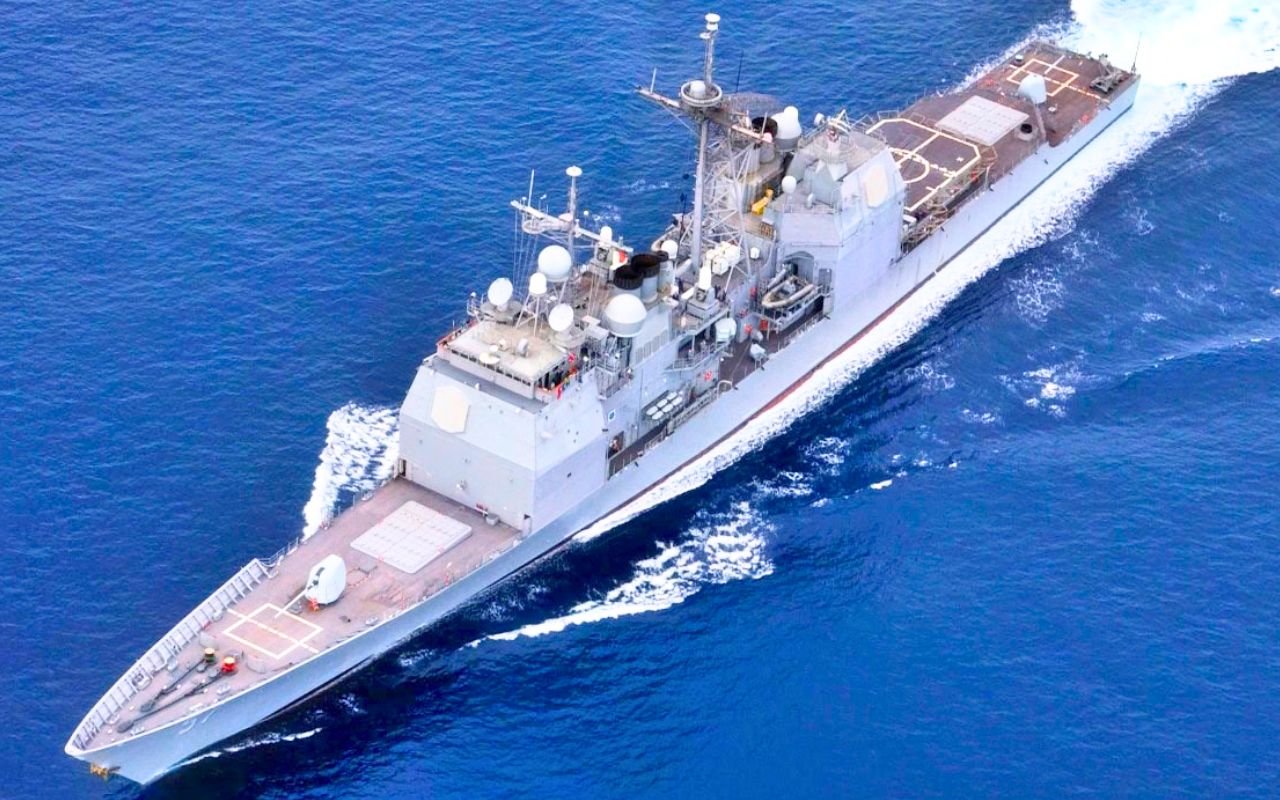
The Ticonderoga-class cruisers represent an unparalleled blend of missile capability and fleet command, weighing nearly 9,800 tons and boasting 122 vertical launch system (VLS) cells each. This missile magazine includes Tomahawks, SM-6 interceptors, RUM-139 ASROC anti-submarine rockets, and other munitions, enabling the ships to launch extensive, precision-guided strikes while acting as air defense command centers within carrier strike groups. With 27 built over the late 20th century, these cruisers have been linchpins of naval power projection. Yet by 2027, all but a few aging vessels are scheduled for retirement. The U.S. Navy plans to replace these cruisers’ role primarily with Flight III Arleigh Burke-class destroyers, which notoriously carry only 96 VLS cells. This numeric decrease results in a 26-cell deficit per ship, meaning the fleet’s long-range missile strike capacity will shrink substantially if no compensatory measures are enacted. This missile capacity decline comes at a time when missile stockpiles themselves face shortages after recent high-intensity operations such as Operation Epic Fury, where roughly 400 Tomahawks were expended within 72 hours—a significant percentage of the available ready-to-fire inventory. Because Tomahawk missiles require approximately two years to produce and current annual output hovers around 90 units, meeting resupply demands is a logistical challenge, especially with increased geopolitical tensions in the Indo-Pacific region demanding robust strike capabilities. The Navy faces a tactical and strategic quandary: how to sustain formidable firepower with fewer missile cells on surface combatants and delays in missile production. This shortfall calls for not only rethinking ship design but also reexamining missile build rates and exploring innovative technologies to boost strike readiness.
The enduring legacy and tactical role of the Ticonderoga-class cruisers in modern naval warfare
Born out of Cold War-era imperatives, the Ticonderoga-class was revolutionary—a powerful air defense command ship integrated into carrier strike groups through the sophisticated Aegis combat system and capable of launching a multitude of missile types. The cruisers’ hallmark was their massive missile capacity, combining offensive and defensive versatility in one hull. Each cruiser’s 122 VLS cells enabled them to carry a mix of weapons fine-tuned to operational needs: long-range Tomahawk cruise missiles for strike precision, Standard missiles (SM-2 and SM-6) to intercept enemy aircraft and ballistic missiles, and anti-submarine rockets ensuring multi-dimensional threat responses. Such firepower earned the Ticonderoga the nickname of “missile truck” by naval strategists. Tactically, the class excelled in roles such as air defense commander, coordinating missile fire to shield aircraft carriers from hostile air threats. Additionally, during offensive operations like the noted Operation Epic Fury, Ticonderogas launched massive Tomahawk salvoes quickly, underscoring their vital role in rapid-strike surface warfare. Operational examples include the USS Gettysburg (CG 64), which as recently as 2025 operated in the U.S. Central Command area conducting precision missile strikes and fleet air defense, attesting to the class’s continued relevance prior to retirement. Yet, decades of sustained service added wear—hull fatigue, aging power propulsion systems, and rising maintenance costs have rendered the class increasingly obsolete, prompting the Navy to retire them in favor of newer, albeit less heavily armed, vessels.
Why the Flight III Arleigh Burke destroyers fall short of filling the missile void
The Navy’s plan to replace the retiring Ticonderoga-class cruisers with Flight III Arleigh Burke-class destroyers presents a paradox. These destroyers feature advanced radar and sensor arrays, arguably superior in many respects to those of their predecessor class. However, a critical drawback looms large: the VLS cell count is capped at 96 per ship—a significant reduction in missile-carrying capacity compared to the Ticonderoga’s 122 cells. This 26-missile cell deficit per ship affects the Navy’s ability to launch high-volume missile strikes or maintain extensive multi-mission missile loadouts. Even if the destroyer fleet expands, individual ships carry fewer missiles, requiring changes in force structuring or supplementary assets to maintain current strike potential. Additionally, the retirement timeline of key submarine platforms compounds the problem. The Ohio-class SSGN submarines, capable of carrying 154 Tomahawk missiles each, are also scheduled for phased retirement before 2030, further diminishing the Navy’s sea-based missile inventory and launch platforms. This convergence of surface and subsurface ship retirements creates a substantial void in missile launch capability. Retiring older vessels without a like-for-like replacement means the Navy must innovate to preserve operational effectiveness. Discussions center on the possibility of increasing the VLS capacity of next-generation destroyers or integrating unmanned systems to supplement missile firepower. However, such developments face lengthy timelines, costing millions of euros and requiring extensive testing and validation. Maintaining a balanced, potent fleet remains critical as competitors like China rapidly expand their naval forces, prioritizing missile-equipped surface combatants. The U.S. faces a narrow window to avoid a power vacuum in missile strike capacity that could tilt strategic balances in the Indo-Pacific region and beyond.
Industrial bottlenecks and missile production constraints threaten naval readiness
A critical underpinning to the missile capacity gap lies not just in platforms but also in munitions supply chains. The Tomahawk missile, a cornerstone of U.S. naval strike power, currently suffers from a production shortfall draining readiness. Operation Epic Fury burned through approximately 400 Tomahawks in 72 hours, equating to about 10% of the immediate ready inventory. With an average Tomahawk build rate of 90 missiles annually, replenishing such losses could take four to five years unless production is dramatically increased.
Recognizing this, the Pentagon and defense contractors have pledged to ramp up production to exceed 1,000 units per year by 2026. Yet numerous challenges impede this surge:
- Component shortages: Critical parts such as guidance systems and rocket motors face constrained supply.
- Shipyard and assembly line capacity: Facilities tasked with assembling and testing missiles operate near maximum throughput limits.
- Skilled workforce constraints: Increasing production requires highly specialized labor that is difficult to quickly scale.
- Certification and quality-control: Ensuring each missile meets stringent reliability standards slows rapid output.
These bottlenecks introduce significant risks for maintaining missile stocks at levels sufficient to support extended or multiple simultaneous combat operations, particularly in high-stakes Indo-Pacific scenarios.
| Year | Tomahawk Annual Production (units) | Projected Goal (units) | Production Bottlenecks |
|---|---|---|---|
| 2023 | 90 | 200 (targeted) | Component shortages, workforce |
| 2024 | 150 | 500 (goal) | Facility capacity maxed |
| 2025 | 300 | 750 (planned) | Certification delays |
| 2026 | 500 (estimated) | 1,000+ | Supply chain issues |
Strategic importance of missile capacity for future Indo-Pacific confrontations
The looming gap in missile firepower caused by the Ticonderoga retirement places critical pressure on U.S. naval planners grappling with increasingly contested waters. The Indo-Pacific theater, in particular, demands ships capable of rapid, long-range precision strike to counter expanding naval and missile capabilities from China and its partners. Effective missile salvo launch ability can define the outcome of fleet engagements and deter hostile actions by projecting overwhelming firepower in seconds. The loss of Ticonderoga’s high-volume missile cells risks undermining this deterrence, potentially forcing the U.S. Navy to rethink deployment strategies, embrace new platforms, or accelerate missile technology innovation. Efforts are underway to address these gaps by exploring enhanced destroyer VLS modules, mixed unmanned-manned missile platforms, and boosted missile production. Yet these solutions demand time, funding, and political will, commodities often strained under competing defense priorities. As 2027 approaches, the U.S. Navy finds itself at a strategic crossroads: the force capable of delivering massive Tomahawk barrages and layered fleet air defense will soon transition to a leaner force challenged to maintain volume strike capability. This shift underscores the complex interplay of aging fleets, industrial capacity, and strategic necessity in shaping maritime power in the mid-21st century. Exploring the history, capabilities, and retirement impact of the Ticonderoga class guided-missile cruisers on Navy strategy and future ship design with expert analysis.
What are the primary reasons for retiring the Ticonderoga-class cruisers?
The Ticonderoga-class cruisers are being retired mainly due to their age, with most ships over 35 years old, resulting in structural fatigue, outdated systems, and rising maintenance costs that make continued operation impractical.
How does the VLS cell count difference between Ticonderoga and Arleigh Burke Flight III affect missile strike capacity?
Ticonderoga-class cruisers carry 122 VLS cells each, whereas Arleigh Burke Flight III destroyers have 96 cells, creating a 26-cell deficit that reduces the Navy’s total missile launch capacity per ship, impacting strike volume and versatility.
What challenges does the U.S. face in ramping up Tomahawk missile production?
Challenges include supply chain shortages, limited shipyard capacity, workforce constraints, and the time-consuming certification process, all of which hinder rapid production increases needed to replenish stocks after high missile usage operations.
Are there planned successors to the Ticonderoga-class cruisers?
Currently, there is no direct successor planned for the Ticonderoga-class; the Navy plans to absorb their missions into Flight III Arleigh Burke-class destroyers and explore new technologies and platforms to fill the missile capability gap.
How might the retirement of missile-capable submarines compound strategic missile capacity issues?
The retirement of Ohio-class SSGN submarines, each capable of carrying 154 Tomahawks, further reduces the sea-based missile arsenal, exacerbating the overall missile launch capacity shortfall and complicating naval strike planning.
