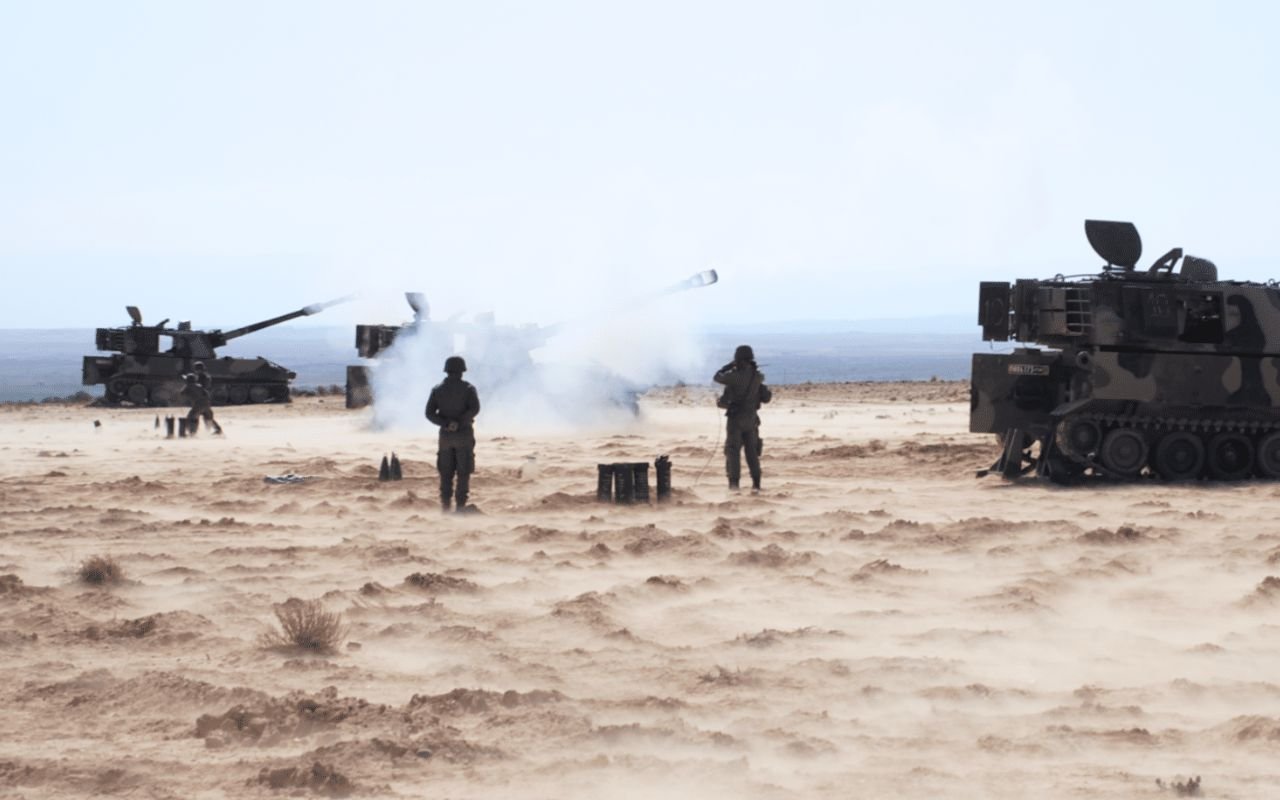
Morocco has surged ahead to become Africa’s largest importer of major arms, defying broader continental downward trends and reshaping the balance of military power across North Africa.
Over the past five years, Morocco’s military acquisitions have grown by a robust 12%, positioning the kingdom not only as Africa’s top arms importer but also as 28th worldwide. This trend unfolds amid a backdrop where many African nations are scaling back on arms deals by significant margins. Driven by modern strategic imperatives, evolving alliances, and intense regional rivalries, Morocco’s arms import role speaks to its broader ambitions to bolster defense capabilities and enhance its geopolitical standing.
How Morocco Outpaced Africa’s Arms Market Amid Continental Decline
While Africa’s overall purchases of major weaponry have contracted sharply, falling by 41% in the period between 2021-2025 compared to 2016-2020, Morocco charts an exceptional course with a 12% increase in imports. This contrast underscores the kingdom’s deliberate effort to upgrade its military hardware at a time when many neighbors face budget constraints, political shifts, or alternative security arrangements leading to reduced arms procurement. The Stockholm International Peace Research Institute (SIPRI) defines major arms as including combat aircraft, armored vehicles, missile systems, naval vessels, and heavy equipment. Morocco’s heightened acquisition focus on these categories reflects a calculated modernization strategy rather than impulsive stockpiling. This selective investment places Morocco in a strategic tier that few other African states currently occupy. With a 1% share of global arms imports, its positioning at 28th worldwide reveals a deep commitment to transforming its military into a highly capable, technologically integrated force. Unlike rapidly shrinking importers, Morocco balances modernization with forward-looking defense priorities, including interoperability with Western partners. Strategically, this stance highlights a conscious divergence from a continent-wide trend of reduced arms dependency. Many African countries have reprioritized spending to internal development or non-military concerns, whereas Morocco views defense as a pillar for sovereignty, influence, and regional stabilization. This commitment is evident in the sustained increase in acquisitions of advanced fighter jets, missile defense platforms, and surveillance equipment crucial for modern warfare.

Understanding Major arms supply categories fueling Morocco’s buildup
Morocco’s import portfolio primarily emphasizes several vital categories:
- Combat aircraft and drones: Enhancing air superiority and reconnaissance with cutting-edge fighters and unmanned aerial systems.
- Missile defense and artillery systems: Bolstering threat determent capabilities critical along tense borders.
- Armored vehicles: Upgrading ground mobility with modern main battle tanks and infantry fighting vehicles.
- Naval assets: Strengthening control over maritime routes through the acquisition of patrol vessels and surveillance ships.
This multi-domain approach supports Morocco’s goal to maintain comprehensive, ready forces capable of rapid deployment and effective deterrence throughout the Maghreb region.
Strategic partnerships steering Morocco’s arms acquisitions
One of the most striking dimensions of Morocco’s continued military buildup is the strategic reorientation underpinning its sources of arms imports. Almost 60% of Morocco’s defense hardware over the last five years comes from the United States, affirming the kingdom’s deep ties with American military technology. The U.S. supplies critical assets such as advanced fighter jets, reconnaissance drones, and missile systems, which are core to enhancing Moroccan aerial and surveillance capacities. However, an increasingly prominent role is also played by Israel, accounting for about 24% of imported arms. Following the restoration of diplomatic relations in 2020, military cooperation between the two countries has flourished, particularly in intelligence, electronic warfare, and drone technology. This cooperation reflects Morocco’s desire to diversify its military partnerships and tap into Israel’s advanced defense innovation, especially in sensitive domains like satellite reconnaissance. France remains the third key supplier, contributing roughly 10% of Morocco’s imports. Though historically pivotal, France’s role has diminished somewhat, reflecting both geopolitical shifts and Morocco’s expanding global sourcing strategy. Despite this, French equipment still plays an important role in Moroccan ground and air forces, symbolizing longstanding ties that continue to coexist with new alliances. These shifting partnerships reveal the kingdom’s multi-vector approach to arms procurement, enabling it to blend U.S. precision technology, Israeli innovation, and traditional European defense expertise to craft a tailored military force.
Key examples of armament programs shaping the partnership landscape
Among the most eye-catching developments is Morocco’s plan to acquire an Israeli spy satellite, a project projected to cost around 900 million euros. This program underscores a leap toward indigenous surveillance capabilities, vital for maintaining situational awareness over the contested Western Sahara region and the broader Maghreb. Alongside this, joint ventures to produce drones domestically highlight Morocco’s ambition to reduce dependency on foreign suppliers while creating a local defense manufacturing hub.
Regional tensions catalyze Morocco’s defense build-up
The kingdom’s leap in arms imports cannot be dissociated from its geopolitical context, particularly its long-standing tensions with Algeria. This rivalry, rooted in historical disputes and differing stances on territorial sovereignty, notably over Western Sahara, heavily influences Morocco’s defense priorities. Building a capable, modern military is crucial not only for deterrence but also for diplomatic leverage in these protracted tensions. While Algeria’s reported arms imports have decreased markedly, the full picture of its military procurement remains somewhat opaque, suggesting that Morocco’s advantage in terms of visible acquisitions is also a calculated message in the region’s security discourse. The SIPRI report specifically links Morocco’s arms surge to efforts to maintain regional military balance and prevent strategic marginalization. This competitive dynamic extends beyond bilateral rivalry, shaping broader Maghreb security architecture. Morocco’s sizable arms investments allow it to project power more confidently and engage from a position of strength in regional security dialogues and alliance building, particularly with Western nations wary of instability in North Africa. The kingdom’s military modernization initiative also serves a broader diplomatic purpose: signaling sovereign resilience and gaining influence within international defense and political circles. A more formidable Moroccan military arguably enhances the country’s bargaining power in territories and cooperation frameworks, signaling to rivals and partners alike that it is prepared for evolving challenges.
What Morocco’s arms race means for Africa’s defense landscape
Morocco’s ascendancy as Africa’s largest arms importer in the earlier part of this decade has wider implications for the continent’s military equilibrium. It reveals a shift where North Africa increasingly asserts its defense priorities independently, contrasting with the slower growth or decline observed in many sub-Saharan states. Interestingly, the sub-Saharan region saw a 13% increase in arms imports during the same period, led primarily by Nigeria. However, Morocco’s pace remains notably rapid, marking a distinct strategic direction emphasizing modernization aligned with high-tech capabilities. This divergence within the African continent highlights evolving defense needs, diverse threat perceptions, and geopolitical alignments. Morocco’s strategy signals a reallocation of regional military influence, suggesting that future stability in North Africa may hinge on how these emerging power balances reconcile politically and militarily. From a broader market perspective, Morocco’s active importing also drives shifts in the global arms trade networks, attracting more suppliers and technology innovators eager to tap into emerging African demand hubs. This trend could create ripple effects, encouraging other African states to reassess their defense postures amid shifting alliances and security dynamics.
Comparative snapshot of African arms importers’ trends 2016-2025
| Country | Change in arms imports (%) | Global import rank (2021-2025) | Primary suppliers | Notes |
|---|---|---|---|---|
| Morocco | +12% | 28 | USA, Israel, France | Largest importer in Africa, shifting strategic partnerships |
| Algeria | -35% | ~40 | Russia, some undisclosed suppliers | Imports declined amid opaque procurement |
| Nigeria | +13% | 50s | China, Russia | Leading sub-Saharan importer, modernizing ground forces |
| Egypt | -5% | ~30 | USA, France, Russia | Stable procurement focused on naval power |
The above overview illustrates how Morocco’s procurement trajectory stands out significantly, signaling a targeted investment in next-generation military tech and capacity.
Building a sustainable defense industry and future outlook for Morocco
Morocco’s ambitions extend beyond purchasing hardware. The kingdom aims to develop a more autonomous military-industrial base, reducing reliance on imports by fostering local production, technology transfer, and defense innovation. Collaborative projects with Israel to manufacture drones locally and potential satellite assembly capabilities epitomize this approach. This industrial push not only strengthens Morocco’s strategic independence but also has economic and technological spillover effects, creating jobs and advancing scientific expertise within the country. However, sustaining such momentum requires continuous investment in research, training, and international partnerships. Morocco’s challenge will lie in balancing the acquisition of cutting-edge foreign technologies with nurturing domestic capabilities to reduce vulnerabilities and dependency over time. Looking ahead, the kingdom’s defense modernization is likely to remain a focal point for its policymakers, driven by an evolving geopolitical environment, regional disputes, and aspirations to maintain leadership in African security matters.
Why has Morocco increased its arms imports while other African countries are reducing theirs?
Morocco’s arms build-up stems from strategic modernization plans amid regional rivalries, especially with Algeria, and a desire to enhance military capabilities aligned with its geopolitical ambitions. Many other African countries face budget limits or recalibrate their security strategies, leading to declines in arms acquisitions.
Who are Morocco’s main suppliers of military equipment?
The United States provides around 60% of Morocco’s arms imports, focusing on aircraft and missile systems. Israel contributes about 24%, particularly in drones, intelligence technologies, and satellite equipment. France remains a steady but smaller supplier, accounting for roughly 10%.
What impact does Morocco’s arms import surge have on regional security?
Morocco’s growing military strength shifts the balance of power in North Africa, particularly vis-à-vis Algeria. It enhances deterrence, strengthens Morocco’s diplomatic position, and influences regional security dynamics, encouraging other countries to rethink their defense postures.
Is Morocco developing its own defense industry?
Yes, through partnerships notably with Israel, Morocco is working to build local drone manufacturing and satellite surveillance capabilities, aiming at increasing self-reliance and fostering a sustainable defense sector.
How does Morocco’s military modernization affect Africa’s arms market?
Morocco’s active imports highlight a reconfiguration in the African arms market, signaling increased demand for advanced weaponry and encouraging suppliers to engage with emerging African militaries. This trend could stimulate technological transfers and strategic partnerships continent-wide.
