
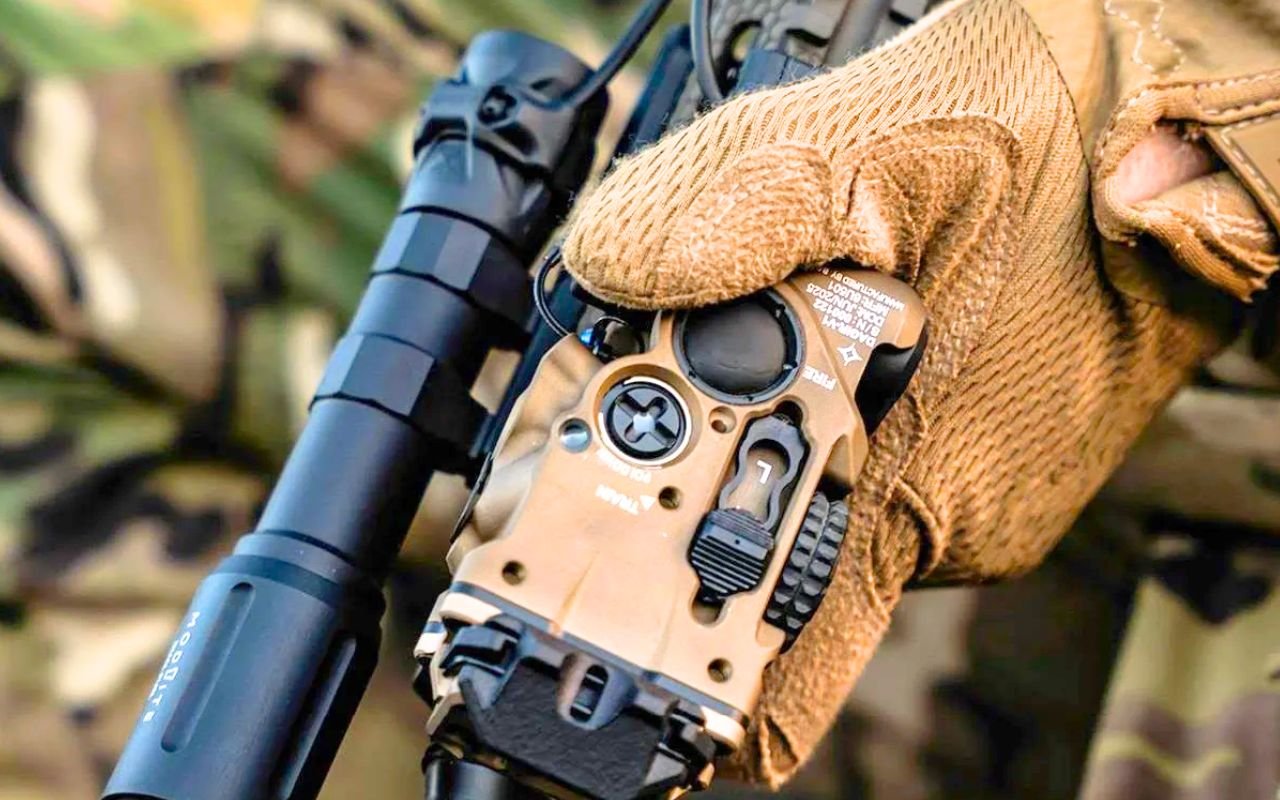
The U.S. Army is stepping up its game with the integration of cutting-edge weapon-mounted lasers from B.E. Meyers, pushing the boundaries of modern battlefield technology.
Over recent years, the evolution of laser weaponry has taken a giant leap, especially with contributions from specialized companies like B.E. Meyers. As threats grow increasingly sophisticated and the battlefield environment becomes more contested, the Army is responding by enhancing its defensive and offensive capabilities. This expansion of laser systems is a clear signal of how critical directed-energy weapons have become in contemporary military strategy. But what exactly are these weapon-mounted lasers, and why is the Army banking on them so heavily?
The growing importance of weapon-mounted lasers in modern military operations
The U.S. Army’s adoption of additional weapon-mounted lasers highlights an important transition towards integrating directed energy weapon (DEW) systems at the squad and vehicle levels. These systems are designed to offer soldiers immediate and precise means to detect, track, and destroy various threats, including unmanned aerial vehicles (UAVs), loitering munitions, and even rocket or mortar projectiles. Unlike traditional kinetic weapons, lasers operate at the speed of light, providing near-instantaneous engagement capability which significantly enhances reaction time during combat scenarios. Directed energy weapons such as those produced by B.E. Meyers combine the advantages of compact size, lightweight design, and high reliability. Their operational potential is extraordinary: they provide a low-cost per shot option compared to missiles or bullets, have an essentially unlimited magazine (as long as there is power), and can be fine-tuned for non-lethal or lethal applications. This versatility is crucial for modern engagements where rules of engagement and collateral damage are carefully considered. Moreover, the Army’s focus on weapon-mounted lasers ensures these systems are rider-friendly and can seamlessly integrate with existing platforms such as infantry squad vehicles, armored trucks, and main battle tanks. This flexibility means that soldiers on the front lines can deploy laser technology swiftly without demanding extensive additional infrastructure. With the domaining of battlefield environments increasingly contested by drone swarms and other unmanned threats, weapon-mounted laser systems act as a force multiplier, enhancing the Army’s situational awareness and strike capabilities. The Army’s decision to expand its arsenal with B.E. Meyers’ lasers signals a robust commitment to maintaining technological superiority in future warfare.

Technical overview: what makes B.E. Meyers’ DAGIR series a standout in weapon-mounted lasers
The DAGIR series by B.E. Meyers represents a significant advancement in laser weapon technology, especially for its role in night operations and enhancing operator survivability. This compact system combines precision aiming with effective illumination, allowing soldiers to accurately target enemies, even under limited visibility conditions.
At its core, the DAGIR system features:
- Minimal size and lightweight construction so it doesn’t inhibit soldier mobility or vehicle handling.
- Multiple mode capabilities including both visible laser pointers and infrared illuminators, essential for all-weather and nocturnal combat.
- Robust performance designed to withstand harsh battlefield environments, including resistance to dust, vibration, and extreme temperatures.
These features drastically improve the usability and reliability of laser systems. For instance, traditional laser pointers were often unreliable in rugged conditions, forcing soldiers to resort to less precise aiming aids. By contrast, the DAGIR not only improves precision aiming but also allows operators to stay concealed through the use of infrared markers visible only with night vision. Such capability significantly boosts lethality while reducing the risk of counter-detection. In addition, the DAGIR series is designed for quick attachment to various weapon platforms including rifles, machine guns, and vehicle turrets. This adaptability ensures the Army can upgrade existing armaments seamlessly, rather than requiring wholly new weapon designs, saving both time and procurement costs. The DAGIR’s modern electronics also allow interfacing with digital command-and-control systems, feeding real-time targeting data back to commanders and linking with broader battlefield networks. This integration marks a step toward network-centric warfare where information dominance is as important as firepower.
Operational advantages of mounted lasers against drone and missile threats on the battlefield
One of the most pressing military challenges today is defending against rapid, low-cost, and proliferating unmanned systems such as drones. The Army’s investment in these weapon-mounted lasers, including those tailored by B.E. Meyers, allows for a rapid-response, low-cost defense against such aerial threats. Unlike traditional projectile weapons, lasers offer near-instantaneous target engagement. The laser weapons employ precision tracking to lock onto incoming drones or loitering munitions, engaging them before they can strike friendly forces. This dramatically increases the effectiveness of counters to swarming drone attacks that would otherwise overwhelm kinetic defenses.
Several current deployments illustrate these advantages:
- The Multi-Purpose High Energy Laser (AMP-HEL) program integrated smaller-scale lasers for squad-level mobility, providing dismounted infantry a direct means to counter UAV raids without relying on larger support units.
- The Directed Energy Maneuver-Short Range Air Defense (DE M-SHORAD) systems mount 50-kilowatt laser modules on Stryker armored vehicles, designed for rapid engagement of multiple aerial threats at ranges of several kilometers.
- Smaller systems like the 20-kilowatt LOCUST laser mounted on Joint Light Tactical Vehicles (JLTVs) provide flexible, rapidly deployable C-UAS (counter-unmanned aerial systems) defense for maneuver units.
These systems bring the unique combination of deep magazine capacity, operation at the speed of light, and minimal collateral damage, making them irreplaceable elements of modern layered defenses. The reduced logistics footprint of lasers—no ammunition resupply needed—also supports protracted operations. As the Army deploys more such systems, force protection improves measurably, providing commanders with new tactical options to deter and defeat evolving aerial threats that conventional weaponry struggles to handle economically and efficiently.
Integration challenges and the path toward full battlefield deployment of weapon-mounted lasers
Even with all the promising technological advancements, integrating weapon-mounted lasers into the Army’s arsenal comes with significant challenges. Early versions of the systems faced issues related to size, power consumption, and environmental robustness. Maintaining consistent beam quality in dusty or rainy conditions remains a critical hurdle given the diverse terrains in which the Army operates. To address these issues, constant refinement and extensive field tests are conducted. Engineers focus on improving thermal management systems, power efficiency, and modular designs that allow components to be swiftly replaced or upgraded in the field. Feedback from soldiers operating the lasers live in harsh environments is invaluable for iterative improvements. Another key challenge lies in the logistical and tactical integration of new technology into existing command frameworks. The Army invests heavily in developing digital interfaces and secure data links so that these laser systems communicate seamlessly with other sensor and fire control networks. Without this digital cohesion, the advantage of speed and precision offered by lasers would be diminished. Despite these hurdles, the trajectory toward full deployment is clear. Investment in training programs to familiarize operators and commanders with the new weapon systems increases daily. Additionally, budget allocations reflect growing confidence in directed energy technologies, ensuring sustained research and procurement efforts. Looking forward, the hope is that weapon-mounted lasers become standard issue not only on vehicles but at the infantry level, forming a core component of multi-domain battle strategies that blend kinetic and directed energy fires into cohesive solutions.
The future of combat: expanding the tactical role and capabilities of weapon-mounted lasers
As directed energy weapon technology continues maturing, the potential applications of weapon-mounted lasers extend beyond air defense. The Army is actively exploring how these lasers can also serve in offensive roles, counter-rocket, artillery, and mortar (C-RAM) defense, and even for non-lethal disabling of enemy equipment.
Future envisioned upgrades include:
| Enhancement | Purpose | Benefit |
|---|---|---|
| Increased laser power output | Engage faster, more resilient targets | Improved effectiveness against hardened drones and incoming missiles |
| Improved beam control and targeting algorithms | Enhance precision and reduce engagement time | Lower collateral damage and faster reaction |
| Energy-efficient power sources | Longer operational times without frequent recharging | Mission endurance and reduced logistic burden |
| Integration with autonomous systems | Enable AI-assisted targeting | Smarter, faster, and more reliable engagements |
Incorporating artificial intelligence and machine learning is expected to revolutionize how these lasers identify and prioritize threats autonomously, especially in complex and chaotic battlefield environments.
Another intriguing prospect is the cross-domain application of these lasers in naval and aerial platforms, allowing the Army to leverage the adaptability of B.E. Meyers’ laser designs across multiple branches of the military, creating a unified directed-energy combat doctrine.
By continuing to invest in research and embracing emerging technologies, the Army positions itself ahead in a rapidly evolving defense landscape where speed, precision, and adaptability define battlefield dominance. The weapon-mounted lasers from B.E. Meyers represent a cornerstone in this strategic shift.
How do weapon-mounted lasers compare to traditional firearms in terms of cost?
Weapon-mounted lasers have a much lower operational cost per shot compared to traditional firearms since they use directed energy instead of physical ammunition. This results in significant savings over time, especially in high-volume engagements.
Can laser weapons operate efficiently in adverse weather conditions?
While lasers face challenges such as rain, fog, or dust that can scatter or absorb the beam, continuous advancements in beam quality and targeting systems help maintain effectiveness in many adverse environments.
Are these lasers effective against all types of drones?
The lasers are highly effective against small to medium-size drones and loitering munitions. However, larger or heavily armored aerial threats may require higher power output or complementary defense systems.
What platforms can B.E. Meyers’ DAGIR series attach to?
The DAGIR series is designed for rapid mounting on rifles, machine guns, vehicle turrets, and other platforms, providing immense flexibility for different combat roles and mission needs.
Is AI integration currently used in these laser weapon systems?
While AI integration is in developmental stages, the Army is actively exploring machine learning enhancements to improve autonomous threat targeting and engagement for these laser weapons.
