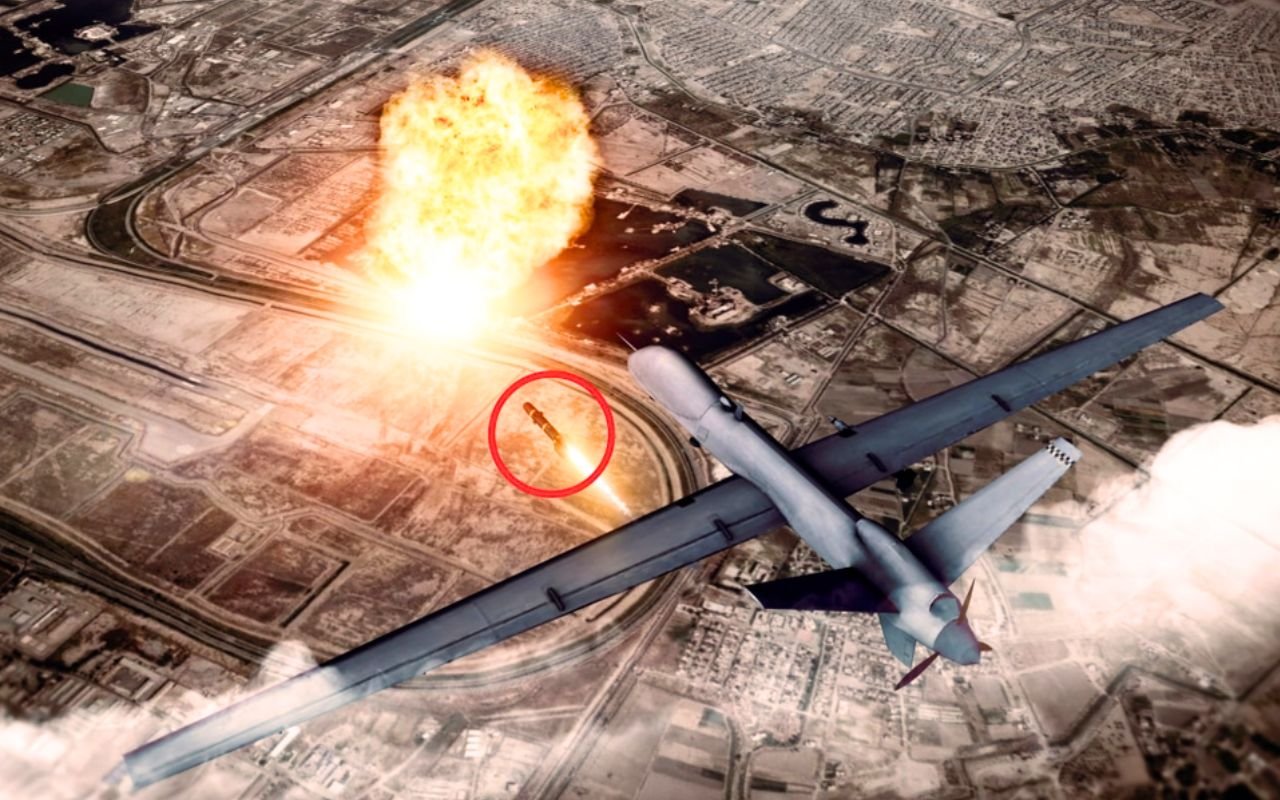
The precision strikes on American AN/TPY-2 radars by Iran’s missile forces have ignited a costly blow, wiping out billions of euros worth of cutting-edge military technology in the heart of the Middle East.
In a rapidly escalating geopolitical conflict, Iran’s ballistic missile campaign has managed to systematically dismantle key elements of the United States’ missile defense system across the Gulf and Levant regions. The targeted destruction of these prized radars marks a significant setback for American defense capabilities and exposes strategic vulnerabilities in its regional military posture.
How Iranian missile strikes shattered billions in US radar assets
The ongoing conflict between Iran and its adversaries in the Middle East has seen Tehran prioritize disabling the US’s most advanced missile defense radars, specifically the AN/TPY-2 systems. These attacks have not only forced massive financial losses but have also undermined the protective shield safeguarding American forces and their allies. Since the onset of the hostilities, several missile and drone attacks launched by Iranian forces have successfully targeted AN/TPY-2 radars deployed at crucial bases—such as those in Qatar and Jordan. Satellite imagery analyzed by major news outlets revealed the devastation inflicted on at least four of these radar units, which form the backbone of America’s missile detection and interception network in the region. The financial impact is staggering. Each individual AN/TPY-2 radar costs roughly 920 million euros, reflecting its status as a state-of-the-art military asset. Recent damage assessments suggest that combined losses could exceed several billion euros within a mere week. One estimate points to more than 5 billion euros wiped out if all affected installations are included. This loss is unprecedented and strikes at the core of US military technological expenditure in the Middle East. This expensive setback goes beyond just monetary value, signaling a dangerous gap in America’s layered defense strategy. The battering of these systems threatens to degrade the missile early warning and interdiction architecture, raising pressing concerns for the security of US personnel and regional allies alike. Moreover, the use of advanced ballistic missiles highlights Iran’s tactical shift toward disrupting sensor networks rather than only engaging direct combat targets, aiming to blind the enemy’s eye and pave the way for future offensive maneuvers.
Understanding why AN/TPY-2 radars are prime targets amid Middle East tensions
The AN/TPY-2 radar system plays a pivotal role in the US missile defense scheme, primarily integrated into the THAAD (Terminal High Altitude Area Defense) missile shield. Due to its unmatched ability to track ballistic missiles shortly after launch, it functions as the vital sensor nerve center for interdiction efforts before missiles approach critical targets. In modern warfare, blinding an opponent’s radar network creates a strategic advantage by limiting enemy missile defense reaction time. Iran’s focused targeting of these radars aims to diminish the United States’ capability to detect and intercept incoming threats promptly. Without these radars providing accurate early warning data, THAAD batteries and allied air defenses like Patriot missiles become far less effective. Strategically, disrupting this sensor web benefits Iran by potentially opening corridors for drone strikes, ballistic missile launches, and other asymmetric attacks against US and allied forces stationed across the Gulf region. The precision and timing of the Iranian strikes underscore a calculated approach to compromise defensive infrastructure rather than engage in costly direct confrontations. Iran’s military doctrine increasingly emphasizes electronic warfare and sensor network disruption to neutralize technologically superior adversaries. By eliminating AN/TPY-2 radars, Iranian forces seek to circumvent formidable missile defense umbrellas, thereby enhancing the effectiveness of their own missile arsenal. Additionally, these strikes send a clear geopolitical message, underscoring Tehran’s ability to penetrate American defense systems despite extensive US presence, complicating Washington’s regional strategy and alliance security assurances.
The technological marvel behind the high-value AN/TPY-2 radar system
Developed by Raytheon Technologies, the AN/TPY-2 represents one of the most advanced X-band radars in existence today. Functioning in the 8.5 to 10 GHz range, it boasts extremely high resolution, allowing it to track objects traveling at hypersonic velocities with pinpoint precision. This radar operates in two primary modes: the Forward-Based Mode (FBM), where it acts as an early-warning sensor detecting ballistic missile launches at distances exceeding 1,000 kilometers, and the Terminal Mode, where it aids missile interceptors during the final engagement phase. What makes the AN/TPY-2 exceptional is not only its technical capabilities but also its scarcity. Since the late 1990s, fewer than 20 units are believed to have been produced worldwide. This rarity contributes to the radar’s enormous cost, estimated between 460 million and 920 million euros per unit, depending on configuration and deployment specifics. By transmitting live, accurate missile trajectory data to THAAD interceptors, the radar is central to the shield’s success in intercepting medium- and intermediate-range ballistic missiles before they reach their targets. Its destruction therefore critically weakens the entire THAAD system’s ability to operate effectively. The radar’s advanced active electronically scanned array (AESA) technology enables it to simultaneously track multiple targets and discriminate between decoys and real warheads, a feature crucial in complex missile engagement environments. Given the high costs, complex production timelines, and technological sophistication, replacing damaged radars poses a significant challenge for US defense planners, likely requiring years and hundreds of millions of euros in investment to restore lost capabilities.
Economic and strategic consequences for US defense in the Gulf region
The loss of multi-billion-euro radar systems has generated a ripple effect beyond the immediate military domain. Economically, the destruction represents one of the largest single-week hits to US defense assets in recent decades, straining already stretched defense budgets and complicating procurement priorities. Strategically, it exposes the vulnerability of America’s forward-deployed missile defense architecture. By targeting just a handful of radars, Iran has amplified anxieties over the reliability of early-warning sensors crucial for protecting US troops, bases, and allied nations such as Jordan, Saudi Arabia, and Qatar. These developments risk altering the calculus for US and NATO defense postures in the Middle East and potentially beyond. They highlight the need for diversified sensor networks and resilient defense layers capable of withstanding precision missile strikes, including countermeasures to protect radars from emerging threats like drones and hypersonic weapons. The geopolitical tension underscored by these losses also complicates regional alliances, as partner nations reassess their security guarantees in the face of persistent Iranian missile capabilities that can circumvent existing defense frameworks.
Below is a detailed overview of key affected locations, estimated cost of lost radar assets, and known strike dates, reflecting the scale and timing of this costly campaign:
| Location | Date of Strike | Radar System | Estimated Cost (€ Billion) | Strategic Role |
|---|---|---|---|---|
| Al Udeid Air Base, Qatar | April 2026 | AN/TPY-2 | 0.92 | Key early-warning radar for Gulf missile defense |
| Muwaffaq al-Salti Air Base, Jordan | March 2026 | AN/TPY-2 | 0.92 | Primary radar protecting Levant region |
| UAE radar installation | May 2026 | AN/TPY-2 (suspected) | 0.92 | Supporting regional missile intercept operations |
| Additional sensor nodes across Gulf | April-May 2026 | Various radar systems | 1.5+ | Networked early detection and interception |
The mounting losses drive urgent discussions within the US Department of Defense on accelerating radar replacement programs and enhancing protective measures to prevent further attrition.
The tactical implications of losing rare radar assets in modern warfare
Destroying AN/TPY-2 radars is like blinding the eye of a sentinel watching over missile trajectories. The fallout in confidence and operational readiness is significant. These radars provide crucial data streams for anticipating missile threats and orchestrating intercepts with split-second timing. Loss of even one radar diminishes the redundancy that missile defense batteries rely on to maintain vigilance and engagement capacity. The destruction of multiple radars simultaneously creates substantial coverage gaps that adversaries like Iran can exploit with offensive missile and drone operations. Moreover, the limited number of these radars amplifies the impact of any single destruction. With production quantities measured in the low tens globally, there is neither the luxury of mass deployment nor fast replacement. This scarcity means that each destroyed unit represents a strategic void unlikely to be filled quickly, heightening the risks for regional defense networks and complicating allied planning. Iran’s success in targeting such a high-value technology signals not just capabilities in missile accuracy but sophisticated intelligence gathering and battle damage assessments, ensuring their strikes hit at critical vulnerabilities rather than random targets. This evolving landscape redefines how modern military powers must protect sensor assets, balance offense and defense, and diversify early warning architectures to deter increasingly capable peers employing missile swarms and electronic warfare tactics.
A succinct overview of US radar vulnerabilities due to Iranian campaigns
- High financial toll: Radar systems costing nearly a billion euros each have been knocked out, surpassing multi-billion-euro total losses.
- Strategic blind spots: The destruction decreases missile early warning capability, raising risk levels for US and allied forces.
- Limited radar stock: Only about 20 units in existence globally, making replacements slow and costly.
- Regional impact: Key bases in Qatar, Jordan, UAE, and other Gulf locations affected, threatening wider defense networks.
- Escalation in tactics: Iran’s strikes demonstrate a shift towards disabling sensor infrastructure rather than direct battlefield engagement.
What makes the AN/TPY-2 radar so critical to US missile defense?
The AN/TPY-2 radar provides high-precision tracking of ballistic missiles shortly after their launch, enabling missile interceptor systems like THAAD to engage threats early and effectively. Its advanced X-band technology and long detection range make it indispensable for early warning.
Why is it so difficult to replace destroyed AN/TPY-2 radars?
Due to their limited production—fewer than 20 units made—and complex technology, manufacturing new radars takes years and costs hundreds of millions of euros each, making rapid replacement impractical.
How do Iranian missile attacks impact US regional defense strategy?
By destroying critical radar sensors, Iran reduces the effectiveness of US missile defense systems, creating vulnerabilities in early warning networks that protect US troops and allies, forcing reassessments of defense postures in the Middle East.
What strategic advantages does Iran gain by targeting these radars?
Damaging AN/TPY-2 radars blunts US missile interception capacity, opening operational windows for Iranian missile or drone strikes and showcasing Tehran’s ability to challenge US military dominance in the region.
Are there measures to protect or replace radar assets quickly?
The US military is exploring enhanced protective measures, dispersal strategies, and accelerated procurement programs to reduce vulnerability and restore lost capabilities, but these efforts face considerable technological and financial hurdles.
