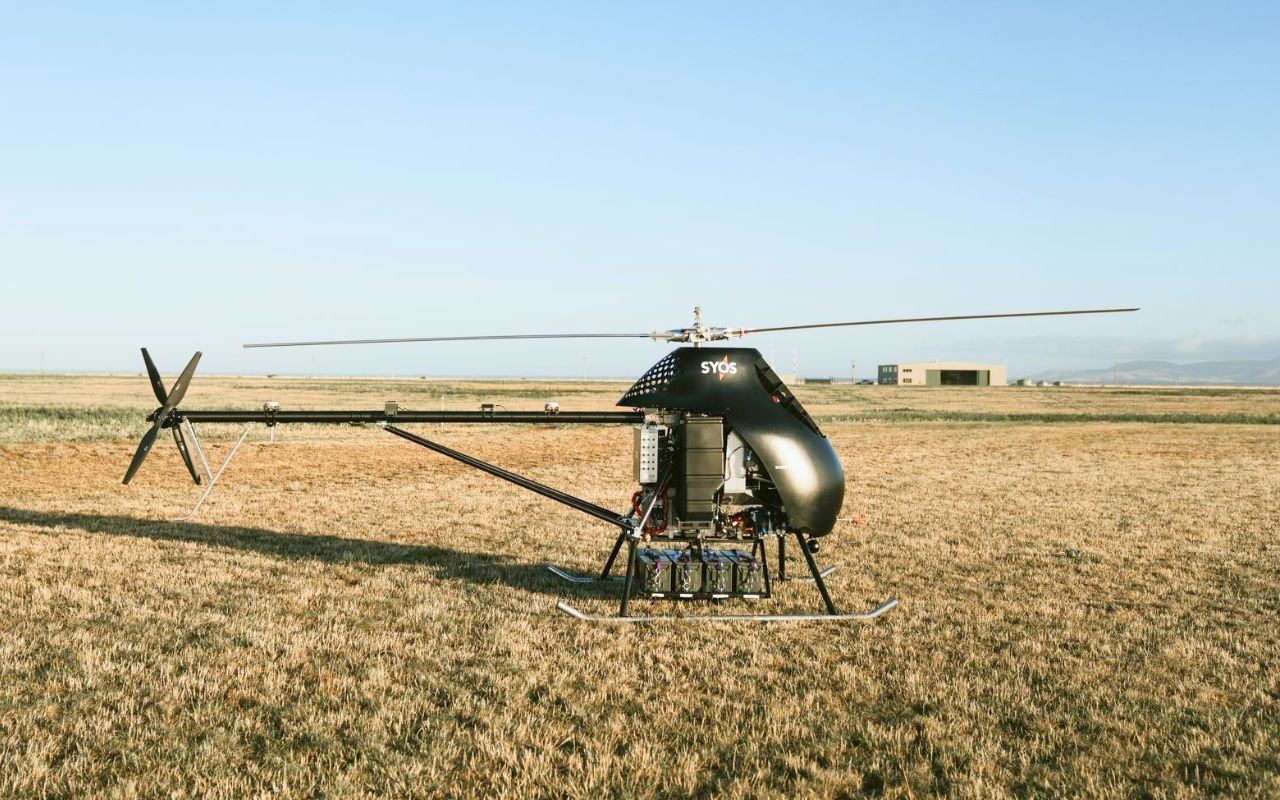
SYOS Aerospace has officially paved the way for mass production of the groundbreaking SA200 heavy-lift drone, promising to revolutionize unmanned aerial vehicle deployment with enhanced autonomy and robust capabilities.
After a rigorous five-year development phase, UK-based SYOS Aerospace announced that its SA200 autonomous uncrewed helicopter has cleared major testing milestones, demonstrating unparalleled endurance and fully autonomous mission execution. The capacity for autonomous takeoff and landing from moving platforms positions the SA200 at the forefront of heavy-lift drone technology. This green light for serial production ushers in a new era for maritime, expeditionary, and logistics operations worldwide.
Breaking new ground: the autonomy and endurance of the SA200 uncrewed helicopter
The SA200 heavy-lift drone exemplifies a new generation of autonomous aviation, combining long endurance and significant payload capacity with sophisticated autonomy. Over a course of extensive testing, the SA200 has demonstrated the ability to execute fully autonomous missions involving complex operations such as automated takeoffs and landings from moving platforms like ships and ground vehicles. The significance of these trials cannot be overstated. Operating from a moving maritime vessel requires real-time adaptability and precision navigation, given unpredictable sea states and environmental factors. SYOS Aerospace’s SA200 executes these maneuvers seamlessly, highlighting its advanced autonomy stack dubbed AAIMS, integrating cutting-edge artificial intelligence and sensor fusion technology to maintain stable flight and mission effectiveness under dynamic conditions. Heavy-lift capability paired with endurance means the drone can transport large payloads over extended distances without pilot intervention. This makes the SA200 ideal for maritime resupply missions, disaster response deployments, and remote area logistics where traditional helicopters are either unavailable or cost-prohibitive. The development of this drone aligns with a global push towards reducing operational costs and increasing flexibility. With military, environmental, and commercial sectors all seeking resilient unmanned systems, the SA200’s low cost-to-capability ratio is a strategic advantage. In real-world demonstrations, the SA200 carried heavy cargo loads while maintaining stable flight for hours, intermittently adjusting routes to account for moving landing zones and environmental factors. Such capabilities represent a significant leap forward for unmanned aerial systems, moving beyond experimental phases into reliable, operationally viable tools.

Advanced autonomy features enabling complex missions
The SA200’s autonomy extends beyond simple waypoint navigation. Using AI-powered decision-making algorithms, the UAV can dynamically re-route missions in response to new obstacles or mission priorities. For example, during a disaster relief operation, the drone can reroute to prioritize delivering medical supplies to critical areas without human input. The AAIMS autonomy stack integrates real-time sensor data from GPS, LiDAR, radar, and onboard cameras to form precise environmental awareness. This multi-sensor fusion enables the drone to identify changing terrain, obstacles, or weather conditions, adjusting flight parameters instantaneously. This melding of endurance—the drone can remain airborne for extended periods—and real-time adaptability epitomizes the SA200’s design philosophy. Such traits ensure operational reliability in challenging environments, including offshore platforms and remote land sites.
Production readiness: what serial manufacturing means for the UAV market
With rigorous endurance and autonomy trials completed, SYOS Aerospace has committed to launching serial production, signaling the SA200’s transition from development to widespread operational deployment. This decision is monumental for several reasons:
- Scalability: Serial production ramps up manufacturing capacity, enabling the company to meet growing demand efficiently.
- Cost reduction: Mass production typically brings down unit cost, enhancing ROI for buyers.
- Market penetration: More units in the field accelerate data collection and iterative improvements, solidifying the SA200’s position as a market leader.
SYOS Aerospace’s production plans are bolstered by a well-established supply chain and modular design of the SA200, which reduces manufacturing complexity and turnaround times. This modularity also facilitates easier maintenance and upgrades post-deployment, a critical factor in UAV lifecycle management. Serial production enables governments, commercial operators, and humanitarian agencies to access a proven heavy-lift autonomous helicopter at an affordable price point. The cost-to-capability ratio positions the SA200 as a disruptive force in sectors traditionally constrained by high aerial logistics costs. Moreover, mass manufacturing aligns with global trends toward more automated, efficient logistics, particularly important in defense and expeditionary contexts where rapid deployment is vital. For instance, naval forces can deploy the SA200 to supplement resupply needs on vessels at sea without dedicating pilot resources or risking crew safety. This move also influences the competitive UAV landscape, pressuring other manufacturers to enhance autonomy and production scalability to stay relevant. As a result, customers benefit from innovation acceleration and better system reliability.

Modular design benefits for maintenance and upgrades
The SA200’s modular architecture ensures components such as rotors, avionics, and power units can be swapped independently, reducing downtime and maintenance costs. The design facilitates faster field repairs and compatibility with future technology enhancements without a complete system overhaul. This modularity extends to software updates, where the autonomy stack can be incrementally improved with patches or new algorithms, enabling the drone’s capabilities to evolve during its operational lifespan. This adaptability is crucial in extending the SA200’s serviceability amid accelerating technological changes.
Strategic applications: how the SA200 redefines military, commercial, and humanitarian operations
The operational potential of the SA200 spans multiple domains, providing solutions to challenges across defense, industry, and emergency response.
Military and expeditionary use cases
Deploying heavy payloads autonomously over long distances without risking pilots addresses a persistent challenge in military logistics. The SA200 can perform supply drops, equipment transport, and intelligence, surveillance, and reconnaissance (ISR) missions from naval vessels or forward operating bases. The autonomy to take off and land on moving platforms enables the SA200 to operate from various naval ships, complementing traditional helicopter operations, especially where manned flights are risky due to weather or hostile conditions. This capability enhances force projection and logistical flexibility.
Commercial and industrial potential
Industries such as offshore oil and gas, mining, and remote construction can benefit from the SA200’s large payload capabilities in transporting specialized equipment and materials to sites inaccessible by ground vehicles. Companies can now reduce dependency on costly manned helicopter flights and lower operational risks. Additionally, the drone’s endurance allows extended inspections or monitoring flights, delivering real-time data on infrastructure health or environmental conditions. This capability supports preventative maintenance and reduces downtime.
Humanitarian and disaster response
The SA200’s ability to quickly carry critical relief supplies over challenging terrain makes it a valuable asset in disaster zones, where conventional transport may be hindered by damaged infrastructure. Autonomous operations eliminate the need for trained pilots, accelerating deployment in urgent scenarios. The drone can also function in search and rescue roles, using onboard sensors to identify survivors or hazards while maintaining persistent airborne presence during extended missions. Such sustained autonomy improves situational awareness and resource allocation in crisis management.
Technical specifications and performance metrics shaping its market edge
Delving into its engineering, the SA200 boasts impressive specifications that underpin its multifaceted roles. Key metrics include:
| Specification | Details |
|---|---|
| Payload capacity | 200 kg of cargo |
| Endurance | 6+ hours of continuous flight |
| Range | Up to 300 km per mission |
| Operational environments | Maritime, expeditionary, urban, and remote |
| Autonomy level | Full autonomy including takeoff and landing on moving platforms |
These metrics illustrate the drone’s ability to maintain operational efficiency over diverse conditions, making it an exceptional tool in both civilian and military arsenals. Its endurance and payload capabilities rival those of smaller manned helicopters but present the additional advantages of autonomy and lower operational risk. Through a combination of sensor technology and software sophistication, the SA200 achieves remarkable flight stability and mission flexibility, often outperforming comparable UAVs in its class.
Performance tested in real-world scenarios
Sea trials and expeditionary field tests provided crucial validation of the SA200’s capability to meet strict operational parameters. Flights executed from moving vessels at sea with autonomous landing and takeoff maneuvers confirmed the robustness of onboard autonomy. Additionally, tests in remote, rugged terrain proved the drone’s adaptability to shifting environmental factors such as wind, temperature, and obstacles. Such comprehensive testing underlines the SYOS Aerospace commitment to delivering reliable, mission-ready drones that push the boundaries of unmanned aviation. The above video showcases the drone’s autonomous trials, illustrating the complexity and precision of its flight control systems in maritime settings.
Market impact and future outlook for heavy-lift autonomous drones
The greenlight for serial production of the SA200 signals a disruptive shift in UAV and helicopter markets. Industry analysts forecast that unmanned helicopters capable of heavy lifting and long endurance will catalyze new operational concepts across sectors. This transition promises to reduce reliance on manned flights for high-risk logistics, especially in offshore and combat environments. With production underway, SYOS Aerospace is positioned to influence regulatory standards and operational protocols for autonomous aerial logistics globally. Looking ahead, the SA200 serves as a benchmark for future developments in drone autonomy and design. Its success could accelerate innovation in swarming capabilities, AI integration, and hybrid propulsion systems, further expanding UAV applications. On the economic front, the lower acquisition and operating costs compared to manned aircraft open heavy-lift aerial solutions to smaller markets previously priced out. This democratization of aerial logistics may reshape supply chains and emergency response systems worldwide. As the industry evolves, monitoring the SA200’s operational deployments will provide insights into the practical benefits and challenges of integrating autonomous heavy-lift drones into complex environments.
What sets the SA200 apart from traditional helicopters?
The SA200 offers fully autonomous heavy-lift capabilities with extended endurance, allowing operations from moving platforms without pilot intervention, reducing risk and cost.
How does autonomous takeoff and landing improve mission flexibility?
Autonomous vertical takeoff and landing, especially from moving vessels, allows the SA200 to operate in dynamic environments like ships at sea, greatly expanding its versatility.
What industries can benefit most from the SA200?
Military logistics, offshore energy, disaster relief, and remote industrial operations gain significant advantages from the SA200’s heavy payload, endurance, and autonomy.
How does the modular design impact drone maintenance?
Modular components make repairs faster and more economical, enabling quick field swaps and straightforward upgrades without replacing entire systems.
What is the expected impact of mass production on drone availability and cost?
Serial production reduces unit costs and increases availability, making advanced autonomous heavy-lift drones accessible to a broader range of users.
