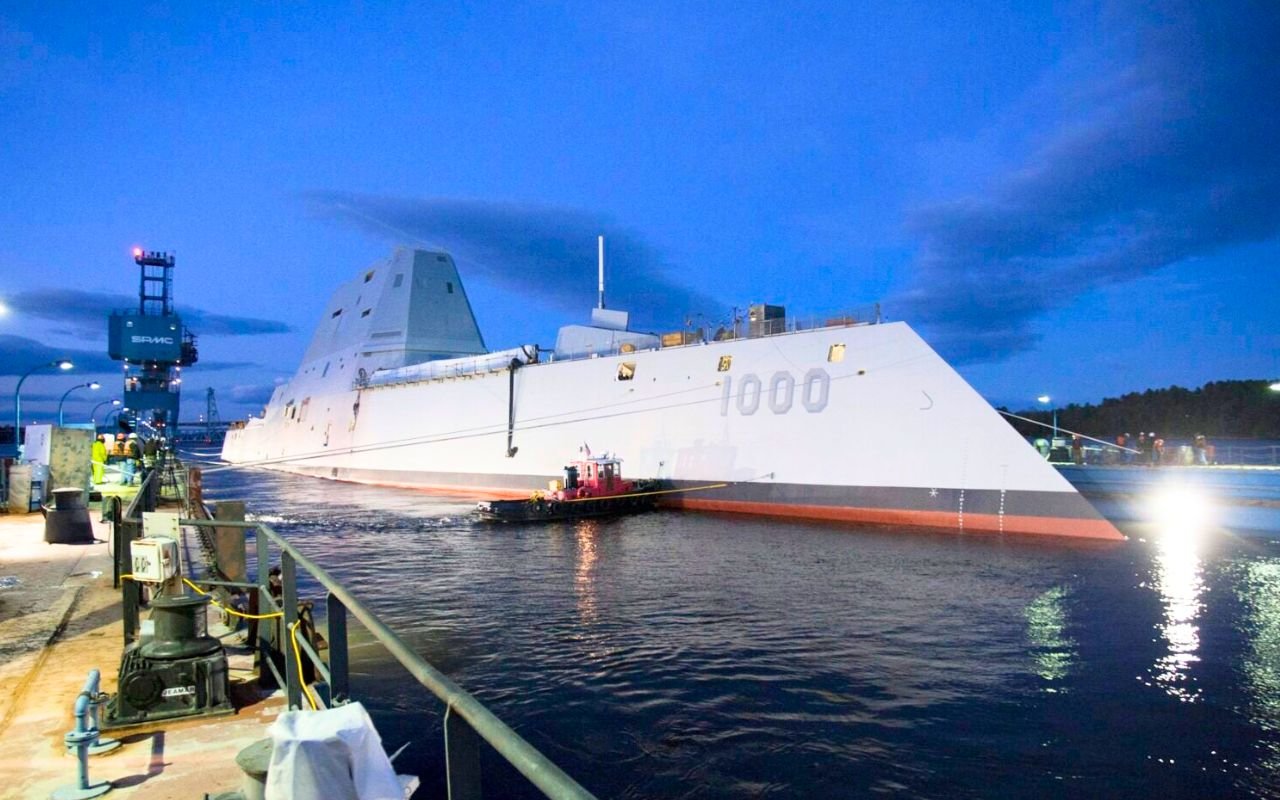
The U.S. Navy has awarded a $19.5 million contract aimed at enhancing the long-term support capabilities of its advanced Zumwalt-class destroyers, a move that strengthens the Navy’s futuristic fleet and promises strategic superiority in naval warfare.
The Zumwalt-class destroyers, known for their stealth technology and multi-mission capabilities, are entering a significant upgrade phase supported by a newly secured contract. These vessels, already a marvel of naval engineering, will benefit from improved maintenance frameworks, logistical support, and system upgrades designed to maximize their operational lifespan and combat readiness. As maritime threats evolve, the Navy’s investment reflects an effort to maintain technological edge and ensure these sophisticated platforms remain formidable assets.
Enhancing long-term support systems to sustain Zumwalt-class operational superiority
The $19.5 million contract awarded by the U.S. Navy focuses on bolstering the support infrastructure that maintains the Zumwalt-class destroyers’ unique capabilities over the coming years. Given these ships’ revolutionary design, regular maintenance and logistical support require advanced tailored solutions. The Zumwalt-class destroyers are equipped with a range of cutting-edge features including low radar signature hulls, advanced radar and sensor systems, and multi-mission capabilities emphasizing land attack and anti-submarine warfare. With all these high-tech components, sustaining peak performance hinges on a robust, responsive support system. This contract is a clear acknowledgement of the complexity involved in keeping these vessels mission-ready. Specifically, the contract covers engineering, programmatic support, and systems integration work that will update operational procedures and maintenance protocols. This not only improves the durability of current systems but also allows seamless integration of new technologies as they emerge. The contract funds will enable contractors to develop predictive maintenance technology, which uses data analytics and AI to anticipate system failures before they occur, considerably reducing downtime. In addition to maintenance, the contract ensures logistical supply chains are streamlined for energy-efficient spare parts and materials like advanced composites and specialized electronics. This is particularly crucial considering the Zumwalt-class’s unique and somewhat bespoke design, which cannot rely on standard destroyer parts. Enhancing supply reliability improves fleet resilience and keeps the vessels ready for immediate deployment. The focus on long-term support also stresses extended crew training programs, technical documentation upgrades, and enhanced cybersecurity protections to shield these highly digitized platforms against cyber threats, which have become a growing concern in modern naval warfare. The aim is to create a sustainable ecosystem that supports both the machine and its crew throughout the destroyers’ service life.
What makes Zumwalt-class destroyers a technology marvel demanding specialized support?
The Zumwalt-class destroyers represent a leap forward in naval design. Unlike traditional destroyers, they incorporate innovative stealth technology that minimizes radar detection, electronic warfare systems, and a radical hull design optimized for reduced acoustic and infrared signatures. These advantages come with complexities in terms of maintenance and operational support. For example, the Zumwalt’s unique tumblehome hull shape improves stealth and hydrodynamics but requires specialized dry dock facilities and maintenance tools. This shape also complicates repair tasks, which can’t simply rely on conventional shipyard procedures. In effect, support teams must be trained specifically for Zumwalt-class peculiarities. The ship’s dual-band radar system, combining SPY-3 and volume search radars, provides unprecedented situational awareness but demands consistent software updates and hardware calibrations for survival against modern electronic threats. Integrating these systems into broader naval networks requires continuous technical oversight. Another significant aspect is the advanced Total Ship Computing Environment (TSCE), managing more than 300 systems aboard through a single encrypted network. This comprehensive software backbone is critical but relies heavily on cybersecurity measures, fault tolerance, and constant updates. The contract’s emphasis on support acknowledges the technological magnitude and the necessity for expert upkeep to prevent system failures or cyber vulnerabilities. Providing ongoing support to Zumwalt-class destroyers also involves adapting to their evolving mission sets. While initially designed for naval gunfire support using the Advanced Gun System (AGS), shifts towards integrating hypersonic missiles and Conventional Prompt Strike (CPS) systems have altered their operational profile. These weapons systems involve novel propulsion and targeting technologies necessitating fresh logistical, technical, and maintenance approaches that the contract seeks to incorporate.
Challenges in maintaining such advanced systems
Maintaining a warship like Zumwalt is akin to supporting a floating technological city with unique infrastructure. Each element from propulsion to electronic warfare requires precision engineering and constant updates, which the Navy aims to address with this enhanced support contract. Many standard destroyers use gas turbines and existing munitions hardware, while the Zumwalt uses Integrated Power Systems (IPS) to drive electric motors that reduce noise and allow flexible power distribution. This increased complexity demands highly qualified personnel and specialized spare parts. Moreover, the need for quiet operation in anti-submarine warfare requires delicate adjustment and monitoring of these systems, again highlighting the importance of dedicated logistical support improvements.
The strategic and fiscal benefits of investing in prolonged destroyer support
Upgrading the support infrastructure for the Zumwalt-class destroyers is not solely a technical matter; it reflects broader strategic and budgetary reasoning. The initial program investment for these ships was approximately €7 billion per vessel, making it essential to protect their operational viability. Effective support extends the life cycle of these high-cost assets, avoiding premature retirement and expensive replacements. By allocating €19.5 million towards support optimization, the Navy is effectively reducing long-term operational costs. Enhanced predictive maintenance reduces unexpected repairs, saves manpower hours, and ensures fewer disruptions during missions. This efficiency translates to higher fleet readiness and strategic flexibility, both crucial in a global security environment marked by increasingly sophisticated adversaries. On the strategic front, improving support helps stabilize the Navy’s position in contested maritime regions by ensuring the Zumwalt-class ships remain combat-ready for their multi-domain missions. These destroyers’ ability to perform land attack, surface warfare, and anti-air capabilities provides commanders influential options in complex geopolitical scenarios where rapid response and stealth are vital. Fiscal prudence is also a key factor. The contract’s funding supports a long-term approach aimed at preventing costly emergency overhauls or rebuilds. It also creates a framework for seamless system upgrades, thus future-proofing the vessels against obsolescence. The Navy can roll out new hardware and software modules more efficiently as a result. Ultimately, prioritizing sustained support ensures that the Zumwalt-class remains an integral element of U.S. naval power projection well into the coming decades, delivering significant returns on the original investment.
Key technological innovations supported by the new contract
The $19.5 million contract facilitates a series of technological enhancements pivotal to maintaining Zumwalt-class destroyers’ edge. Among the innovations supported are:
- Advanced predictive maintenance systems that employ AI algorithms to analyze sensor data and forecast component wear and failure, allowing preemptive repairs.
- Cybersecurity reinforcement suites, ensuring protection against increasingly sophisticated cyber attacks targeting the integrated ship systems network.
- Improved logistics and supply chain technology to guarantee rapid sourcing of specialized materials and custom parts unique to the Zumwalt-class.
- Software upgrades for weapon system integration, enabling the deployment of the latest Conventional Prompt Strike missiles and other cutting-edge armament.
- Enhanced training tools incorporating virtual and augmented reality to prepare crews better for operating and maintaining complex systems.
Together, these innovations form a comprehensive support strategy that balances physical maintenance with technological foresight, which is critical for the Zumwalt’s continued dominance. For example, AI-powered predictive maintenance can prevent costly damage caused by unnoticed wear on propulsion modules, while sophisticated cybersecurity measures deter potential threats that could disable critical ship functions. The supply chain upgrades address the common challenge of logistics delays for custom components that standard naval vessels don’t require. Moreover, software refreshes will keep weapon systems ahead of enemy countermeasures. As the Navy intends to outfit Zumwalt-class destroyers with hypersonic missiles, integrating the necessary fire control and sensor fusion capabilities demands constant technical refinement—something that this contract supports fully. Enhanced training, through simulated environments, prepares crews for the hybrid warfare scenarios likely facing the Navy, where electronic warfare and cyber attacks blend with conventional combat operations. This holistic approach to ship and crew readiness represents a cutting-edge model for modern naval forces worldwide.
Operational advantages and challenges in integrating new weaponry with Zumwalt-class support infrastructure
One of the transformative evolutions for the Zumwalt-class destroyers enabled by this contract is the integration of next-gen weapons like the Conventional Prompt Strike (CPS) missile. This hypersonic missile allows rapid strike capability over hundreds of kilometers, reshaping naval engagement tactics. Integrating such weapons with the Zumwalt’s existing systems introduces both operational advantages and complex challenges. On the positive side, CPS integration expands the destroyers’ strike reach, allowing for quicker and more precise response options in contested environments. This extends the Navy’s strike capability far beyond traditional artillery ranges, transforming the Zumwalt into a potent force projection platform. However, the integration demands sophisticated coordination between weapon control, sensors, and shipboard data networks. Ensuring that the launch systems communicate flawlessly with the targeting and detection arrays requires rigorous testing and continuous software upgrades—part of the support contract’s mandate. Furthermore, the logistics chain must adapt to handle new types of missile components, payload storage needs, and safety protocols. Skilled maintenance teams must also be retrained to service these advanced armaments without disrupting other shipboard systems. Any misalignment or technical failure could compromise mission effectiveness or risk catastrophic damage.
Despite these challenges, the strategic gain is clear: enhanced firepower, increased survivability, and a more diverse operational profile. This multifaceted upgrade strengthens the Navy’s capacity to maintain dominance across multiple warfare domains.
| Aspect | Description | Impact | Associated investment (€) |
|---|---|---|---|
| Support system enhancements | Improved maintenance, logistics, and training | Increased operational readiness, reduced downtime | 19,500,000 |
| Predictive maintenance technology | AI-driven failure forecasting | Proactive repairs, cost savings | 7,200,000 |
| Cybersecurity upgrades | Enhanced network protection | Prevent cyberattacks, safeguard systems | 4,500,000 |
| Weapons system integration | Incorporation of hypersonic missiles | Extended strike capability | 5,800,000 |
| Crew training advancements | VR-based operational training | Improved crew preparedness | 2,000,000 |
What is the primary purpose of the $19.5 million contract for Zumwalt-class destroyers?
The contract is designed to improve long-term support infrastructure, including maintenance, logistics, and system upgrades to ensure the destroyers maintain operational readiness and technological supremacy over their service life.
Why do Zumwalt-class destroyers require specialized maintenance support?
Due to their advanced stealth design, unique hull form, integrated power systems, and sophisticated combat systems, Zumwalt-class destroyers demand tailored support that differs significantly from traditional naval vessels.
How will the integration of hypersonic missiles affect Zumwalt-class destroyer capabilities?
Integrating hypersonic Conventional Prompt Strike missiles will extend the destroyers’ strike range by hundreds of kilometers, providing rapid response options and transforming naval engagement tactics.
What role do AI and predictive maintenance technologies play in ship support?
AI-driven predictive maintenance analyzes system data to anticipate failures before they occur, helping to reduce downtime and repair costs, thereby enhancing mission readiness.
How does cybersecurity fit into the Zumwalt-class support plan?
Given the heavy reliance on integrated shipboard networks, enhanced cybersecurity measures are critical to prevent cyberattacks that could compromise weapon systems and operational control.
