
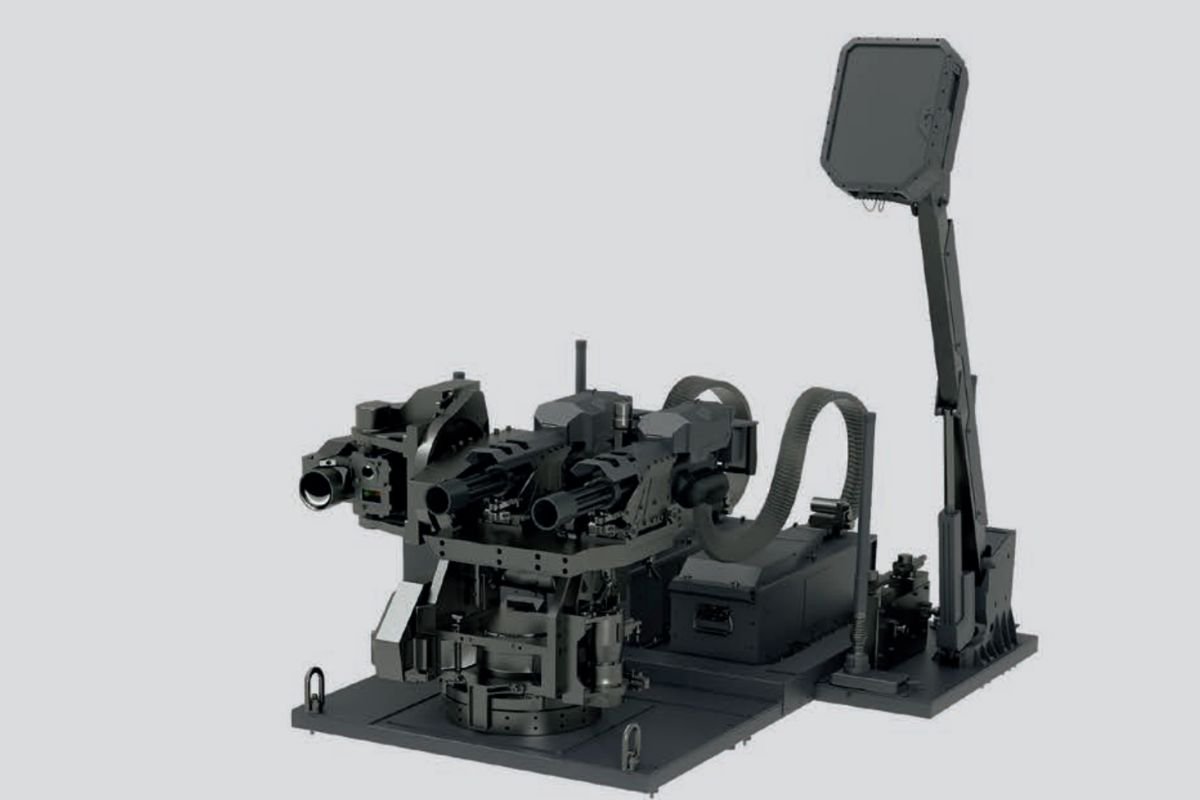
American Rheinmetall’s latest innovation is set to revolutionize aerial defense by introducing a specialized vehicle engineered to neutralize hostile drones swiftly and efficiently.
As drone technology advances globally, so does the threat it poses to military installations and critical infrastructure. Addressing this challenge, American Rheinmetall has launched a groundbreaking drone hunter vehicle that combines cutting-edge detection, targeting, and engagement systems. This vehicle aims to bolster defense strategies against increasingly sophisticated unmanned aerial threats. The unveiling at key defense expos has drawn widespread attention, positioning Rheinmetall as a pivotal player in next-generation air defense.
Technological breakthroughs in unmanned aerial threat detection and neutralization
One of the core advancements of American Rheinmetall’s drone hunter vehicle is its integration of multifaceted detection technologies. It employs a combination of high-resolution radar, electro-optical sensors, and advanced signal processing to identify and track drones of varying sizes and signatures. This combination is critical because modern drones often fly low and are designed to evade traditional radar systems by minimizing their radar cross-section. By merging these technologies, the vehicle ensures rapid target acquisition even in cluttered environments or urban areas.
Additionally, the vehicle utilizes artificial intelligence-based algorithms to differentiate between hostile drones and civilian UAVs, which is essential to avoid collateral damage and compliance with international operational standards. For instance, the AI system analyses flight patterns, speed, altitude, and signal types, constantly learning to improve its accuracy. Such adaptive algorithms significantly enhance the vehicle’s precision engagement capabilities.
Beyond detection, the vehicle is equipped with state-of-the-art electronic warfare modules. These feature directed jamming systems designed to disrupt drone communication and navigation. By cutting the drone’s command link, it effectively forces the hostile UAV to either land or return to its launch point. This disruption tactic is preferred as it avoids collateral damage and provides opportunities for drone capture and forensics.
Another remarkable system includes high-energy laser weapons capable of neutralizing micro UAVs with pinpoint accuracy. These lasers provide a silent, rapid, and economical way to engage threats without relying on traditional ammunition. The combination of kinetic, electronic, and directed energy countermeasures creates a robust multi-layered defense system, making the vehicle versatile for different combat theaters.
Integrating these technologies into a mobile platform is no small feat. Rheinmetall’s vehicle boasts a highly maneuverable chassis, designed to operate in demanding terrains while maintaining system stability. This mobility allows for rapid deployment close to the frontline or in protected perimeters, enabling continuous real-time defense coverage.
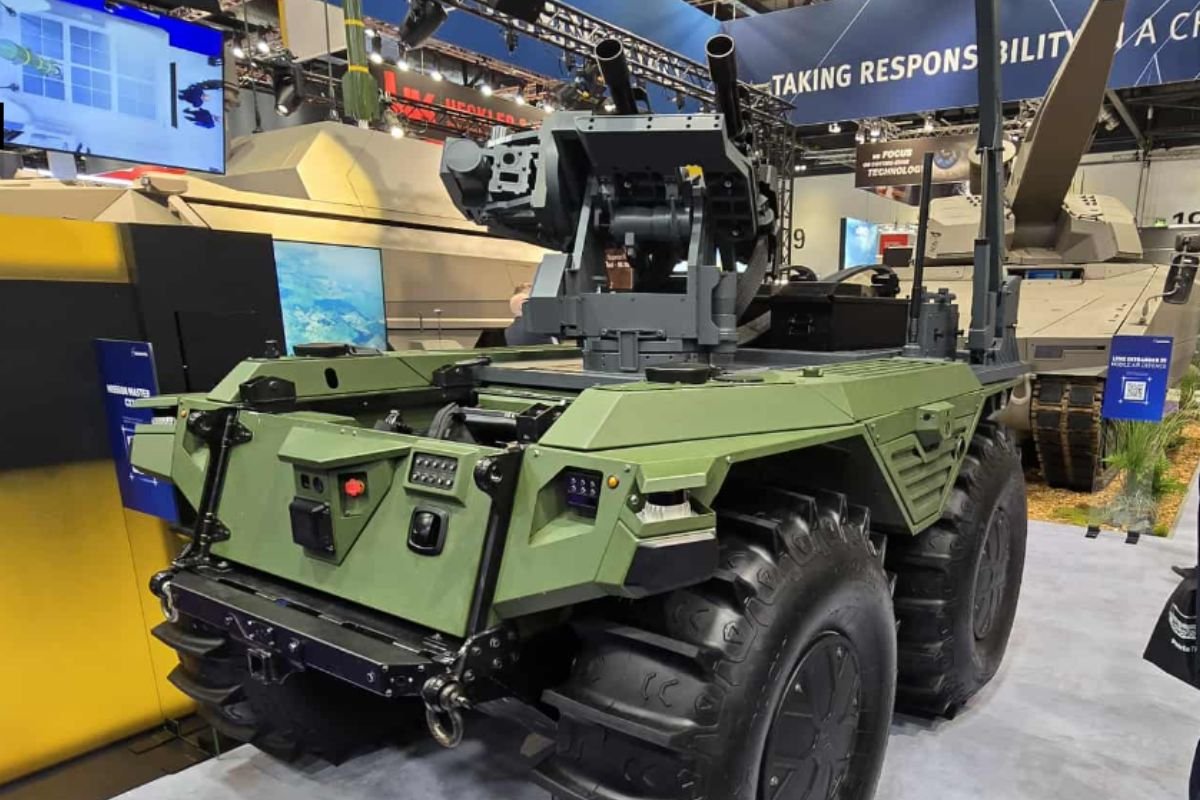
The company also presented the Mission Master CXT ground-based air-defense vehicle fitted with the Oerlikon Skyranger 762 module.
Strategic implications of advanced drone hunter systems for modern aerial defense
The emergence of advanced drone hunter vehicles is reshaping military strategies worldwide. Hostile drones have become a staple in asymmetric warfare, espionage, and even terrorist activities, necessitating effective countermeasures to maintain airspace security. The ability of Rheinmetall’s vehicle to autonomously detect, classify, and neutralize threats grants armed forces a substantial edge in controlling contested environments.
In particular, short-range air defense (SHORAD) is being redefined. Previously reliant on missile systems or man-portable air defense missiles, contemporary conflicts emphasize faster engagement cycles and scalable responses. The drone hunter vehicle fills this critical operational gap by enabling forces to counter low-flying, maneuverable drones that missiles might miss or prove too costly to engage. This effectiveness saves resources while maintaining robust defense postures.
Moreover, such vehicles can be networked into broader integrated air defense systems (IADS), feeding real-time threat data to command centers and allied units. This data sharing accelerates response times and threat prioritization, strengthening joint force defense. For example, in multinational exercises, these platforms can coordinate with aerial units and radar satellites to create a layered protective shield.
The operational flexibility also means the drone hunter system supports not only military but also critical civilian infrastructure security. Airports, power plants, government buildings, and large public events increasingly demand counter-drone solutions, and Rheinmetall’s vehicle is designed with modularity to adapt to various mission needs swiftly.
This strategic pivot underscores broader defense trends emphasizing autonomy, speed, and precision. As drone threats continue scaling in numbers and sophistication, investment in such cutting-edge defense tools becomes pivotal for both deterrence and rapid neutralization.
Design and operational features enhancing combat effectiveness and crew survivability
Beyond firepower and detection, American Rheinmetall has prioritized crew protection and operational efficiency in this drone hunter vehicle. The design includes an armored chassis that can withstand indirect artillery strikes and improvised explosive threats. This ensures the vehicle remains operational in hostile environments while protecting its operators.
The modular turret system features a remotely operated 30mm autocannon with airburst ammunition specifically engineered to engage small, fast-moving aerial targets like drones. A layered defense approach enables the vehicle to escalate responses depending on threat severity—from electronic jamming to lethal force engagement—thereby reducing collateral damage and conserving ammunition.
State-of-the-art communication suites enable secure, encrypted command and control linked to broader battlefield networks. This connectivity ensures that the vehicle can operate independently or in concert with other defense assets, maximizing flexibility.
Ergonomics also receive focused attention. The vehicle boasts advanced driver-assist technologies, including terrain-adaptive suspension and automated navigation aids, reducing crew fatigue during extended missions. The onboard human-machine interface supports intuitive control of complex sensor arrays, enabling fast decisions under pressure.
Maintenance and logistical support have been optimized with an open systems architecture allowing easy upgrades and integration of new counter-drone technologies as they arise. This future-proof approach is crucial amidst the rapid evolution of drone threats, guaranteeing that the vehicle remains at the technological forefront for years.
Industry collaborations and technological partnerships driving innovations in aerial defense
American Rheinmetall’s leap into advanced drone defense owes much to strategic collaborations with key aerospace and tech innovators. Partnerships with companies specializing in AI-driven sensor technology, high-energy laser development, and electronic warfare have fast-tracked the maturation of integrated systems crucial for combat operation efficiency.
A notable alliance includes the cooperation with cutting-edge drone detection startups, which provide enhanced algorithms for real-time target discrimination and threat assessment. This ensures the vehicle’s AI not only adapts to new drone models but anticipates evolving adversary tactics.
Similarly, collaborative programs with energy weapon manufacturers have led to the adaptation of compact, rugged laser platforms tailor-made for mobile air defense applications. These energies complement Rheinmetall’s kinetic and electronic countermeasures, assembling a robust, multi-tiered shield against drone swarms.
On the production side, Rheinmetall leverages long-standing expertise in military vehicle manufacturing, combining precision engineering with scalable digital systems. Such synergies drive the creation of vehicles that embody reliability, survivability, and cutting-edge capability.
This ecosystem of partnerships highlights an industry-wide shift toward integrated, multi-domain defense solutions, where combining diverse technologies is essential for outpacing emerging drone-enabled threats.
Future trends and potential battlefield impact of autonomous drone hunter vehicles
The introduction of autonomous drone hunter vehicles like Rheinmetall’s prototype signals a significant shift towards fully autonomous air defense within the military landscape. These vehicles are expected to reduce human intervention during high-threat scenarios, relying on AI for rapid threat response, which is critical when reaction times are measured in seconds.
Future development paths include enhanced swarm defense capabilities, where multiple autonomous vehicles collaborate dynamically to neutralize drone swarms. Such cooperative behavior would involve shared situational awareness, distributed sensor fusion, and coordinated targeting, multiplying the effectiveness of aerial defense.
The integration of advanced machine learning models will also enable predictive threat analysis, preempting attacks based on drone flight patterns or behavioral anomalies detected through big data analysis. This predictive element could shift defense from reactive to proactive modes.
Moreover, efforts are underway to reduce logistical footprints by developing more energy-efficient power systems, extending operational endurance, and enabling deployment in austere environments without frequent resupply. These improvements prolong mission duration and coverage, essential for sustained defense operations.
The battlefield impact of such vehicles is profound: they promise to safeguard troops, critical infrastructure, and civilian populations from the growing menace of drone attacks, while redefining traditional air defense paradigms with swift, scalable, and cost-effective solutions.
| Feature | Description | Operational benefit |
|---|---|---|
| Multi-sensor detection suite | Combines radar, electro-optical sensors, and AI algorithms | Enables rapid and accurate identification of hostile drones |
| Directed electronic jamming | Targets enemy drone communications and navigation | Disrupts control without causing collateral damage |
| High-energy laser weapon | Silent, precise neutralization of small UAVs | Cost-effective and efficient engagement |
| Armored and mobile chassis | Designed for rugged terrains with crew protection | Ensures operational continuity in hostile zones |
| Modular turret with 30mm autocannon | Airburst ammunition for drone engagement | Flexible response options according to threat level |
- High adaptability due to modular design allowing future system upgrades
- Seamless integration with networked battlefield defense systems
- Enhanced crew survivability through protective armor and ergonomic controls
- Multi-layered defense with kinetic, electronic, and laser countermeasures
- Rapid deployment capability in diverse operational environments
What types of drones can the Rheinmetall hunter vehicle target?
The vehicle is designed to detect and neutralize a wide range of hostile drones, from micro UAVs to larger tactical drones, thanks to its versatile detection and engagement systems.
How does the vehicle distinguish between friendly and hostile drones?
Using advanced AI algorithms analyzing flight patterns, signal types, and behavior, the system can accurately discriminate between civilian or friendly drones and potential threats.
Is the drone hunter vehicle fully autonomous?
The vehicle supports autonomous operations with AI-driven target recognition and engagement, though it also allows for remote human oversight and control for greater operational flexibility.
Can this vehicle be integrated into existing air defense networks?
Yes, it is designed with an open systems architecture enabling seamless integration into broader battle management and air defense networks.
What role do high-energy lasers play in this system?
Lasers provide silent, rapid, and precise elimination of small drones, complementing kinetic and electronic methods to offer multi-layered aerial defense.
Source: https://www.rheinmetall.com/Rheinmetall%20Group/brochure-download/Air-Defence/D1198e0825-Oerlikon-Skyranger-762-U-SHORAD-RCWS.pdf
