
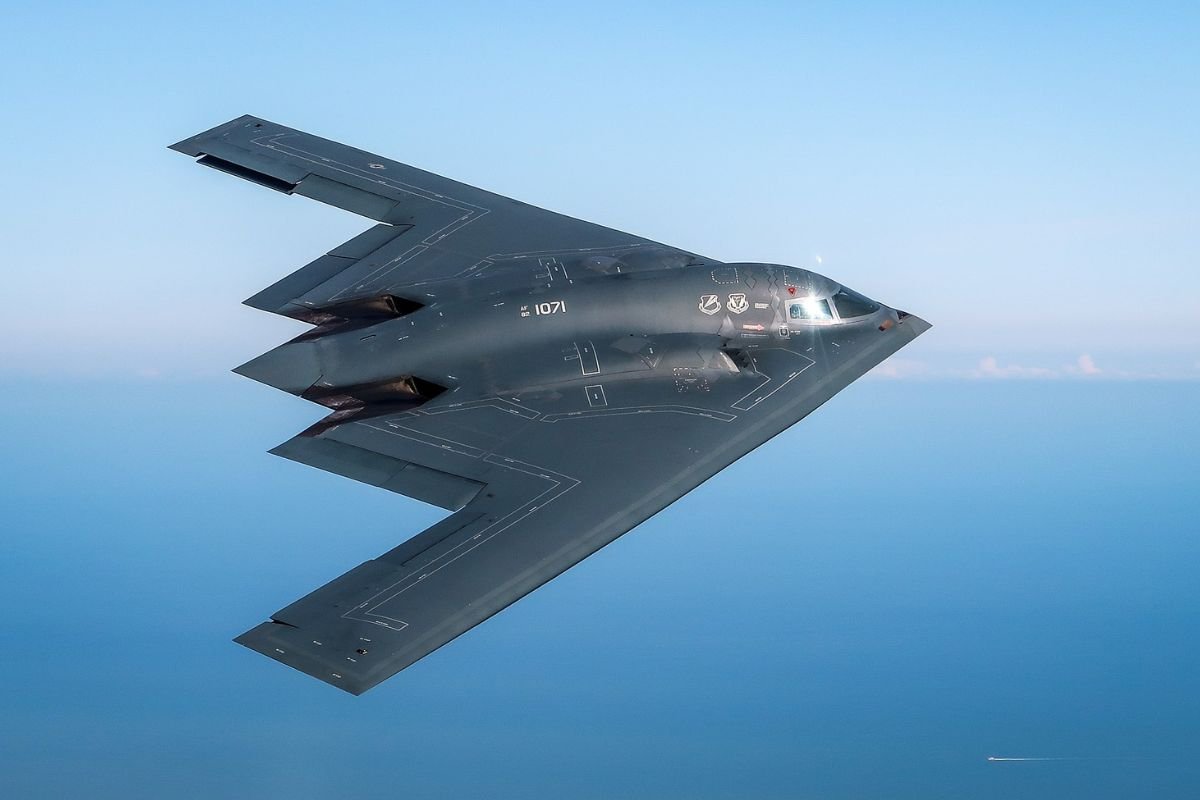
U.S. strategic bombers are intensifying their bombardment of Iran’s deeply fortified nuclear and military facilities, leveraging a mix of stealth technology and heavy payload capacity to maintain relentless pressure.
For months, the skies over Iran have witnessed a significant escalation in U.S. air campaigns, with B-1B Lancer, B-52 Stratofortress, and B-2 Spirit stealth bombers spearheading the efforts. These aircraft, operating from key bases like RAF Fairford in the UK and Whiteman Air Force Base in Missouri, are targeting an intricate network of military, nuclear, and drone infrastructure. The blending of classic heavy bombers with cutting-edge stealth technology illustrates the evolving approach of American air warfare, especially amid ongoing concerns about Iran’s underground nuclear developments and drone capabilities. Below we examine how these bombers operate in tandem, the tactical advantages they provide, and the challenges faced in neutralizing one of the Middle East’s most complex target environments.
Strategic use of legacy and stealth bombers for high-impact strikes on Iran’s fortified targets
The coordination between B-1B, B-52, and B-2 bombers highlights the U.S. military’s layered offensive strategy aimed at striking hardened Iranian targets. The B-2 Spirit, known for its ability to penetrate advanced air defenses undetected, delivers heavy payloads of bunker-busting bombs such as the massive 30,000-pound GBU-57/B Massive Ordnance Penetrator (MOP). This weapon can demolish deeply buried underground facilities, including Iran’s clandestine nuclear sites. Though the MOP sees targeted use, the more numerous B-1B and B-52 aircraft complement these strikes by deploying smaller but highly effective “mini-MOPs” – BLU-109 2,000-pound penetration bombs attached to GBU-31 JDAMs (Joint Direct Attack Munitions).
Operating primarily from RAF Fairford, the B-1B Lancers have rapidly become central to the bunker-busting campaign. Their capability to deliver high volumes of precision strikes in “cleared” airspace allows sustained pressure on Iran’s nuclear infrastructure, with twelve Lancers supported by three B-52s flying sorties focused on disrupting command centers and industrial complexes. These high-volume strikes are crucial for preventing Iran from rehabilitating or reinforcing sites previously targeted in operations like Epic Fury.
The B-52 Stratofortress, despite its vintage origins, remains an adaptable powerhouse. Its wide payload capacity and long-range strike efficiency enable the U.S. Air Force to deploy a relentless bombardment campaign armed with cruise missiles such as the JASSM (Joint Air-to-Surface Standoff Missile) alongside bunker busting JDAMs. Together, these bombers maintain a relentless tempo, showcasing how legacy platforms still hold strategic significance in 21st-century conflicts through modernization and tactical innovation.
Examples of recent coordinated strikes and their tactical impact
On March 11, a notable strike using the B-2 Spirit targeted the Taleghan 2 nuclear facility near Tehran with MOP bombs, marking a significant blow to one of Iran’s key nuclear sites. Simultaneous deployments of B-1B and B-52 bombers executed precision strikes against command bunkers and missile production factories within the region, showcasing the layered targeting approach designed to throttle Iran’s strategic capabilities comprehensively.
Notably, American and Israeli intelligence confirmed the suppression and elimination of many of Iran’s active air defenses, creating corridors of safer passage for non-stealth bombers like the B-1B, enabling these aircraft to conduct strikes that would otherwise be too risky. This shift in control over Iranian airspace has been pivotal in maintaining the intensity and frequency of bombing runs.
Such coordinated operations exemplify how technological advances and strategic airpower integration can jointly pressure a complex adversary, balancing stealth attacks with high-volume, less stealth-dependent strikes to maintain continuous operational momentum.
Mini-MOPs and the evolution of bunker-busting tactics in Iran’s underground conflict
The introduction of smaller but highly effective bunker-busting munitions like the BLU-109 warhead has revolutionized the U.S. Air Force’s capability to target subterranean infrastructure in Iran. These “mini-MOPs” are a cost-effective alternative to the traditional Massive Ordnance Penetrator bombs and can be deployed in greater numbers from B-1B and B-52 platforms. The BLU-109’s 2,000-pound warhead can penetrate fortified concrete and soil layers to reach underground bunkers, which have become prevalent as Iran attempts to shield its nuclear programs from airstrikes.
This tactical adjustment reflects the realities of modern warfare where softened air defenses allow non-stealth bombers to take on roles formerly reserved for stealth platforms. The B-1B’s capacity to carry these mini-MOPs signifies confidence in its precision strike capability and survivability in contested but controlled airspace.
Furthermore, the deployment strategy sends a psychological signal to Tehran: the continuous presence and open visibility of these bombers at RAF Fairford indicate that the U.S. is committed to sustained pressure. The public and deliberate nature of this deployment contrasts with covert strikes, underscoring strategic resolve.
While the mini-MOPs may not match the devastation of the GBU-57/B, their relative affordability and production ease allow for prolonged campaigns without the logistical burdens associated with heavier weapons. As a result, these munitions play a critical supporting role in the effort to dismantle Iran’s deep underground facilities, which remain a persistent challenge to neutralize fully.
Advantages and limitations of mini-MOPs in the ongoing air campaign
One major advantage is the volume at which these smaller bunker-busters can be delivered, allowing for widespread targeting across multiple key sites. They excel in collapsing the entrances of missile “cities” — vast underground complexes used for missile storage and launch preparation — thereby effectively immobilizing large portions of Iran’s missile arsenal.
However, limitations exist. Although BLU-109 warheads are potent, their penetration ability is less than the massive 30,000-pound MOP bombs, raising questions about their effectiveness against deeply buried facilities reinforced with layers of concrete, earth, and sand. Yet, this approach remains viable given intelligence indicating Iranian efforts to simply entomb key sites, which can be disrupted without always completely demolishing the entire complex.
The table below illustrates the primary bunker-busting weapons and their deployment platforms actively used in strikes on Iran:
| Weapon system | Weight (kg) | Carrier aircraft | Target type |
|---|---|---|---|
| GBU-57/B Massive Ordnance Penetrator | 13,600 | B-2 Spirit | Deep underground nuclear facilities |
| GBU-31 JDAM w/ BLU-109 warhead (Mini-MOP) | 907 | B-1B Lancer, B-52 Stratofortress | Hardened bunkers, missile storage entrances |
Targeting Iran’s drone network and unmanned missile infrastructure
The rise of loitering munitions and kamikaze drones in Iran’s arsenal represents a growing threat to regional stability, forcing the U.S. and its allies to adapt their air campaigns accordingly. While ballistic missile capabilities have been largely degraded by precision strikes, Iran’s development of drone swarms poses a complex interdiction challenge, as these unmanned systems are harder to intercept and can overwhelm existing defense systems.
Destroying drone production and launch facilities has become a priority to prevent these weapons from saturating the battlefield. B-52 bombers, with their payload flexibility, are actively engaged in disrupting these drone manufacturing hubs. The inability of missile interceptors to keep pace with the sheer volume of incoming unmanned threats has even accelerated research and limited deployment of laser-based counter-drone technologies.
Israel’s Iron Beam laser system has shown promise in shooting down drones within its airspace, but similar directed-energy systems in U.S. hands remain experimental and not yet operationally widespread. This technological gap underscores the urgency in targeting the drone infrastructure at its root rather than relying solely on defensive measures.
Efforts to degrade Iran’s drone capability are not only about current battlefield concerns but also a strategic move to limit Tehran’s future offensive options. By neutralizing these facilities, the U.S. aims to reduce the proliferation and operational effectiveness of Iranian drones that threaten allies throughout the Middle East.
Air superiority and the geographic targeting strategy in the Iran conflict
Maintaining control over Iranian airspace is vital to the effectiveness of bomber missions focusing on western Iran, where air defenses have weakened significantly. The relative degradation of enemy radar and missile systems in the west allows B-52s and B-1Bs to strike with reduced risk. Meanwhile, stealth aircraft like the B-2 Spirit undertake missions in the more heavily defended eastern parts of the country.
This geographic distribution of strike assets optimizes the use of each bomber platform’s strengths, balancing risk and payload delivery capacity. By assigning B-52s and B-1Bs to areas with diminished integrated air defenses, the U.S. forces can sustain a heavy strike volume, wearing down Iranian capabilities faster and enabling more precise, stealthy incursions elsewhere.
The broader air campaign aims to fully dismantle Iran’s nuclear infrastructure over time. However, challenges such as battle damage assessment complicate confirmation of target destruction. Satellite imagery and intelligence analysis are critical to verifying whether strikes have incapacitated their intended targets or if further attacks are needed.
Key bomber platforms: capabilities and evolving roles in sustained air campaigns
The ongoing Iran air campaign demonstrates the utility of legacy bombers reinvented for modern warfare alongside cutting-edge stealth platforms. Here’s a breakdown of the principal bombers involved:
- B-2 Spirit: The stealth powerhouse uniquely capable of deploying the Massive Ordnance Penetrator for deep strikes on the most hardened underground facilities.
- B-1B Lancer: The flexible “bomb truck,” favored for delivering large payloads of mini-MOPs and JDAMs in cleared airspace, increasingly central for bunker-busting missions targeting Iran’s reburied nuclear sites.
- B-52 Stratofortress: Versatile and heavily armed, equipped to launch cruise missiles like JASSM alongside bomb loads, providing high-volume strike capabilities and extended range operational flexibility.
This trio’s integration allows the U.S. Air Force to tailor strike packages and sustain pressure across a broad operational spectrum. While technology evolves, the enduring relevance of these bombers underscores their adaptability and essential roles in confronting modern battlefield challenges.
What are mini-MOPs and why are they important?
Mini-MOPs are smaller bunker-busting bombs, specifically GBU-31 JDAMs fitted with 2,000-pound BLU-109 warheads. They provide a cost-effective and versatile way to target hardened underground facilities in Iran, complementing the larger Massive Ordnance Penetrator bombs.
Why are B-1B Lancers trusted for bunker-busting missions in Iran?
B-1B Lancers combine large payload capacities with high speed and range. After suppression of enemy air defenses, they operate effectively in ‘cleared’ airspace to deliver precise strikes using mini-MOP munitions, making them crucial for sustained bombardment campaigns.
How does the U.S. adapt to the threat posed by Iranian drones?
The U.S. targets drone production and launch facilities to disrupt swarm attacks, while experimental laser defense systems are being developed. Meanwhile, strategic bombing campaigns aim to degrade Iran’s drone capabilities at their source to reduce their operational impact.
How is battle damage assessment conducted in this conflict?
Assessment relies on satellite imagery and intelligence analysis to determine if strikes have fully neutralized Iran’s underground facilities. The ongoing reinforcement of these sites by Iran complicates verification, necessitating continuous monitoring.
Why is the U.S. using B-52s and B-1Bs instead of relying solely on stealth bombers?
While stealth bombers like the B-2 conduct high-risk missions in heavily defended areas, B-1Bs and B-52s are deployed in parts of Iran with degraded air defenses, enabling high-volume strikes with larger payloads and maintaining operational tempo.
Sources:
- https://iranwire.com/en/news/149980-centcom-b-2-stealth-bombers-strike-200-targets-deep-inside-iran
- https://www.flightglobal.com/fixed-wing/us-bombers-strike-deep-into-iran-as-epic-fury-intensifies/166515.article
Image: A U.S. Air Force B-2 Spirit stealth bomber, deployed to RAF Fairford in Gloucestershire, flies over the English countryside near Dover during training operations.
For the first time, RAF F-35B Lightning fighters conducted integration flights with USAF B-2 bombers, highlighting close NATO cooperation and joint 5th-generation airpower training.
