
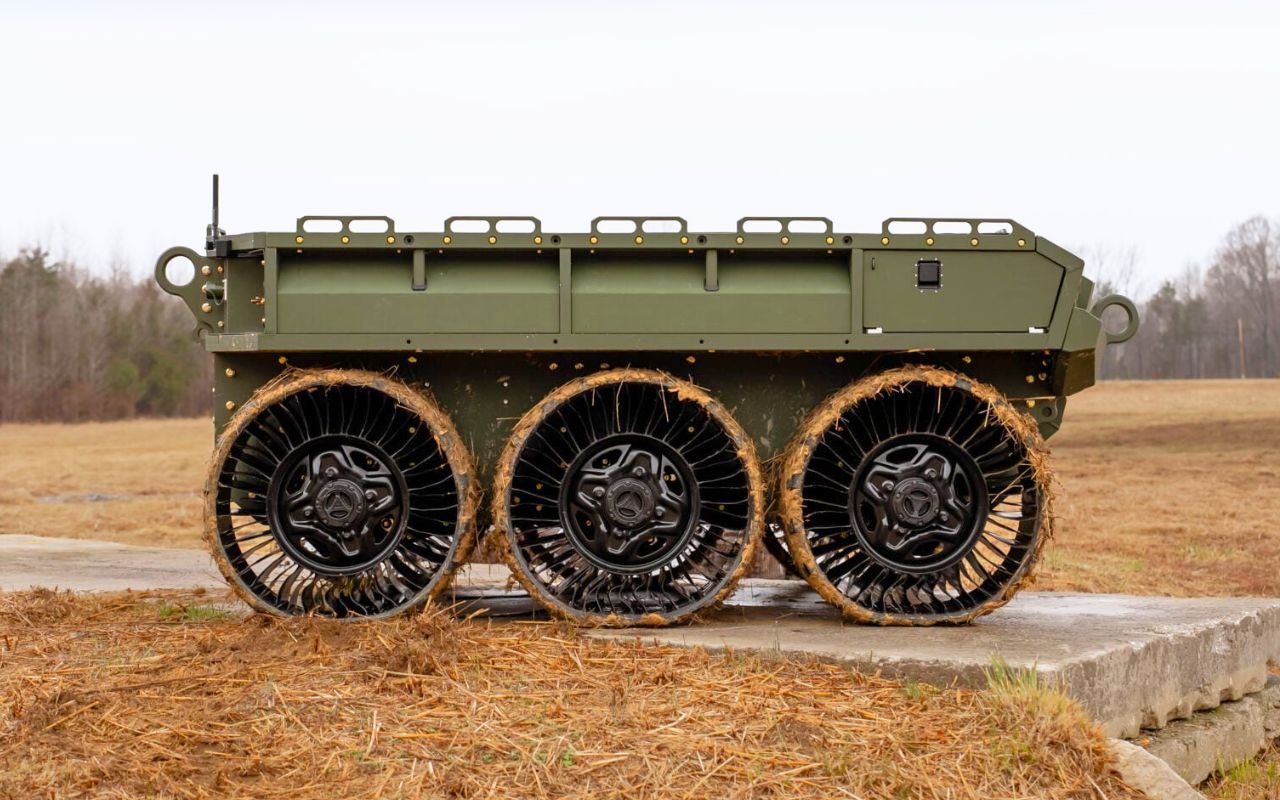
The military robotics sector is rapidly evolving as HDT Robotics steps into the spotlight by launching operational trials of the cutting-edge Hunter WOLF unmanned ground vehicles (UGVs).
HDT Robotics has begun real-world operational tests of their revolutionary Hunter WOLF UGVs, aiming to redefine tactical mobility and logistics in defense arenas. These trials are poised to evaluate how well the Hunter WOLF adapts to diverse combat scenarios, pushing the limits of autonomy, transportability, and stealth. The initiative signals a pivotal shift in military technology, emphasizing autonomous ground systems that lessen human risk and enhance battlefield efficiency.
Next-generation unmanned ground vehicles steering battlefield logistics into the future
The Hunter WOLF represents a significant advance in unmanned ground vehicle technology deployed by HDT Robotics, tailored specifically for the demands of contemporary and future military operations. At its core, the Hunter WOLF features a robust 6×6 wheeled platform designed to tackle rugged terrain, carry heavy payloads, and provide reliable power export through its hybrid electric drive system. These characteristics enable it to operate alone or alongside troops, significantly improving tactical mobility and logistical support.
Tactical mobility is a focal advantage: the vehicle’s 6-wheel drive in combination with electric motors offers exceptional traction and silent operation, minimizing noise signatures which is critical during covert missions. This stealth capability, paired with the sturdy steel frame, ensures durability under rigorous environmental conditions—from deserts and mountains to urban landscapes—where conventional vehicles might falter.
Additionally, the Hunter WOLF’s hybrid electric drive amplifies endurance by merging the benefits of electric efficiency with combustion engine range extension. This dual approach means the vehicle can silently maneuver into position before activating the combustion engine for extended missions, thus blending endurance and stealth without compromising either. In practical terms, such engineering allows forces to depend more heavily on unmanned systems for supply runs, casualty evacuation, and electronic system power support.
Examples from recent military exercises have shown the Hunter WOLF successfully transporting ammunition and medical supplies across difficult terrains, reducing the physical burden on soldiers and accelerating resupply timelines. This translates into operational agility that can often tip the balance during fast-paced engagements.
Operational flexibility is another aspect where the Hunter WOLF shines. Its modular design allows for quick reconfiguration to carry various payloads, including communications gear, sensors, or weapon stations. This versatility means the vehicle can evolve with mission requirements, adapting to evolving threats or logistical needs.
How HDT Robotics’ Hunter WOLF is reshaping unmanned support vehicles for harsh combat environments
Operating in hostile and unpredictable environments demands superior reliability and ease of maintenance—criteria that HDT Robotics has embedded deeply into the Hunter WOLF’s design ethos. The vehicle’s steel frame not only provides ruggedness but also allows for simplified field repairs, a critical factor when deployed far from supply bases. Combined with its electric and hybrid powertrain, the vehicle minimizes thermal signatures and reduces overall maintenance demands by having fewer moving parts than traditional internal combustion vehicles.
The hybrid-electric architecture is a breakthrough for unmanned ground systems, facilitating silent approach capabilities and rapid energy management. The system’s efficient power export can support troops by powering communications, sensors, or other tactical equipment remotely, essentially acting as a mobile energy node on the battlefield. For soldiers operating in remote or high-risk areas, this capability can be a game changer, ensuring devices and systems stay operational without adding additional personnel risks.
During the initial operational trials, the Hunter WOLF has demonstrated remarkable endurance, successfully completing missions over extended hours with minimal intervention. This kind of performance enables longer patrols, fewer logistical choke points, and an overall reduction in human exposure to enemy fire.
Furthermore, its stealth features have been tested in simulated environments replicating enemy observation conditions. The low noise emissions and minimized heat signatures help the Hunter WOLF blend into surroundings, reducing detection risk during night and day operations.
Case studies from recent field exercises highlight the vehicle’s capacity to operate in extreme weather conditions. Whether crossing muddy slopes after heavy rains or ascending rocky inclines in cool mountainous regions, the Hunter WOLF maintained consistent speed and stability, showcasing its superior mechanical design and software-guided navigation systems.
Strategic impact of Hunter WOLF trials on future armed forces mobility and autonomy programs
The ongoing trials of the Hunter WOLF UGV are not just about proving its physical capabilities but are fundamentally reshaping how future armed forces envision mobility on the ground. With increasing emphasis on robotic autonomy and logistical efficiency, platforms like the Hunter WOLF are key to reducing soldier fatigue and casualty rates by offloading burdensome tasks such as heavy transport or hazard area supply delivery.
Military strategists underline that integrating such unmanned platforms enhances situational awareness and operational reach. The data collected during trials feeds into training and deployment protocols, ensuring that human commanders can better leverage the vehicle’s autonomous navigation, obstacle avoidance, and payload management. Sophisticated sensors aboard the Hunter WOLF relay critical environmental intelligence, effectively serving as a force multiplier.
HDT Robotics’ partnership with the US Army’s Small Multipurpose Equipment Transport (S-MET) Increment II program underscores the tactical value the Hunter WOLF adds. By automating routine transport missions, this reduces manpower requirements and streamlines coordination under fire or in complex environments. Such advances have implications for both combat and disaster relief scenarios where rapid, dependable mobilization can save lives.
Additionally, the lessons drawn from these trials influence future development trajectories for unmanned ground vehicles. Autonomous systems must integrate seamlessly with broader military assets such as aerial drones and satellite communications, reinforcing a networked approach to modern warfare.
The impacts of these programs ripple beyond just troop support; they affect doctrine, training, and procurement decisions across allied defense forces, aiming for interoperable autonomous assets that function cohesively in joint operations worldwide.
Technological breakthroughs empowering the hybrid electric drive and stealth capabilities of Hunter WOLF
The Hunter WOLF is a showcase of cutting-edge hybrid electric propulsion combined with advanced robotics software, producing a vehicle that excels in stealth and endurance. The hybrid system deploys electric motors for quiet movement, critical in reconnaissance or covert resupply missions, while a combustion engine activates when extended range or power burst is necessary. This energy management strategy significantly reduces the vehicle’s acoustic and infrared footprints.
This hybrid approach also allows the Hunter WOLF to export power efficiently, functioning as a mobile power supply for auxiliary systems, a feature that saves energy and enhances operational sustainability by allowing critical communication and sensor arrays to operate independently of fixed bases.
Beyond propulsion, the vehicle’s design integrates stealth materials and shapes that reduce radar cross-section while the electric components diminish electromagnetic emissions. Together, these attributes make the Hunter WOLF difficult to detect or target, even in contested environments.
Software innovations enable the platform to adapt dynamically to terrain changes, regulate power distribution, and execute autonomous navigation with minimal human inputs. AI-driven obstacle detection and avoidance systems maintain a smooth and safe path, critical when operating beyond line-of-sight.
These technological breakthroughs elevate the Hunter WOLF beyond a simple transport vehicle to an intelligent platform enhancing battlefield survivability and mission success.
Operational trial schedule and key milestones for Hunter WOLF deployment
| Date | Milestone | Description |
|---|---|---|
| January 2026 | Initial field deployment | Hunter WOLF units delivered for first operational evaluation in realistic military scenarios |
| March 2026 | Extended endurance testing | Vehicle performance assessed over prolonged operations including silent movement and power export |
| May 2026 | Stealth and detection trials | Evaluation of noise, thermal, and electromagnetic signature reduction under simulated enemy surveillance |
| July 2026 | Payload versatility assessments | Testing modular configurations for different mission requirements including communication and supply roles |
| September 2026 | Integration with command networks | Demonstrations of Hunter WOLF coordination with manned units and other autonomous systems |
| November 2026 | Final evaluation and recommendations | Comprehensive reporting and recommendations for full operational adoption |
This timeline represents the strategic phases leading up to large-scale deployment, aiming to optimize reliability, versatility, and soldier safety through exhaustive testing and operational feedback.
The above video showcases the Hunter WOLF navigating through rugged conditions, emphasizing stealth and autonomous capabilities demonstrated during field tests.
This second video details the hybrid electric drive system and stealth features that set Hunter WOLF apart from previous generation unmanned ground vehicles.
Key advantages and versatile applications for Hunter WOLF in modern military operations
- Enhanced logistical support: capable of transporting heavy equipment and supplies independently.
- Force protection: reduces risk to personnel by undertaking hazardous missions in contested zones.
- Stealth operational capacity: low noise and heat emissions critical for covert maneuvers.
- Modular payload design: adaptable for multiple roles including communication relay, sensor deployment, and medical evacuation.
- Energy export functionality: can provide mobile power to remote bases or tactical equipment.
- Autonomous navigation and obstacle avoidance: decreases operator workload and enables efficient mission execution.
What missions is the Hunter WOLF best suited for?
Hunter WOLF excels in tactical logistics, covert supply runs, casualty evacuation, and acting as a mobile power source in rugged or hostile environments.
How does the hybrid electric drive enhance operational capability?
The hybrid electric drive allows quiet approach and extended range, combining electric motor efficiency with combustion engine reliability for prolonged missions without compromising stealth.
What makes Hunter WOLF’s stealth features effective?
A combination of reduced noise emissions, minimized heat signatures, and low electromagnetic output makes Hunter WOLF less detectable in battlefield conditions.
Can Hunter WOLF carry weapon systems?
While primarily designed for logistics and support, the Hunter WOLF’s modular payload system allows for integration of light weapon stations depending on mission requirements.
What stages are involved in Hunter WOLF’s operational trials?
The trials include initial deployment, endurance and stealth tests, payload versatility assessments, network integration, and final operational recommendations before full adoption.
