The Iran conflict has catapulted China’s stealth bomber ambitions into overdrive, revealing the strategic pressure Beijing faces in perfecting its H-20 long-range strike platform.
Amid the unfolding military operations in Iran, the spotlight on stealth aircraft capabilities has intensified, proving the unparalleled value of such platforms in modern warfare. As the United States deploys bombers like the B-2 Spirit with devastating precision, China’s race to bring its Xian H-20 stealth bomber from prototype to battlefield readiness is accelerating. This emerging dynamic could reshape the balance of aerial power across the Indo-Pacific and beyond.
How Iran conflict highlights the growing indispensability of stealth airpower
The ongoing air campaign targeting Iranian military infrastructure has underscored a decisive trend in 21st-century conflict: stealth technology is the backbone of successful air operations. Over 2,000 key targets, including missile sites and nuclear facilities, suffered precise strikes within the initial 100 hours of combat, many executed by cutting-edge platforms such as the Northrop Grumman B-2 Spirit. This aircraft’s ability to penetrate heavily defended airspace undetected and deliver bunker-busting ordnance has proven its critical importance.
Stealth assets clearly continue to provide the most reliable means of achieving air superiority and suppressing enemy defenses quickly. While Iranian radar and missile systems are considered outdated compared to Western countermeasures, they do represent a real threat, highlighting the challenges any adversary faces when operating in hostile airspace. The B-2’s repeated successful sorties to sensitive sites at Fordow, Isfahan, and Natanz serve as a live-fire demonstration of stealth’s strategic value.
For military planners worldwide, watching these strikes unfold offers an invaluable case study. The opening days of the conflict reaffirm the model of initiating wars with stealth aircraft to dismantle defensive networks and pave the way for broader air and ground operations. The pattern is consistent with previous campaigns in Iraq and Afghanistan, solidifying the stealth-led air campaign as modern airpower’s keystone strategy.
China, notably lacking combat-proven operational experience, has closely monitored these developments. Its military has dedicated years to studying American stealth tactics and technologies, understanding that true air dominance depends heavily on the capacity to strike unseen and unchallenged deep into enemy territory. This insight brings into sharp focus the urgent strategic need driving China’s H-20 bomber program, designed precisely for extended-range penetration operations.
An airpower revolution under way
These stealth aircraft reshape the paradigm by emphasizing precision, surprise, and deterrence over sheer numbers of sorties or aircraft. The ability to neutralize key military assets swiftly translates into strategic leverage, often altering the course of conflicts before ground forces are significantly deployed.
The campaign in Iran exemplifies this revolution. Rather than relying on massed air strikes, a handful of high-value platforms with advanced stealth and ordnance capabilities have imposed disproportionate damage while minimizing aircraft losses. This trend may also encourage investments in unmanned stealth systems and hypersonic weapons, but for now, manned stealth bombers remain the gold standard for strategic strike roles.
China’s current bomber fleet and the gap the H-20 aims to fill
China’s legacy bomber force is centered on the Xian H-6 series, derived from the 1950s Soviet Tupolev Tu-16. While significantly modernized with newer engines and the ability to launch long-range cruise missiles, the H-6 remains a subsonic platform fundamentally limited in its penetration capabilities. It generally conducts standoff strikes from outside well-defended enemy airspace rather than entering contested zones.
This limitation becomes critical when considering the evolving nature of threats in the Asia-Pacific, where U.S. allied networks deploy layered air defenses capable of inflicting severe losses on exposed aircraft. The H-20 stealth bomber is intended to transform this paradigm by enabling China to strike at strategic targets deep within adversary territory with minimal detection risk.
The H-20 is envisaged as a flying-wing platform, echoing the design philosophies of the American B-2 Spirit and upcoming B-21 Raider. Expected to boast a range surpassing 8,500 kilometers and payload capacity upwards of 10,000 kilograms, the H-20 would shift China’s strike capabilities well beyond the so-called Second Island Chain, allowing Beijing to project power into the western Pacific and potentially beyond.
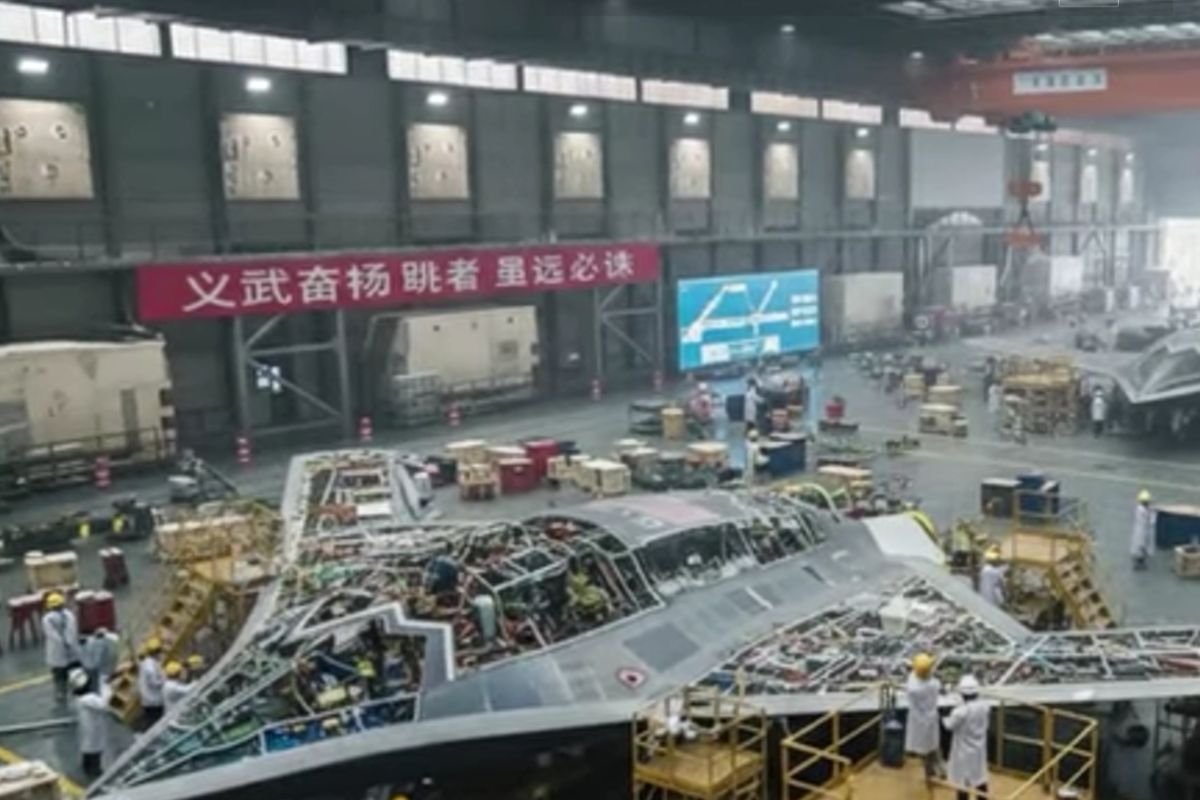
Despite years of anticipation and various artist renderings, the H-20 has remained largely under wraps, with no official flight tests or public unveilings as of early 2026. Rumors persist around developmental hurdles, especially in stealth materials application and integration of advanced avionics, but the pressure pronounced by recent battlefield events likely propels progress forward.
The strategic importance of the H-20
Possession of a stealth strategic bomber is more than just an add-on weapon system; it represents a qualitative leap in deterrence and military posture. The H-20 would provide China with a credible second-strike nuclear capability and extend its conventional strike reach. This contrasts with the more limited regional role currently filled by the H-6K. With the H-20, China could threaten assets deep inside rival territories including U.S. bases in Guam or military installations throughout the Indo-Pacific.
Operational lessons from Iran shaping China’s development pace
Strategic bombing campaigns in Iran have offered a real-world testbed for stealth tactics and operational concepts. Beijing’s military strategists recognized that simply investing in more conventional bombers is insufficient when faced with layered, integrated air defense systems increasingly common in high-threat environments. They have drawn several key lessons that influence development timetables and design choices for the H-20.
First, stealth remains the most effective way to avoid early detection and interception, a critical survival factor in modern air warfare. Second, precision strike capability, including bunker-busting munitions, is vital to degrade hardened targets rapidly and decisively. Third, endurance and aerial refueling integration allow missions spanning continents and multiple target sets without sacrificing payload or operational flexibility.
The Iran war’s rapid, high-intensity air operations underline the necessity of having a versatile long-range platform. The H-20’s design reportedly anticipates these operational requirements, emphasizing a balance between stealth shape, payload capacity, and strategic range. Given the U.S. success in Iran with bombers like the B-2, the pressure on China to not only finish but rapidly deploy the H-20 intensifies.
How Iran conflict accelerates China’s bomber ambition
The real-time demonstration of the B-2 Spirit’s effectiveness has likely jolted Chinese leadership and aviation engineers alike. The prospect that the United States maintains a stealth-enabled long-range strike fleet with proven combat success pushes China toward committing more resources and urgency to its H-20 project.
Repeated American sorties against Iranian targets provide a vivid argument for matching or surpassing these capabilities to avoid strategic vulnerability. The H-20 could redefine Asia-Pacific power balances by enabling China to project airpower across great distances with a stealth advantage previously held only by the U.S.
Prospective capabilities and anticipated challenges facing the H-20 program
Looking ahead, the H-20 is expected to feature advanced low observable technologies integrated with state-of-the-art propulsion, sensors, and weapons systems. However, achieving this level of sophistication presents significant hurdles. Stealth coatings are notoriously difficult to produce consistently, and integrating stealth with high-performance engines requires cutting-edge materials and design.
Moreover, the software and avionics suite must ensure resilience against jamming and cyber attacks, as any vulnerability can negate the benefits of stealth. Equally important is the development of an arsenal compatible with the H-20’s shape and stealth capabilities, such as precision conventional bombs, hypersonic missiles, and nuclear weapons delivery systems.
The strategic requirements for aerial refueling, long-duration flights, and operational reliability in diverse environments add further strain on the program. Given these technical and logistical challenges, the timeline for deployment remains uncertain, though China’s current geopolitics indicate a desire to field the platform as soon as possible.
Summary of core capabilities and development challenges
| Capability | Description | Challenges |
|---|---|---|
| Stealth design | Flying-wing shape with radar-absorbing materials to reduce detection | Complex manufacturing and coating processes |
| Range | Exceeding 8,500 kilometers enabling intercontinental reach | Efficient engines and fuel capacity management |
| Payload | Up to 10 tons of conventional or nuclear weapons | Maintaining stealth while carrying diverse munitions |
| Avionics | Advanced sensors, electronic warfare, and hardened communication suites | Ensuring cyber resilience and system integration |
Beyond the bomber: how the H-20 fits into China’s broader airpower ambitions
The introduction of the H-20 would mark a shift in China’s military aviation strategy, signaling ambitions not just to defend national borders but to operate globally. This shift aligns with Beijing’s growing economic and political stakes worldwide and its desire to assert influence in contested regions.
Combined with advancements in fighter aircraft and missile technology, the H-20 complements an emerging doctrine emphasizing multi-domain operations and long-range strike capability. The bomber would work in tandem with drones, satellites, and cyber forces to form an integrated combat network capable of challenging U.S. dominance in the Indo-Pacific.
China’s strategic objectives with the H-20 also include:
- Deterring adversaries through credible nuclear and conventional long-range strike options
- Expanding power projection across key maritime chokepoints and disputed territories
- Enhancing strategic flexibility by providing another instrument of rapid global strike
This broader vision indicates that the H-20 is not just a bomber but a symbol of China’s evolving role as a global military power and a challenge to existing strategic hierarchies.
What is the primary purpose of China’s H-20 stealth bomber?
The H-20 is designed to be a long-range strategic bomber capable of carrying both nuclear and conventional weapons, allowing China to conduct deep strike missions with a stealth advantage that reduces detection risks.
How does the H-20 compare to the U.S. B-2 Spirit or B-21 Raider?
While the H-20 shares the flying-wing stealth design concept with the U.S. B-2 and B-21, it is generally considered less mature technologically. However, it aims to bring China’s bomber capabilities closer to parity with the U.S. in terms of range, stealth, and payload.
What challenges has China faced in developing the H-20?
China has struggled with mastering advanced stealth materials, integrating cutting-edge avionics, ensuring cyber resilience, and balancing stealth with payload and range requirements, which delays the program’s deployment timeline.
Why has the Iran conflict accelerated China’s H-20 program?
The conflict showcased the critical role of stealth bombers in modern air warfare, highlighting China’s current gaps and creating urgency to field a comparable long-range stealth bomber to maintain strategic balance with the U.S.
Will the H-20 give China a credible nuclear deterrent?
Yes, the H-20 is intended to serve as a part of China’s nuclear triad, providing a long-range, stealthy platform capable of delivering nuclear weapons, thus augmenting China’s second-strike capability and deterrence posture.
Source: https://aerospaceglobalnews.com/news/china-h-20-stealth-bomber
