
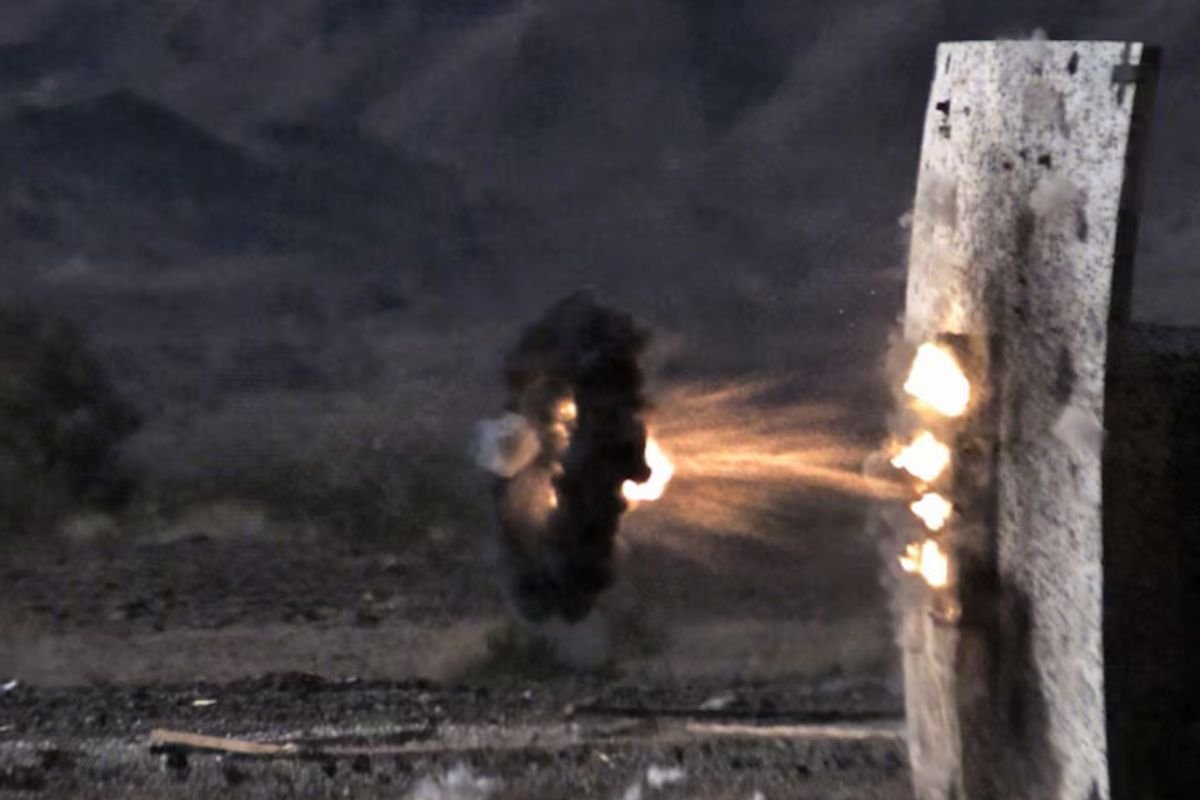
The U.S. Army is stepping up its game against drone threats with a revolutionary 30mm munitions upgrade for its AH-64 Apache attack helicopters, promising to redefine battlefield counter-UAS tactics.
In response to the growing menace posed by unmanned aerial vehicles (UAVs), especially small drones that can operate in swarms or at low altitudes, the U.S. Army is testing its cutting-edge APEX ammunition. This new ammo unlocks a proximity-fuzed capability to the M230 cannon mounted on the Apache, presenting a significant leap forward in air-to-air combat potential and counter-drone defense. As drone technology proliferates globally, the ability for frontline attack helicopters to quickly and effectively neutralize airborne UAVs without drastic hardware modifications is becoming a crucial battlefield advantage.
How APEX ammunition transforms Apache helicopters into specialized drone hunters
The AH-64 Apache has long been celebrated as a formidable ground-attack platform. But in recent conflicts and training exercises, the rise of drones has forced a reimagining of its combat role. The introduction of the XM1225 APEX 30mm proximity-fuzed round fulfills this new operational demand impressively.
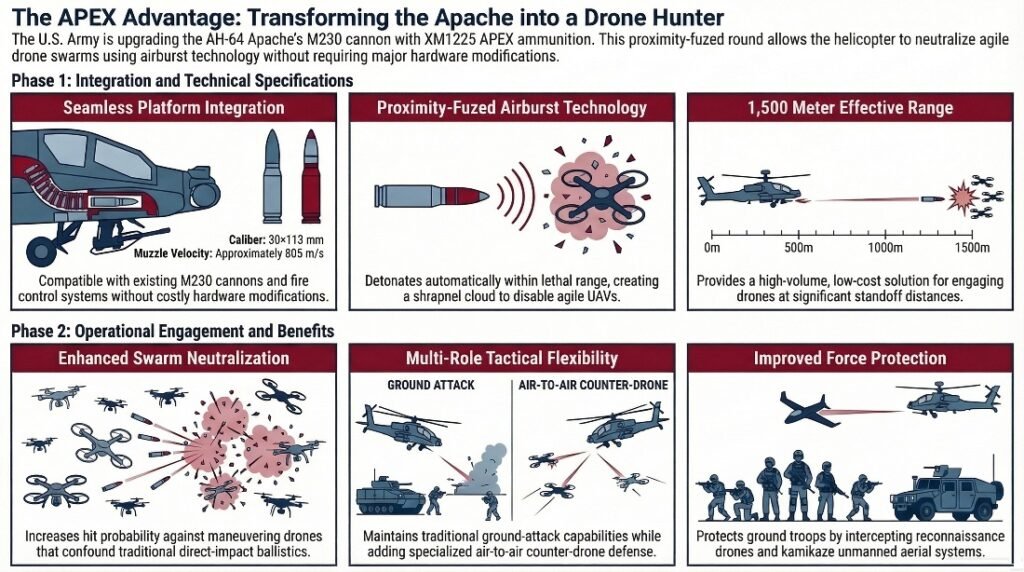
The APEX round differs from traditional cannon shells by including a proximity fuse designed to detonate automatically when within lethal range of a target, rather than requiring a direct hit. This airburst feature creates a cloud of shrapnel, significantly enhancing the likelihood of disabling small, agile UAVs that are otherwise very difficult to track and intercept with conventional rounds.
Importantly, the Army has developed APEX to be compatible with existing Apache systems, allowing for rapid integration without costly modifications or extensive training. Soldiers can use the new ammunition with the familiar M230 30mm cannon, keeping the helicopter’s operational tempo high while broadening its target set to include aerial threats previously out of reach.
This capability shift places the Apache squarely in the role of a mobile, effective anti-drone platform. It reflects evolving battlefield realities where drones can gather intelligence, deliver explosives, or act as electronic disruptors. The adoption of APEX counter-UAS ammo underscores the Army’s proactive approach to maintaining air superiority in complex, multi-domain conflicts.
The Yuma Proving Ground tests: proving the effectiveness of proximity fuzed rounds
At Yuma Proving Ground in Arizona, the Army conducted rigorous live-fire trials to validate the APEX rounds’ capability against drone targets. These tests marked the first instance of the AH-64 Apache engaging unmanned aerial systems using a 30mm proximity-fuzed round in simulated air-to-air combat scenarios.
The test results showcased the round’s precision and lethality at various engagement distances, including challenging conditions with multiple small drones maneuvering simultaneously. Outcomes demonstrated the round’s ability to detonate at precisely calculated proximities, maximizing damage radius and neutralizing the swarm threat effectively.
Additionally, the trials evaluated how well Apache pilots could incorporate the new ammunition into their existing fire control systems without interrupting other attack duties. Feedback from these exercises pointed to enhanced pilot confidence and tactical flexibility. Fielding APEX means crew members can engage hostile drones without diverting attention or weapon systems away from ground targets, a crucial capability for simultaneous multi-axis engagements.
The success at Yuma also underpins the Army’s plans to expedite the airworthiness release for the APEX ammunition. This process certifies that the rounds can be deployed safely and effectively from operational Apache helicopters in diverse combat environments, moving the munitions closer to front-line deployment.
Advantages of integrating proximity-fuzed ammo in Apache’s M230 cannon system
Integrating APEX proximity-fuzed rounds into the Apache’s existing M230 cannon framework offers a number of compelling benefits. First and foremost, this upgrade provides a lower-cost counter-drone solution compared to more complex missile systems, making it scalable and broadly deployable across the helicopter fleet.
Since the ammunition is designed to work with current fire control and targeting setups, the Army avoids the need for extensive retrofitting, reducing both downtime and logistic burden in deployment theaters. This seamless interoperability is key to rapid adoption and operational transition in the fast-evolving technology landscape of drone warfare.
Flexibility is another highlight — the same cannon system can continue performing traditional ground attack missions while adding air-to-air drone engagement capabilities. This multipurpose use preserves the attack helicopter’s core combat strengths while responding to emerging threats without introducing new weapon platforms or pilot specialties.
Moreover, proximity-fuzed rounds inherently increase hit probability against small, evasive targets by not relying solely on direct hits but also utilizing controlled airbursts. This is particularly useful against drones that can rapidly alter altitude and direction, confounding conventional ballistics. Consequently, the Apache’s survivability and lethality in contested airspace face a marked improvement.
Practical implications for battlefield units
On a tactical level, the APEX munition enables commanders to deny adversarial drone reconnaissance, disrupt precision-guided threats, and maintain air dominance in increasingly contested environments. This capability is critical as potential adversaries proliferate the use of commercial off-the-shelf drones as swarm or kamikaze weapons.
Troops on the ground benefit from enhanced protection as well. The ability of Apache helicopters to proactively intercept drones limits enemy situational awareness and reduces the risk of drone-delivered weaponry reaching troop formations, convoys, or base camps. This creates safer operational conditions and maintains momentum in offensive or defensive actions.
Developing counter-UAS tactics with APEX ammo: training and operational adjustments
The introduction of APEX ammunition also ushers in important shifts in pilot training and tactical doctrine. While the round functions with existing army systems, understanding the nuances of proximity-detonation engagement introduces new strategic and operational thinking to how Apaches confront drone threats.
Pilots must learn to recognize drone flight patterns, optimize firing parameters to trigger fragmentation at ideal proximities, and integrate these engagements with simultaneous ground attack operations. Training emphasizes rapid threat identification and prioritization, as modern battlefields require effective responses to dynamic multi-threat environments.
Operational units are encouraged to develop counter-drone mission profiles leveraging APEX’s unique advantages. This includes layered defense schemes combining electronic warfare, kinetic armed responses, and aerial patrols. By using data collected during recent trials, training modules simulate real-world drone swarm attacks to prepare crews for high-stress, fast-paced scenarios.
Such comprehensive preparation ensures that when APEX rounds enter widespread service, crews will maximize their effectiveness, turning what was once a technological vulnerability into an operational edge over hostile UAVs on the battlefield.
A detailed overview: APEX ammunition specifications and its strategic impact
Understanding the specifications of the APEX 30mm proximity-fuzed round showcases why it stands out in counter-UAS applications:
| Specification | Details |
|---|---|
| Caliber | 30×113 mm |
| Type | Aviation Proximity Explosive (APEX) |
| Muzzle velocity | Approximately 805 m/s |
| Effective range against drones | Up to 1,500 meters |
| Detonation mechanism | Proximity fuse with airburst capability |
| Compatibility | Standard M230 cannon on AH-64 Apache |
| Operational advantage | Enhanced hit probability on small, fast-moving UAVs |
This combination of effective range, detonation technology, and seamless integration positions the APEX round as a game-changer for Apache operational concepts. Strategically, it arms U.S. forces with an adaptable tool to counter the rapidly expanding threat of drone swarms and unmanned reconnaissance vehicles at relatively low cost and logistical complexity.
As modern conflicts increasingly incorporate unmanned systems, the ability to adapt legacy attack helicopters with specialized ammunition shows foresight and agility in defense innovation. This synergy between proven aircraft and novel munitions ensures survivability and force multiplication on future battlefields.
Another perspective on the live fire exercises and the Apache’s evolving counter-drone role can be viewed below, highlighting this transformative military capability in action.
Key benefits of APEX proximity-fuzed rounds summarized
- Increased efficiency against drone swarms: Airburst technology ensures greater area coverage and target neutralization.
- Cost-effectiveness: Utilizes existing cannon hardware without the expense of adding missile systems.
- Operational simplicity: No major changes to pilot training or helicopter systems required.
- Multirole application: Maintains full ground-attack capabilities while adding air-to-air features.
- Enhanced survivability: Improves protection of troops and assets against drone-enabled reconnaissance and attacks.
What makes APEX rounds different from regular 30mm ammunition?
APEX rounds feature a proximity fuse that allows them to detonate near targets, creating a lethal fragmentation cloud that dramatically increases the chance of hitting agile drones, unlike regular rounds that require direct impact.
Can APEX rounds be used against targets other than drones?
While optimized for counter-UAS missions, APEX rounds can still be employed against small aerial and some ground targets, but their effectiveness is most pronounced against small, fast-moving UAVs.
How soon will APEX ammunition be fully operational on Apache helicopters?
Following successful airworthiness approvals, the Army aims to field APEX rounds widely within the next few years, accelerating the Apache’s counter-drone readiness.
Does APEX ammunition require modifications to the AH-64 platform?
No significant modifications are needed; APEX is designed to be fully compatible with the existing M230 cannon and fire-control systems.
How does APEX compare to missile-based counter-UAS solutions?
APEX offers a lower-cost, high-volume alternative to missile systems, providing rapid-fire capability ideal for engaging swarms, whereas missiles are more expensive and suited for individual, high-value targets.
Source: https://www.war.gov/News/News-Stories/Article/Article/4429771/army-tests-apex-counter-uas-round-in-arizona
Image: The U.S. Army Yuma Test Center at Yuma Proving Ground, Arizona, tested a new 30 mm Aviation Proximity Explosive (APEX) round on December 9, 2025.
The ammunition is designed to detonate near airborne targets, improving the effectiveness of helicopters like the AH-64 Apache against drones.
