The U.S. Army is accelerating its push toward fully autonomous ground vehicles through extensive trials in Germany, showcasing a new era of military mobility and battlefield strategy.
Amid growing global interest in autonomous military technology, the U.S. Army recently commenced trials for Polaris autonomous ground vehicles in Germany. These tests are aimed at refining the capabilities of robotic combat and utility vehicles designed to revolutionize how soldiers move, fight, and carry out missions. As defense forces worldwide explore remote-operated and AI-driven technologies, Polaris stands out with its cutting-edge innovations tailored to the needs of modern warfare. The ongoing experiments in Germany offer invaluable insights into autonomous vehicles’ ability to operate safely and effectively alongside human troops in complex, multinational environments.
Polaris autonomous vehicles redefining military mobility with advanced AI navigation systems
The Polaris autonomous ground vehicles, known as the MRZR Alpha family, are not your standard off-road machines. Equipped with sophisticated AI-driven navigation systems, these vehicles can maneuver through challenging terrain without direct human input. The U.S. Army’s collaboration with Polaris Government & Defense reflects a strategic commitment to leveraging the best commercial technologies for military use, significantly enhancing tactical mobility.
The AI navigation technology integrates sensors, cameras, and advanced algorithms to enable the vehicle to recognize obstacles, map routes, and even respond to sudden changes on the battlefield. This capability allows the vehicles to scout ahead, carry cargo, or provide remote fire support, reducing risk to soldiers in dangerous zones. Particularly in Germany’s Hohenfels Training Area, where these trials are conducted, the diverse terrain ranging from wooded hills to open fields tests the vehicle’s ability to adapt dynamically.
Beyond simple obstacle avoidance, the Polaris autonomous system includes a comprehensive sensor suite that supports situational awareness for commanders and operators. This “eyes-on-the-ground” capability helps coordinate missions with manned units, improving operational efficiency and safety. For instance, the vehicles can be deployed in convoy settings, maintaining formation autonomously, and adjusting speed and spacing without human supervision.
An example from the recent tests highlighted how the MRZR Alpha navigated complex woodland obstacles while carrying payloads exceeding 900 kilograms, all while maintaining stealth and operational silence. The autonomous control system’s precision allowed the vehicle to avoid detection better than traditional human-driven vehicles might, providing clear tactical advantages in reconnaissance and supply missions.
The impact of these autonomous transportation systems is far-reaching. They alleviate the logistical burdens on soldiers by taking on the most arduous and dangerous transport tasks. Ultimately, this technology promises not only to save lives but to redefine the speed and flexibility of military operations worldwide.
Multinational coordination and interoperability in autonomous vehicle trials
Testing Polaris autonomous ground vehicles in Germany introduces another critical dimension: the challenge of ensuring smooth interaction between these systems and international military allies. The U.S. Army routinely operates in coalition environments, making interoperability paramount to successful deployment.
One of the trials’ key objectives is to refine communication protocols and real-time data sharing between autonomous vehicles and multinational command units. The MRZR vehicles are equipped with secure, encrypted communication links that allow them to share real-time sensor data, route plans, and status updates with allied forces. As Germany, along with NATO partners, enhances their collective defense capabilities, ensuring these unmanned systems seamlessly integrate into joint missions is essential.
This integration is not only technical but operational—autonomous vehicles must adapt to different doctrines, rules of engagement, and battlefield languages. During the German trials, U.S. units worked closely with NATO partners to simulate coalition task forces in various tactical scenarios. The results showed promising levels of interoperability, but also highlighted areas requiring further refinement, such as cross-platform data compatibility and joint command interface design.
For example, one multinational exercise involved a convoy of Polaris autonomous vehicles alongside human soldiers from five different NATO countries. Despite language and procedural differences, the convoy maintained coordination and tactical effectiveness, showcasing the system’s robustness. Still, the experience underscored the importance of continuous development in cybersecurity measures and streamlined command tools, ensuring these systems remain resilient against cyber threats and real-world complexities.
This emphasis on coalition interoperability ensures that autonomous ground vehicles like the MRZR Alpha can be deployed flexibly in various theaters and conflict types, from high-intensity warfare to peacekeeping missions. The trials in Germany also provide a testing ground for developing doctrine around unmanned systems’ autonomy levels, command hierarchy, and soldier interaction.
Strategic implications of autonomous ground vehicles for future combat scenarios
Autonomous ground vehicles mark a profound shift in military doctrine, with the potential to redefine numerous aspects of ground combat. Their role extends beyond simple transportation, influencing reconnaissance, fire support, and logistical resupply operations. The U.S. Army’s trials in Germany underline this transformation by demonstrating how these vehicles can operate alongside manned forces to multiply combat effectiveness.
The MRZR Alpha vehicles offer several tactical advantages, such as the ability to enter hostile zones without risking soldiers’ lives, perform silent and precise movements, and sustain extended operational hours thanks to autonomous control reducing human fatigue factors. This flexibility is crucial in modern battlespace environments dominated by asymmetric threats and electronic warfare challenges.
For instance, in urban combat scenarios, autonomous vehicles can support infantry units by providing remote surveillance, transporting equipment, or evacuating casualties without exposing troops to direct fire. Their capability to operate with minimal human oversight allows commanders to allocate manpower more effectively while maintaining battlefield control and situational awareness.
Moreover, the vehicles’ ability to adapt swiftly to changing conditions on the ground and communicate in real time with command centers enables faster decision-making and rapid response. This responsiveness is vital during ambushes, sudden retreats, or shifting frontlines.
Strategically, the adoption of autonomous vehicles like Polaris’s MRZR Alpha could also trigger doctrinal changes in force composition, favoring networks of mixed manned and unmanned units working together. This hybrid approach enhances operational resilience by ensuring that if some assets are lost or compromised, others can continue the mission autonomously.
Such transformations reflect a broader trend across global militaries emphasizing autonomous systems for their force-protection benefits and operational adaptability in contested environments. The German trials provide critical data to guide these doctrinal shifts and highlight the practical value and limits of current autonomous technologies in future conflicts.
Overland AI partnership and the technological backbone of Polaris autonomous systems
Underlying the Polaris autonomous vehicles’ impressive capabilities is a crucial partnership with Overland AI, a leading innovator in robotic control systems. Overland AI specializes in transforming conventional off-road military vehicles into intelligent, optionally autonomous platforms, enabling seamless operations in any terrain.
This collaboration merges Polaris’s expertise in rugged vehicle design with Overland AI’s cutting-edge software, producing autonomous ground vehicles that can navigate complex environments with a high degree of independence. The AI incorporates machine learning algorithms and sensor fusion techniques to improve obstacle detection, terrain adaptability, and mission execution under varying conditions.
During the German trials, this software demonstrated its capability to adapt to the unpredictable nature of live battlefield conditions. The vehicles could adjust routes dynamically after detecting terrain changes, obstacles, and threats. This autonomous re-planning ability is a game-changer for tactical logistics, enabling reliable resupply and rapid troop movement without direct human control.
Technical highlights of the Polaris-Overland AI system include:
- Multi-sensor integration: Combining LiDAR, radar, GPS, and cameras for 360-degree situational awareness.
- Adaptive path planning: Algorithms that recalculate optimal paths instantly when faced with obstacles or new mission parameters.
- Fail-safe modes: Redundant systems to maintain vehicle control in case of sensor malfunction or communication loss.
- Secure communication: Hardened data links ensuring encrypted and resilient connectivity across combat zones.
This robust technological foundation positions Polaris’s autonomous vehicles at the forefront of current unmanned vehicle innovation and aligns with U.S. Army modernization goals. The partnership also supports integration with other defense projects, such as DARPA collaborations and the Army’s Ground Expeditionary Autonomous Retrofit System (GEARS) project.
Training, soldier feedback, and the real-world impact of autonomous vehicle deployment
One of the most critical aspects of the Polaris autonomous ground vehicle trials in Germany has been gathering feedback directly from soldiers operating alongside and controlling these systems. The U.S. Army’s Soldier Operational Experiments (SOE) integrate real soldier insights to refine vehicle design, user interfaces, and mission workflows.
Soldiers have praised the MRZR Alpha’s ability to reduce physical strain by carrying heavy loads or performing repetitive shuttle runs, which traditionally exhaust infantry units. Autonomy also reduces cognitive load, allowing soldiers to concentrate on tactical decisions instead of vehicle control. However, feedback has emphasized the importance of intuitive human-machine interfaces to avoid confusion during complex operations and to maintain trust in autonomous functions.
Training programs are evolving to familiarize soldiers with autonomous vehicle operation and coordination. These initiatives emphasize cooperation tactics where manned and unmanned units work in tandem, capitalizing on each other’s strengths. For example, soldiers learn to use autonomous vehicles as mobile sensor platforms, calling on them to scout ahead or flank enemy positions.
The trials revealed that adapting to autonomous vehicles shifts traditional soldier roles, with a growing demand for operators skilled in robotics, data analysis, and remote vehicle coordination. This evolution requires new military training curricula and certification processes.
Real-world deployment of autonomous ground vehicles is already enhancing mission success rates by improving logistics, force protection, and battlefield awareness. Soldiers report increased confidence when supported by these systems, contributing to overall troop safety and operational resilience during multinational exercises and deployments.
Emerging challenges and future outlook for autonomous ground vehicles in military operations
Despite the tremendous advances represented by Polaris autonomous vehicles, several challenges remain before widespread adoption becomes standard. Key hurdles include ensuring robust cybersecurity, system resilience in contested electronic warfare environments, and securing reliable communication networks across vast operational areas.
Autonomous vehicles also raise complex ethical and legal questions about the boundaries of machine decision-making in combat. Establishing clear rules of engagement, command structures, and fail-safe protocols will be essential as autonomy increases.
Additionally, logistical considerations like vehicle maintenance, software updates, and integration with legacy systems require tailored solutions. The German trials help illuminate these issues by testing Polaris vehicles in diverse, realistic scenarios that expose operational weaknesses and inform ongoing development.
Looking ahead, experts expect autonomous ground vehicles to evolve rapidly in capability and scale. Integration with aerial drones, networked battlefield sensors, and AI-driven command centers will create highly sophisticated combat systems enabling unprecedented levels of situational awareness and rapid reaction by combined arms forces.
Investment by the U.S. Army and allied militaries in these technologies signals a gradual but profound transformation of ground warfare. The lessons learned from the Polaris trials in Germany are already helping shape future doctrine and procurement strategies focused on maintaining technological superiority and troop safety.
The trajectory toward autonomous military vehicles reflects a broader shift toward AI-driven warfare underpinned by data, robotics, and automation—reshaping the battlefield landscape for decades to come.
| Trial Location | Vehicle Model | Payload Capacity (kg) | Autonomy Level | Allied Participants | Primary Objectives |
|---|---|---|---|---|---|
| Hohenfels, Germany | Polaris MRZR Alpha | 900+ | Level 4 (High automation with remote override) | U.S. Army, NATO Partners | Interoperability, tactical mobility, soldier safety |
What distinguishes Polaris autonomous vehicles from traditional military vehicles?
Polaris vehicles feature AI-enabled navigation, autonomous obstacle avoidance, and real-time data sharing, allowing operations without direct human control in challenging terrain.
How do multinational trials enhance the development of autonomous ground vehicles?
They ensure interoperability with allied forces, refine communication protocols, and adapt technology to varied operational doctrines.
What role do soldiers play in the development and deployment of autonomous vehicles?
Soldiers provide critical feedback to improve vehicle usability, interface design, and operational workflows, as well as undergo specialized training to coordinate manned and unmanned units.
What are the main technological components behind Polaris autonomous vehicle systems?
Key components include multi-sensor integration (LiDAR, radar, GPS), adaptive path planning algorithms, fail-safe mechanisms, and secure encrypted communications.
What challenges could slow the adoption of autonomous ground vehicles in the military?
Cybersecurity concerns, contested electronic warfare environments, communication reliability, and ethical considerations about autonomous weapon deployment are major hurdles.
Source:
- https://military.polaris.com/en-us/applications/military/
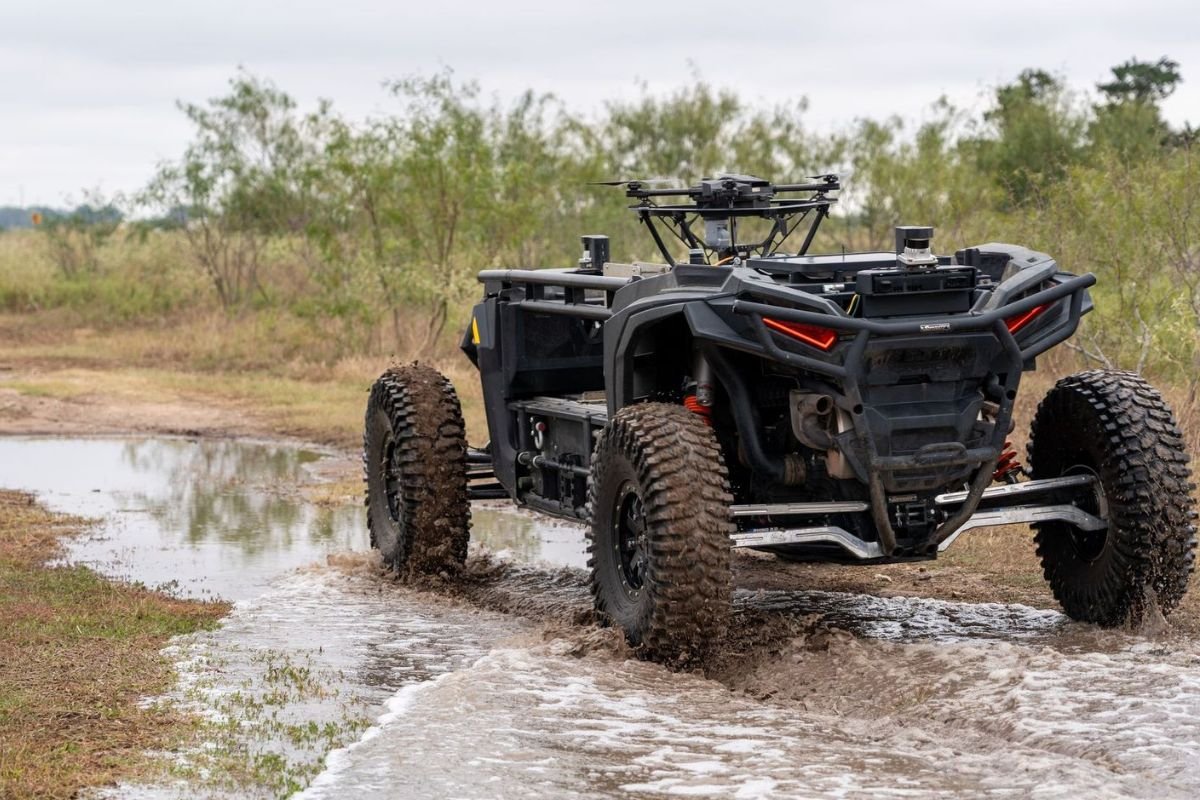
Image: The U.S. Army is testing Polaris MRZR Alpha autonomous ground vehicles in Germany, exploring how AI-driven mobility could transform logistics, reconnaissance, and battlefield operations.
These trials aim to prove that autonomous vehicles can operate safely alongside NATO troops, carrying heavy payloads and navigating complex terrain while reducing risks to soldiers.
