
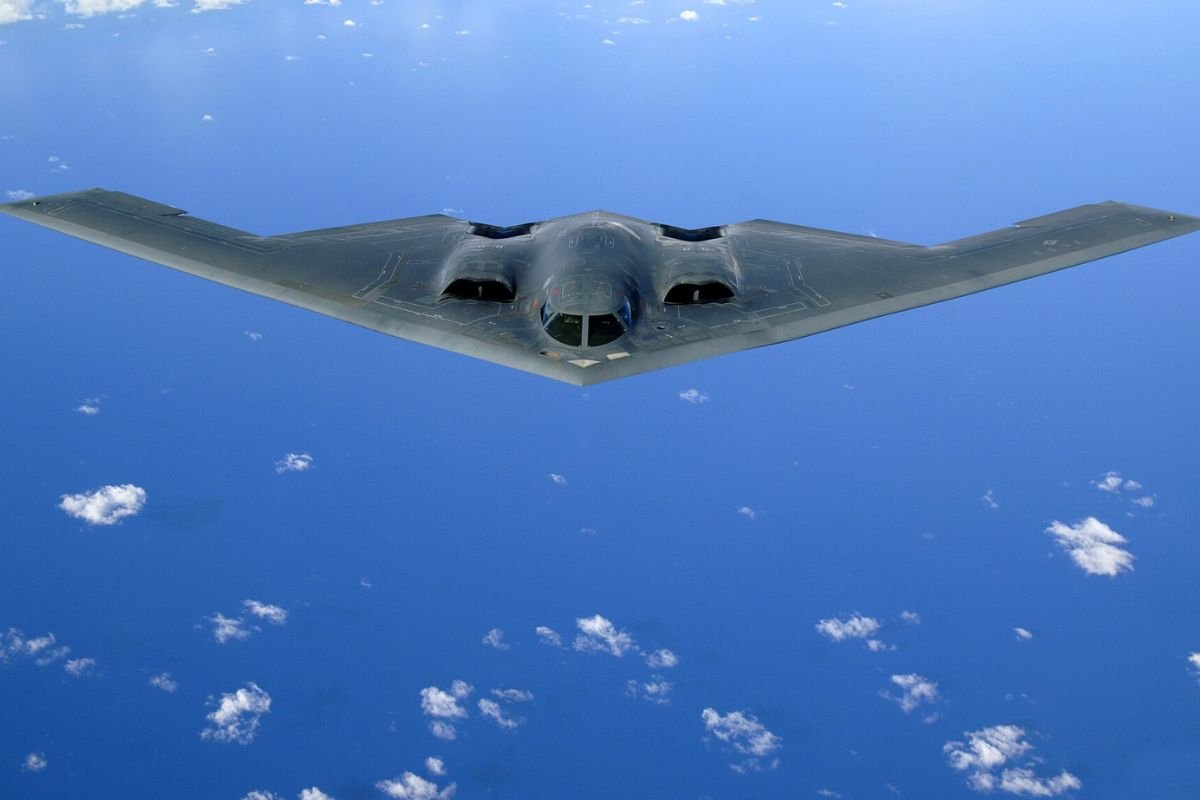
A Chinese defense technology company asserts it has detected radio transmissions from U.S. B-2 Spirit stealth bombers over Iran, signaling a shift in the landscape of military intelligence gathering powered by AI and commercial data.
On March 1st, 2026, during the initial phase of a massive U.S.-Israel military operation targeting Iranian nuclear facilities, Chinese firm Jingan Technology claimed that its advanced monitoring platform intercepted radio signals emitted by B-2 Spirit bombers. This astonishing announcement highlights both the growing capabilities of artificial intelligence in military surveillance and the unfolding challenges facing even the most sophisticated stealth aircraft today. The detection, made possible through the integration of open-source intelligence and satellite imagery, raises questions about the practical invulnerability of stealth technology within interconnected operational networks.
How artificial intelligence powers modern military surveillance to expose stealth aircraft
The unprecedented claim by Jingan Technology shines a spotlight on a revolutionary approach in intelligence gathering where artificial intelligence (AI) takes center stage. The firm’s monitoring system, named Jingqi, reportedly identified multiple radio call signs linked to the B-2 Spirit during its return flight from the Iranian strike mission. Unlike traditional espionage relying on secret intercepts, Jingqi combines open-source data with commercial satellite imagery and aviation tracking to derive rich operational insights.
Utilizing AI algorithms that sift through vast, diverse datasets, Jingqi’s platform detects subtle patterns and correlations invisible to human analysts. This includes flight path reconstruction, communication signal detection, and the cross-referencing of publicly available military records. The capacity of such data fusion underlines a crucial transformation in intelligence analysis: military actions are becoming increasingly transparent in an era dominated by digital data.
Historically, stealth aircraft like the B-2 have capitalized on radar invisibility to operate deep within enemy airspace. However, even the most advanced platforms cannot escape the broader operational footprint comprising communications, support assets, and logistical movements. The AI-driven Jingqi system leveraged these peripheral signals, exposing a vulnerability in the overall stealth paradigm that had often been underestimated.
The rise of AI-enhanced open-source intelligence (OSINT) tools democratizes the ability to monitor complex military operations. What was once possible only for state actors equipped with expensive classification programs can now be achieved by private companies or even dedicated individuals wielding cutting-edge software. This shift is poised to redefine battlefield awareness in the near future.
Reconstructing the B-2 flight mission: what does the data reveal?
Jingan Technology asserted that its system successfully pieced together the B-2 flight path during the March 1st operation using an impressive combination of signal detection, aviation data, and satellite imagery. By matching the detected radio signals against flight trajectories and corroborating them with satellite visuals, the company claims to have recreated substantial segments of the bombers’ route over Iran.
The bomber team reportedly used the call signs “Petro 41” through “Petro 44,” which Jingqi’s AI could isolate from the broader airwaves. This level of signal extraction from apparently secure stealth missions signals a paradigm shift in operational security. It also suggests that stealth defenders need to consider a multidimensional approach beyond just radar evasion to protect critical communications and minimize digital traces.
This reconstructed flight information, although still unverified by independent U.S. sources, is compelling. It showcases how the confluence of various commercial intelligence inputs—from live satellite feeds to aviation transponders and even open-flight databases—can collectively generate meaningful tactical pictures. This phenomenon marks a pronounced reliance on accessible data ecosystems in modern military surveillance.
Moreover, the detection fuels discussion about the limitations inherent in stealth technology, which primarily seeks to avoid radar detection but is less well-equipped against comprehensive network tracking and signal intelligence efforts aided by AI. Looking ahead, countermeasures will likely focus on hardening operational security against multi-source data aggregation.
Commercial satellite imagery and geospatial firms expanding the scope of battlefield transparency
Jingan Technology’s revelation is part of a broader trend where commercial geospatial intelligence firms are making military movements increasingly visible. Companies like MizarVision have actively published satellite images showing U.S. aircraft deployments and naval activities around the Middle East, including bases in Israel and Saudi Arabia during heightened tensions with Iran.
These firms combine high-resolution satellite photos with analytical tools, enabling near real-time monitoring of troop concentrations, aircraft locations, and even logistic deployments. Such transparency was unthinkable a decade ago but is now a vital component in assessing ongoing conflicts.
The war in Ukraine starkly illustrated how open commercial data—ranging from satellite imagery to social media postings—transformed information warfare. Analysts could track the buildup and movement of forces daily. Similarly, current monitoring of U.S. air strikes in Iran demonstrates the convergence of commercial technology and military intelligence, pushing the boundaries of what can and cannot be concealed.
Aside from revealing actual combat deployments, commercial data also supports predictive analysis. By observing unusual patterns such as increased flights of cargo planes or shifts in fighter jet locations, analysts infer probable future operations. This big data approach is critical for strategic planners and defense agencies around the globe.
This phenomenon pressures armed forces worldwide to rethink operational secrecy and adapt counter-intelligence practices. Military planners must now anticipate that satellite and AI-enabled observation platforms will peer into areas previously considered secure.
The strategic and operational implications of B-2 detections for U.S. military stealth capabilities
If these claims about B-2 signal interception hold weight, they carry serious strategic consequences. The B-2 Spirit bomber currently represents one of the most capable long-range stealth platforms in the U.S. arsenal, designed for deep penetration strikes against high-value targets. Yet, its supposed detectability could signal emergent vulnerabilities in U.S. stealth doctrine.
In light of this, Pentagon officials likely face renewed urgency to enhance operational security and develop next-generation stealth features. This may involve encryption improvements, radio silence protocols, and more integrated AI countermeasures to mask network footprints. The vulnerability extends beyond individual platforms: the entire operational framework supporting stealth missions comes under scrutiny.
The evolving electronic warfare environment intensifies the cat-and-mouse game between high-tech attackers and defenders. China’s investment in AI surveillance, combined with commercial data exploitation, exemplifies a strategic push to counterbalance U.S. military superiority in stealth strike capacities. It also underscores the growing power of private tech firms contributing to state-level intelligence efforts.
Furthermore, this development could accelerate the pace at which the U.S. invests in new stealth platforms like the B-21 Raider, designed to further reduce detectability. However, the modern battlefield’s interconnectedness means no system can operate in true isolation. Understanding and mitigating electromagnetic and digital signal vulnerabilities become paramount in maintaining air dominance.
Challenges and ethical questions surrounding open-source intelligence and military secrecy
The rising prominence of open-source intelligence tools, AI-powered platforms, and commercial satellite data sparks a broader debate about the limits of military secrecy and national security in the digital age. These technologies democratize access to sensitive information, often blurring the lines between legitimate surveillance and potential espionage.
While governments and militaries must adapt to an environment where their movements can be tracked by anyone with access to the right technologies, commercial intelligence companies also face ethical considerations. Their ability to reveal classified or sensitive military activities to the public introduces risks of misinterpretation and geopolitical escalation.
Furthermore, the advent of AI-driven data analysis presents challenges in verifying the accuracy of intercepted signals or reconstructed flight paths. False positives or disinformation campaigns exploiting open data vulnerabilities pose threats to strategic stability.
Governments worldwide might need to revisit policies on information control, technology export restrictions, and cyber operations to safeguard national interests. At the same time, transparency advocates argue that peaceful accountability for military actions can benefit from such openness.
This evolving balance between secrecy and openness in defense intelligence will shape how future warfare is conducted and perceived globally.
- Open-source intelligence platforms utilize AI to analyze diverse datasets, democratizing military surveillance.
- Advanced stealth aircraft are increasingly vulnerable to multi-source signal detection.
- Commercial satellite firms provide real-time geospatial data for monitoring battlefield deployments.
- Operational security requires innovation beyond traditional radar evasion.
- Ethical and policy debates emerge around the use of commercial intelligence in military contexts.
| Date | Event | Details | Implications |
|---|---|---|---|
| February 28, 2026 | Operation Epic Fury begins | US and Israel launch strikes on Iranian military sites | Set the stage for B-2 bomber missions and increased surveillance |
| March 1, 2026 | B-2 Spirit radio signals detected | Jingan Technology claims interception of radio emissions over Iran | Raises doubts about stealth invulnerability and highlights AI surveillance |
| 2025-2026 | Increasing commercial satellite monitoring | Geospatial companies release imagery of military movements worldwide | Expands battlefield transparency, challenging traditional secrecy |
How credible are the claims that Chinese AI intercepted B-2 bomber signals?
While the claims by Jingan Technology have not been independently verified, they highlight emerging risks for stealth aircraft operations exposed to AI-powered open-source intelligence and commercial data integration.
Why is it difficult for stealth aircraft to remain undetected despite radar evasion technology?
Stealth technology primarily aims to reduce radar detection, but aircraft still emit communication and support signals that AI and data fusion systems can identify, making total invisibility challenging.
What role do commercial satellite firms play in modern military surveillance?
Commercial geospatial firms provide real-time satellite imagery and analytics that can reveal troop deployments and air asset movements, dramatically increasing military transparency.
How might militaries improve operational security in light of AI-powered intelligence tools?
By enhancing encryption, applying radio silence protocols, and developing counter-AI measures, militaries aim to reduce their digital footprints and protect sensitive communications from detection.
What ethical concerns arise with the use of commercial intelligence in military contexts?
The dissemination of sensitive military information by private companies raises concerns around misinformation, potential escalation, and challenges in controlling data use, necessitating new policies on intelligence transparency and security.
Source: https://www.scmp.com/news/china/science/article/3346200/chinese-firm-claims-it-intercepted-b-2-radio-signal-during-us-strike-iran
Image: The Northrop B-2 Spirit is a U.S. stealth strategic bomber designed for long-range penetration missions, capable of delivering both conventional and nuclear weapons while remaining difficult to detect by radar.
With its distinctive flying-wing design, the B-2 became one of the most advanced and expensive combat aircraft ever built, serving as a cornerstone of U.S. long-range strike capability.
