Poland’s president takes a bold step by vetoing the EU’s massive €44 billion defense financing plan, raising questions about national sovereignty and Europe’s military future.
As Europe grapples with rising geopolitical tensions and the ongoing conflict in Ukraine, the European Union launched the Security Action for Europe (SAFE), a €150 billion initiative aimed at strengthening member states’ military capacities. Poland, poised to be the biggest beneficiary with access to nearly €44 billion in low-interest loans, found itself in a political standoff. President Karol Nawrocki’s unexpected veto of legislation enabling Poland to participate in SAFE has stunned Warsaw and its allies. The clash underscores deep divisions over Poland’s defense strategy, financial independence, and its vision for Europe’s security landscape.
Unpacking the SAFE program: What it means for European defense financing
The European Union’s SAFE initiative represents an unprecedented effort to enhance the collective strategic autonomy of its members. With a substantial budget of around €150 billion, the program offers loans designed to help countries invest in vital military equipment, upgrade defense industries, and develop advanced capabilities. The core intention is to counterbalance increased security threats, particularly from Russian aggression, through financial and material support that accelerates modernization.
Poland’s role was set to be pivotal. Its military, historically focused on countering threats from the East, stands at a crossroads that requires significant modernization and rearmament. The approximately €43.7 billion in loans outlined in the program would have catapulted Poland into a leadership position within European defense cooperation. This fund would enable Warsaw to procure cutting-edge technology, enhance troops’ capabilities, and strengthen infrastructure — crucial elements as tensions continue to escalate.
Yet the SAFE program also introduces complexities. It binds recipients into long-term loans, potentially impacting national budgets for decades. Interest payments and repayment schedules amount to significant financial commitments, sparking debates about fiscal prudence versus strategic necessity. Poland’s president has highlighted these concerns in his veto rationale, sowing doubt over whether such reliance on external financing aligns with Poland’s sovereign interests.
How SAFE aims to boost European strategic autonomy
SAFE is more than just loans; it’s a mechanism driving long-term resilience by equipping EU members with modern military tools and capabilities. Considering recent geopolitical shifts, particularly Russia’s invasion of Ukraine, Europe’s fragmented defense capacity has been a glaring vulnerability. SAFE seeks to address this by injecting significant resources into member states’ defense sectors.
For example, countries like Poland, which face direct security threats, were expected to upgrade radar systems, missile defenses, and armored vehicles. This modernization is vital to deter aggression and maintain regional stability. The program also fosters cooperation between European defense industries, enabling joint research and procurement efforts to reduce dependency on non-European suppliers.
The program is carefully structured as a loan, not a grant, emphasizing shared responsibility but raising questions around long-term repayments and economic impact. How these loans will interplay with national budgets is a key concern among stakeholders across Europe, especially in countries with varying fiscal health.
The veto: Why President Karol Nawrocki blocked Poland’s path to €44 billion in EU military loans
On March 12, 2026, Poland’s president Karol Nawrocki issued a veto against legislation enabling Poland to benefit from SAFE’s loans-for-weapons scheme. His decision was rooted fundamentally in concerns over national sovereignty and fiscal responsibility. Nawrocki warned that the program would entangle Poland in a “huge foreign debt” lasting 45 years, with an alarming interest cost reaching approximately 41 billion euros.
President Nawrocki argued that such financial dependency compromises Poland’s independence both economically and militarily. The loans, while enabling rapid modernization, would saddle the country with debt and empower Western banks and financial institutions. These entities, he posited, stand to profit extensively while Poland’s taxpayers bear the burden of repayment.
His rejection also touched on the principle of decision-making autonomy. By accepting SAFE funds, Poland would tacitly cede some control over defense procurement to European institutions, an idea politically unpalatable to Nawrocki’s administration. This clash between nationalists and pro-European globalists is a microcosm of broader debates on Europe’s unity versus national sovereignty, playing out vividly within Poland’s political arena.
The president’s economic concerns explained
The financial implications of SAFE loans extend beyond the face value. According to Nawrocki, Poland would end up repaying nearly double the principal amount due to the high interest costs, estimated at around 180 billion zlotys, or approximately 41 billion euros. This highlights a latent fear of long-term economic strain, particularly on public budgets already stretched thin by global economic pressures.
In his statements, Nawrocki emphasized the burden on future generations. The repayment plan, spread over decades, raises questions about fiscal sustainability and national debt management. His critique framed the SAFE program as a potentially reckless gamble with the country’s economic future, suggesting that Poland should instead focus on self-reliant defense funding methods.
Political fallout: The government vs. the president on Poland’s defense future
The veto has exacerbated political tensions between President Nawrocki and Prime Minister Donald Tusk, whose administration champions Poland’s participation in SAFE. Tusk views the program as essential for accelerating military modernization, particularly given rising threats and Poland’s position as Europe’s eastern bulwark. He has declared the veto a political setback but remains committed to finding ways to access European funds.
This political impasse reflects deeper ideological divisions. On one side, Tusk’s government favors closer integration with European defense initiatives, seeing SAFE as a strategic boon—allowing fast-track modernization while sharing the financial load. On the opposing side, Nawrocki’s veto signals a nationalist emphasis on sovereignty and fiscal caution, wary of supranational influence over Poland’s armed forces.
If no compromise emerges, Poland could face delays in military upgrades and lose out on the €43.7 billion in loans that the SAFE program offered. Beyond the military, critical institutions such as the police and border guards risk funding shortfalls. Reports suggest these agencies might lose up to 7 billion zlotys (€1.6 billion) in potential support, affecting internal security and border control.
Possible alternatives to SAFE funding
In light of the veto, Warsaw is exploring bespoke ways to fund defense upgrades without external loans. One promising source is the profits stemming from Poland’s central bank gold reserves. These profits could reach up to 197 billion zlotys (about €45 billion) and can be channeled into modernization projects, potentially bypassing theSAFE scheme’s constraints.
This approach aligns with Nawrocki’s vision of preserving financial independence while still investing significantly in defense. However, it may limit Poland’s ability to tap into broader EU cooperation and risk-sharing mechanisms embedded in SAFE.
Evaluating the broader European implications of Poland’s SAFE veto
Poland’s veto stands as a stark warning to the EU’s ambitions for common defense financing. As the bloc seeks to unify its military presence amid ever-growing threats, such internal resistance threatens to slow or undermine collective progress. Poland, being the largest recipient candidate of SAFE funds, was symbolic of European intent, making this political rift highly significant.
This veto may embolden other member states harboring skepticism about lending schemes tied to defense spending. Countries with concerns about financial liabilities or sovereignty could follow Poland’s lead, fracturing consensus on cooperative defense strategies.
Moreover, in the context of the ongoing war in Ukraine, delays or hurdles in modernizing military capacities are not trivial. The EU’s strategic objective to build a resilient, autonomous defense presence is challenged by such internal clashes, potentially tilting the advantage toward adversaries.
The path forward for EU defense financing
To maintain momentum, EU leaders may have to rethink the design of defense loan programs like SAFE. Increased flexibility, guarantees of non-interference in national military decisions, and more transparent cost-sharing arrangements may be necessary to win over skeptical governments. Alternately, new forms of cooperation that respect sovereignty while pooling resources could emerge as compromise solutions.
| Aspect | SAFE program proposal | Polish president’s concerns |
|---|---|---|
| Total funding available to Poland | €43.7 billion in low-interest loans | Could impose long-term foreign debt burden |
| Loan repayment period | Up to 45 years | Raising concerns on fiscal sustainability |
| Interest costs | Unspecified but incorporated in long-term repayment | Estimated €41 billion potentially in interest |
| Strategic benefits | Rapid modernization of defense capabilities | Risk of reduced sovereignty in military procurement |
| Alternative funding sources | N/A | Use of central bank gold reserves profits (~€45 billion) |
Europe faces tough choices in balancing sovereignty with collective security. Poland’s presidential veto of SAFE funding crystallizes this dilemma, sparking debate on the future of EU defense integration. As this complex scenario unfolds, the continent watches closely.
Key dimensions of the SAFE veto: financial autonomy versus military modernization
One of the most pressing questions arising from the veto centers on how nations can simultaneously preserve their economic independence while efficiently upgrading their military forces. Poland’s decision reflects a tension felt across several EU countries — the desire for robust defense infrastructure without succumbing to external debt or influence.
For advocates of the veto, the stakes are high: financial self-determination means avoiding traps of prolonged indebtedness and foreign control. Opponents argue that in an interconnected Europe, only joint investments can bring about comprehensive strategic security.
This debate is far from theoretical. Poland’s estimated need of tens of billions of euros for modernization illustrates the scale of defence funding challenges ahead. If not addressed, it risks creating a patchwork of underfunded militaries vulnerable to emerging threats.
- Financial concerns: Potential €41 billion in interest over 45 years raises alarms on debt sustainability.
- Sovereignty fears: Risk of losing control over military procurement decisions to EU bodies.
- Strategic urgency: The need to counter Russian aggression demands rapid modernization.
- Alternative funding: Utilization of national assets like gold reserves to avoid external borrowing.
- Political division: A push and pull between pro-European integration and nationalist agendas.
Questions still open regarding Poland’s defense path ahead
As Warsaw navigates this standoff, numerous critical considerations remain unresolved. How will the government balance the demands of modernization with preserving fiscal prudence? Will alternative funding sources suffice to meet defense needs? Will Poland’s resistance to EU financial instruments resonate with similar movements elsewhere?
Furthermore, the impact on Poland’s position within NATO and EU defense networks could be significant. EU defense policies are increasingly intertwined with NATO strategies. Poland’s retrenchment may complicate cooperation and funding frameworks, especially as the security landscape evolves rapidly.
What is the SAFE program and how does it function?
The Security Action for Europe (SAFE) is an EU initiative providing low-interest loans to member states to fund military modernization and defense capability development, aiming to enhance Europe’s strategic autonomy.
Why did the Polish president veto the legislation enabling SAFE?
President Karol Nawrocki vetoed the legislation citing concerns over national sovereignty, long-term foreign debt commitments with high interest costs, and potential interference in Poland’s military procurement decisions.
What are the consequences of the veto for Poland’s military?
The veto delays Poland’s access to €43.7 billion in defense funding, potentially slowing modernization efforts and impacting security forces including the police and border guards due to lost funding.
Are there alternative ways Poland can fund its military modernization?
Yes, Poland is considering using profits from its gold reserves, estimated at around €45 billion, to finance defense needs independently of the SAFE program.
How does this veto affect EU defense cooperation?
Poland’s veto introduces political challenges to the EU’s ambitions for unified defense financing, possibly encouraging other nations to resist collective funding mechanisms, thereby slowing Europe’s military integration efforts.
Source: https://www.globsec.org/commentaries/poland-safe-veto-eu-defence-loans
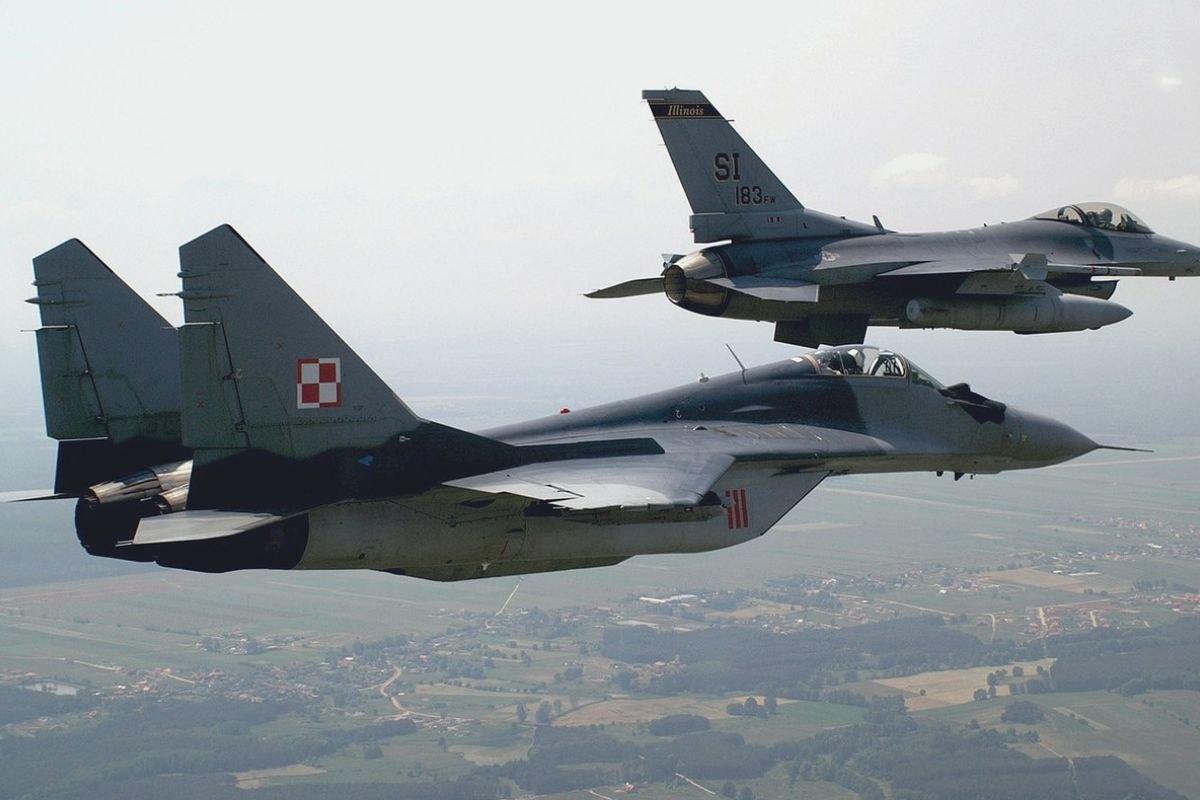
Image : A U.S. Air Force General Dynamics F-16C Fighting Falcon from the 183rd Fighter Wing (Illinois Air National Guard) flies in formation with a Polish Mikoyan-Gurevich MiG-29A of the 1st Tactical Squadron over Krzesiny Air Base, Poland, on 15 June 2005, during the joint exercise “Sentry White Falcon 05.”
