
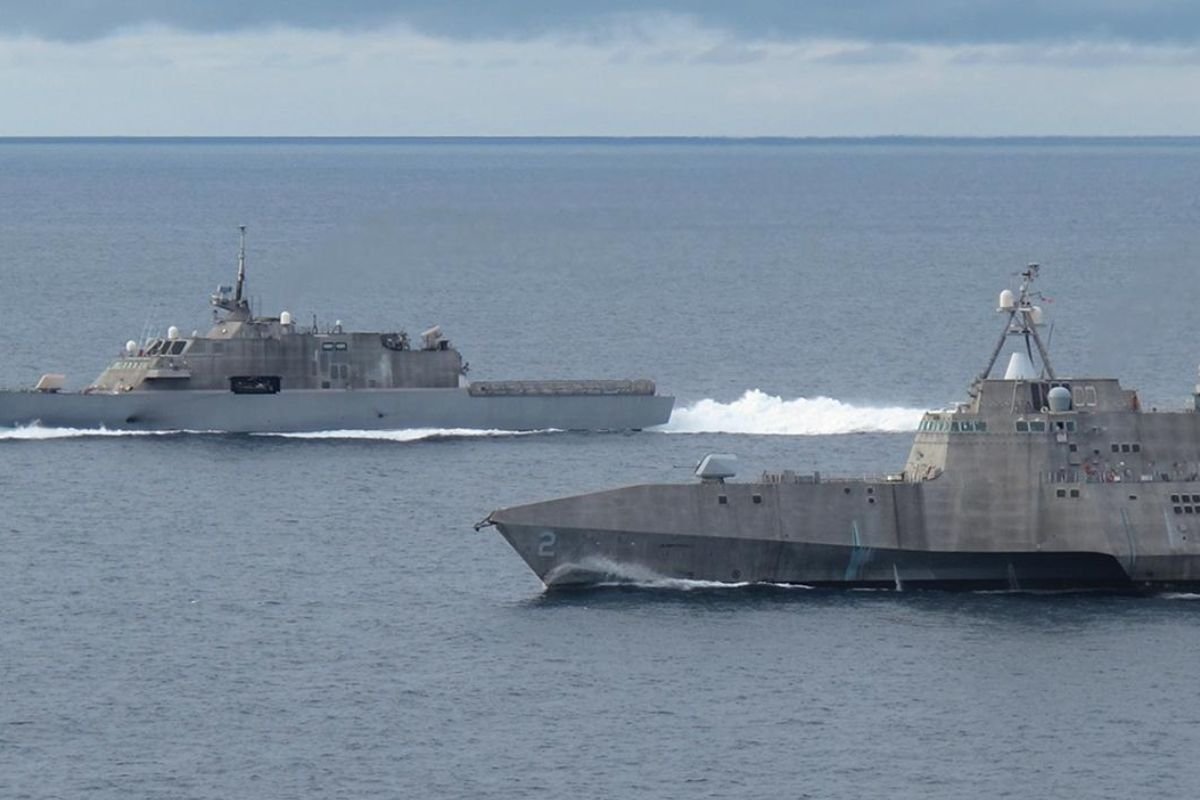
The U.S. Navy invested a staggering €22 billion into a fleet of Littoral Combat Ships touted as revolutionary, only to find themselves burdened with vessels plagued by fundamental flaws and operational failures.
Since their inception, Littoral Combat Ships (LCS) were marketed as nimble, fast, and modular vessels ideal for coastal warfare. However, over the years, it has become painfully evident that this grand vision heavily underestimated the technical challenges and underestimated emerging threats. The resulting warships have struggled with reliability, combat readiness, and longevity—all while costing taxpayers an unprecedented sum of money. As the Navy increasingly retires its early LCS models well ahead of schedule, questions swirl around the consequences for America’s naval dominance and what lessons can be drawn from this costly misstep.
Technical shortcomings and reliability issues that doomed the Littoral Combat Ships
The technical complications of the Littoral Combat Ships have proven to be their Achilles’ heel. Initially designed to serve as agile coastal combatants, the LCS dynamic quickly devolved into a saga of mechanical failures and structural vulnerabilities. Two main variants, the Freedom-class and Independence-class, exhibited distinct but equally troubling flaws.
The Freedom-class, envisioned as a fast combatant with a sleek design, quickly became notorious for recurring transmission malfunctions. These mechanical problems frequently left the ships disabled, unable to move under their own power. Reports highlight persistent breakdowns of the combining gear—an essential device connecting gas turbines with propulsion systems—that compromised mission capability during critical operations. This not only affected the operational pacing of these vessels but also placed crew safety at risk.
On the other hand, the Independence-class ships struggled with severe structural issues. Their innovative trimaran hull design, while offering speed and maneuverability, became prone to cracking under the stress of rough seas. Such structural cracks severely undermined the ship’s durability, casting doubt on their ability to maintain integrity during extended deployments. The cost of repairing these damages only added to already climbing maintenance expenses.
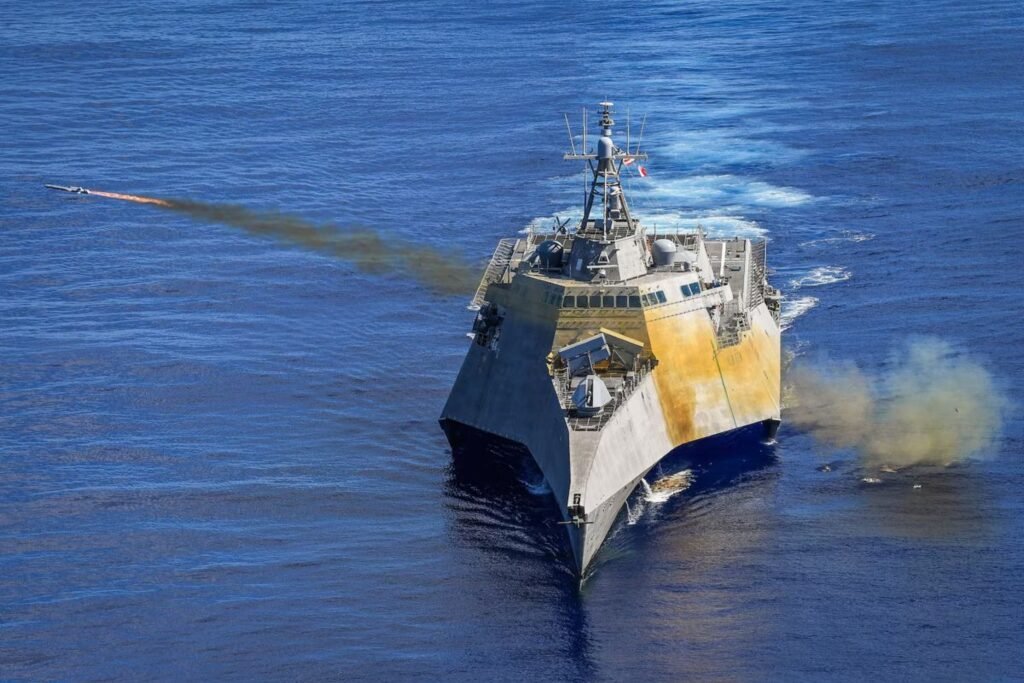
Maintenance costs for these vessels remain another glaring problem. Building each LCS ship hovered around €460 million, while annual maintenance ran approximately €64 million—figures that quickly outpaced projections for a platform touted as cost-effective and adaptable. This high price tag for flawed ships has pressed the Navy to decommission them prematurely, often after less than half of their intended 25-year service life.
These persistent challenges have sparked debates on whether the LCS program was fundamentally flawed from the start. Poor integration of modular systems—intended as the program’s signature innovation—exacerbated operational difficulties and swelled costs beyond initial estimates.
Modular mission packages: An ambitious concept that faltered under real-world pressures
One of the most alluring promises of the LCS program was the introduction of modular mission packages. These mission modules were supposed to revolutionize naval versatility by allowing rapid swapping of specialized equipment tailored for anti-submarine warfare (ASW), mine countermeasures, or surface combat tasks. The Navy imagined that a single hull could adapt to a diverse range of missions, transforming fleet composition and readiness.
In theory, this approach represented a bold leap in efficiency and innovation. However, in practice, the modular system proved more of a logistical nightmare than an operational boon. The process of changing modules was complex, time-consuming, and required extensive shipyard support—defeating the goal of field adaptability. Modules themselves suffered from reliability issues, with the ASW package eventually canceled entirely after failing to meet performance standards amid technical setbacks and funding shortfalls.
Experts analyzing the program observe that the modular design’s complexity significantly inflated maintenance and operational costs. Instead of making these ships more cost-effective, modularity became a long-term financial burden and introduced unforeseen complications with crew training and integration of new technology. Increasingly, commanders found themselves limited by these constraints, often deploying LCS vessels with only a fraction of the intended capabilities.
The Navy’s rethink led to focusing investments on conventional surface combatants like the Constellation-class frigate, which promised better reliability and firepower. Unfortunately, the frigate program itself is yet to fully mature, raising concerns about an emerging capability gap in U.S. naval forces.
This failure underscores a broader lesson in military procurement: ambitious technological concepts must be balanced against operational realities, budget constraints, and evolving threat environments.
The strategic impact of early LCS retirements on U.S. naval power in littoral zones
As the Navy hastens to decommission the problematic Freedom-class and Independence-class ships, the consequences ripple far beyond lost equipment. The premature retirement of these vessels has left significant holes in the Navy’s coastal warfare capabilities, especially in zones where larger, less maneuverable warships struggle to operate.
The littoral, or coastal areas, are critical for modern naval strategy. Controlled sea lanes, chokepoints, and contested shorelines worldwide require fast reaction and adaptability—roles ideally suited to the nimble LCS. However, the shrinking LCS fleet forces the Navy to rely more heavily on fewer ships with different operational profiles, potentially placing America at a disadvantage in conflict scenarios near hostile shores.
The capability gap is not just about the number of ships but extends to their specialization. Mine warfare, anti-submarine operations, and close-in surface combat play an outsized role in littoral dominance. The cancellation of vital mission modules and lack of replacements exacerbate vulnerabilities in these areas. Some analysts warn that adversaries have been quick to exploit this vacuum, ramping up their coastal weapon systems and naval tactics tailored against the U.S. fleet’s weaknesses.
Moreover, the Navy’s shift to newer frigate classes to fill this void has been slowed by program delays and budgetary pressures, prolonging the period during which littoral threats remain inadequately countered. This strategic void could hinder the U.S.’s ability to project power in increasingly contested regions such as the South China Sea, the Persian Gulf, and the Eastern Mediterranean.
To mitigate these issues, some have proposed transferring decommissioned LCS vessels to allied navies for secondary missions like maritime security and counter-piracy, where their speed and modularity still provide value without front-line combat expectations.
Financial and political consequences of the $22 billion misstep
The Littoral Combat Ship program’s staggering cost of roughly €22 billion places it among the most expensive naval acquisitions in recent history with little return on investment. This extravagant outlay without commensurate operational success has provoked sharp criticism from defense analysts, lawmakers, and taxpayers alike.
The Navy’s public acknowledgment that LCSs “do not provide lethality or survivability in a high-end fight” reflects a deeply troubling admission, especially in the context of the geopolitical environment of the mid-2020s, with China and other powers rapidly modernizing their navies.
This financial overcommitment strained the Navy’s budget, forcing the early retirement of the LCS fleet to reallocate funds to more promising platforms. Yet, these budget shifts were done in a challenging fiscal setting marked by competing defense priorities, including maintaining nuclear deterrence, cyber capabilities, and expanding the submarine fleet.
The political fallout has spurred increased scrutiny and calls for reform in defense procurement, particularly about transparency, oversight, and realistic goal-setting in technology development. Lawmakers emphasize the need to avoid repeating such procurement pitfalls amid rising global uncertainties.
The LCS episode serves as a cautionary tale reminding defense planners of the risks associated with unfettered optimism and overreliance on unproven technologies without adequate testing and contingency planning.
Below is a table summarizing key financial and operational data related to the Littoral Combat Ship program:
| Category | Figure (Euros) | Remarks |
|---|---|---|
| Total program cost | €22 billion | Includes construction, maintenance, and modernization |
| Cost per ship | Approximately €460 million | Based on two variants, Freedom and Independence |
| Annual maintenance cost per ship | €64 million | Substantially higher than projected |
| Intended service life | 25 years | Most ships retired early, some after less than 10 years |
| Mission modules | ASW module canceled | Swappable modules program largely unsuccessful |
Alternative roles and future prospects for retired Littoral Combat Ships
While the LCS program’s original vision may have faltered, retired or soon-to-be-retired ships still offer utility in certain settings. Analysts suggest repurposing these vessels for less demanding roles that capitalize on their speed and flexibility while minimizing exposure to their structural or mechanical vulnerabilities.
One promising avenue is using decommissioned LCS ships for counter-piracy and maritime interdiction missions. These operations do not demand the same level of survivability or heavy armament as high-end naval combat, but require speed, agility, and interoperability with allied navies. In this capacity, even older ships can provide valuable presence in strategically vital sea lanes and contribute to international security efforts.
Countries with emerging naval forces might also find interest in acquiring surplus LCS vessels. These transfers could enhance allied cooperation while extending the operational life of these ships in environments less demanding than major theaters of war.
Despite the tarnished reputation, the experience gained from the LCS development and deployment programs offers invaluable lessons for future naval procurement. Efforts to incorporate modular design, speed, and technological adaptability must be tempered with rigorous testing and realistic assessments of cost versus capability.
Ultimately, the Navy’s challenge moving forward involves integrating these lessons into building a more resilient, capable, and affordable surface fleet—one better poised to face 21st-century maritime threats without the pitfalls seen in the LCS saga.
Littoral Combat Ship investment: common questions and clarifications
Why were the Littoral Combat Ships considered a failure?
Their persistent mechanical breakdowns, structural weaknesses, high maintenance costs, and failure of the modular mission packages collectively undermined their operational effectiveness and longevity, leading to early retirements.
What were the main differences between the Freedom-class and Independence-class LCS variants?
The Freedom-class ships suffered frequent transmission failures, while Independence-class vessels experienced structural cracking due to their trimaran hull design.
Can retired LCS vessels still be useful?
Yes, they can serve in secondary roles such as counter-piracy, maritime security, and allied naval support, where their speed and modular aspects remain advantageous without the demand of high-end combat.
How did the modular mission package concept fail?
Implementation complexity, logistical inefficiencies, canceled modules like anti-submarine warfare, and increased costs prevented the modular system from delivering intended flexibility and savings.
What impact has the LCS program failure had on U.S. naval strategy?
It created a significant capability gap in coastal warfare and pressured the Navy to accelerate development of more reliable frigate classes, while highlighting the risks in ambitious technological projects without proper oversight.
Sources:
- https://www.usni.org/magazines/proceedings/2023/april/time-scrap-lcs
- https://www.forum-militaire.fr/les-etats-unis-ont-enchaine-2-enormes-fiascos-militaires-pour-un-total-de-27-milliards-deuros-avec-les-programmes-lcs-et-constellation/
Image: An April 2023 article in Proceedings argues that the U.S. Navy’s Littoral Combat Ship (LCS) program should be terminated, citing persistent design problems, high operating costs, limited combat capability, and maintenance challenges.
The author contends that, with Constellation-class frigates entering service, the LCS no longer has a clear role and would be better retired and used as a source of spare parts for other naval vessels.
