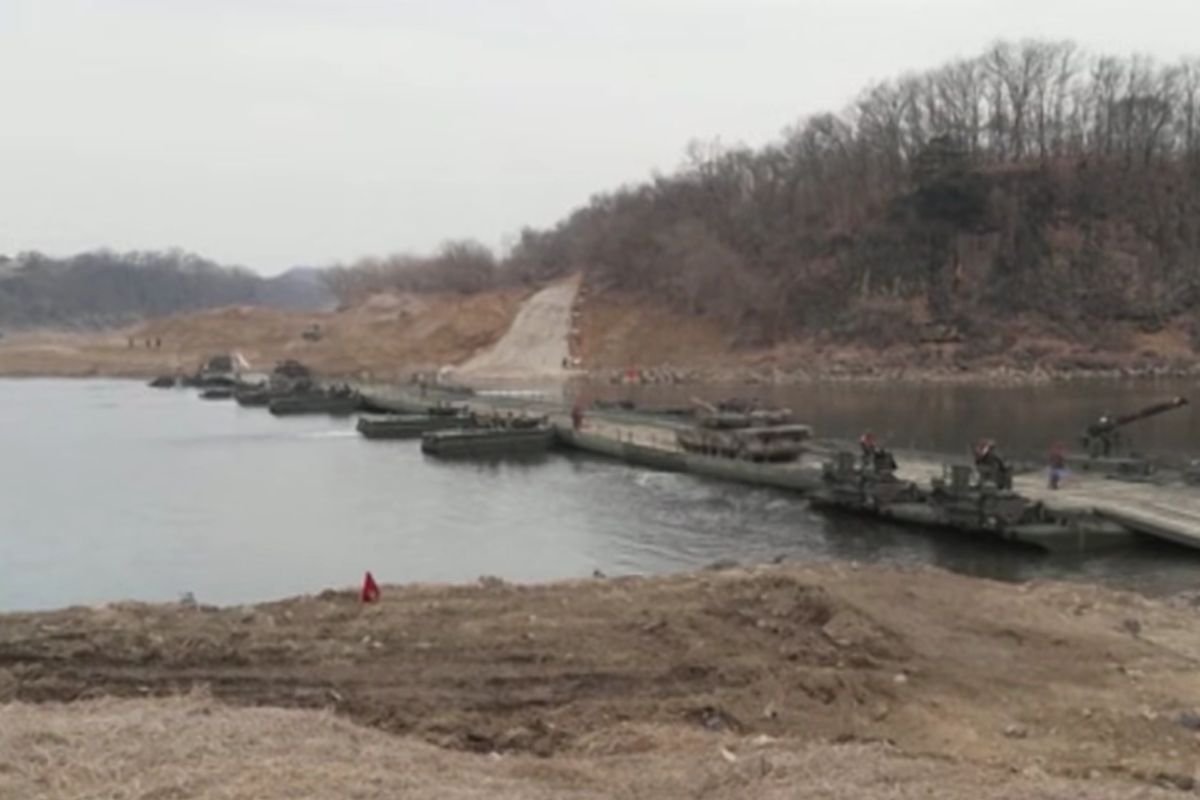
South Korea and the United States have recently undertaken a remarkable joint operation focusing on strategic bridge-building near the Demilitarized Zone (DMZ), a move with deep military and geopolitical implications.
This unprecedented exercise demonstrates how critical infrastructure development near high-tension areas is not just an engineering feat but also a calculated strategic endeavor. Tensions on the Korean peninsula have necessitated multi-faceted preparations, and this collaboration signals a strong message of readiness and alliance between the two nations. The partnership involves complex logistics, military coordination, and advanced engineering technologies, underscoring the evolving nature of modern military alliances.
Strategic importance of bridge-building near the DMZ and its military implications
Constructing a strategic bridge near the DMZ is no ordinary civil engineering project; it holds immense military value. The DMZ separates North and South Korea and remains one of the most fortified borders in the world. The new bridge infrastructure aims at enhancing troop mobility, supply chain efficiency, and rapid deployment capabilities. By improving access across the region, this installation could significantly alter operational dynamics in case of hostilities.
The collaboration allows the U.S. and South Korean military to test logistics chains under simulated combat conditions while synchronizing communication protocols vital for command and control. Coordinating construction efforts in this critical zone amalgamates engineering precision and strategic military foresight. Rapid reinforcement or evacuation routes would be strategically essential if tensions escalate abruptly.
In addition to military transportation, the bridge will structurally support heavy military vehicles, armored units, and emergency response teams, all of which require durable, high-load capacity. The engineering challenge includes ensuring resilience against potential sabotage, artillery fire, and natural elements. This also signifies symbolic deterrence by showcasing a permanent, robust presence close to hostile borders without provoking direct conflict.
Moreover, international observers understand that infrastructure projects like this carry an implicit message concerning preparedness and alliance solidarity. The proximity to the DMZ amplifies its significance in military strategy, reinforcing the partnership between U.S. and South Korea in defense and regional security operations.
Engineering challenges and innovations integrated into the joint bridge project
This joint U.S.-South Korea engineering initiative has tackled multiple challenges endemic to such a high-risk environment. The terrain near the DMZ is rugged and unpredictable — engineers had to plan around fluctuating river flows, land stability, and the risk of enemy surveillance. Solutions required innovative techniques that balance speed with safety and durability.
Recent advances in modular bridging technology were essential. Prefabricated components allowed quick assembly under controlled conditions, which minimized exposure during construction. The use of advanced composite materials improved the bridge’s load-bearing capacity and resistance to environmental wear and potential explosive impacts.
Technological integration included the use of remote-controlled drones for reconnaissance and real-time monitoring of structural integrity during and after construction. Automated sensors now embedded within the bridge can detect vibrations, weight stress, and even chemical residues indicative of sabotage attempts. This level of innovation aligns with modern military asset protection philosophies.
A particular emphasis was placed on camouflage and concealment elements, blending sections of the structure with natural surroundings using advanced paint technologies and deployment timing aligned with meteorological data to minimize aerial detection. These engineering efforts reflect a sophisticated understanding of battlefield requirements beyond simple construction excellence.
One of the most innovative aspects was synchronizing U.S. and South Korean standards for bridge design, given their slightly differing military needs and specifications. This harmonization reflects broader strategic cooperation and sets a precedent for future joint construction projects ensuring interoperability and mutual benefit.
Geopolitical ramifications of enhanced military infrastructure along the Korean border
The construction of this bridge extends beyond physical infrastructure; it has prominent geopolitical consequences. The North Korean regime views such developments as provocative, increasing tensions in the region. By advancing their military logistics, South Korea and the U.S. reinforce their deterrence, signaling that any aggressive move would face a faster, better-coordinated military response.
Internationally, this strengthening of U.S.-South Korea ties may influence strategic calculations of neighboring powers such as China and Russia. These countries remain sensitive to shifts in military balance and could escalate political pressure or modify their own military postures in response. Diplomatic channels are inevitably affected, and regional security frameworks adapt accordingly.
Additionally, the bridge possibly facilitates humanitarian operations in case of crises, including natural disasters or large-scale evacuations, which adds a layer of dual-use functionality to its geopolitical role. Civilian and military purposes intersect, strengthening public perception of alliance utility.
South Korea’s proactive stance on infrastructure development near the DMZ marks a shift from purely defensive to assertive strategic posturing, utilizing engineering projects as a tangible expression of sovereignty and resolve. It also signals increased national confidence bolstered by U.S. military support. This development might prompt dialogues on arms agreements and border policies within multilateral forums.
Amid global instability, such reinforced infrastructure demonstrates how infrastructure investment is a key tool in modern diplomacy and power projection. The blend of military preparedness and engineering prowess reshapes the Korean peninsula’s security landscape.
How joint exercises near the DMZ improve alliance capabilities and readiness
Beyond physical construction, the collaborative exercise brings invaluable operational training for both militaries. Bridge-building near the DMZ integrates engineers, combat troops, logistics teams, and command staff in an exercise that refines coordination under pressure. This collaboration reveals areas for improvement in communication and resource allocation, informing future military planning.
Live simulations during bridge assembly prepare troops for rapid construction and repair operations during conflict scenarios. These scenarios include simulated attacks, evacuations, and emergency logistics rerouting, thereby honing critical skills. Engineers gain hands-on experience with battlefield constraints, while soldiers practice securing and defending these vital assets. It is a comprehensive rehearsal of contingency responses in one of the world’s most militarized zones.
The exercise also tests interoperability of equipment and procedures, ensuring American and South Korean units can seamlessly integrate in joint combat or disaster relief missions. This is crucial given evolving global threats that require multi-domain responses involving land, air, sea, and cyber warfare elements.
Training outcomes influenced subsequent military doctrine updates emphasizing rapid infrastructure deployment, joint command decision-making, and civil-military cooperation. By learning from each session, the alliance strengthens deterrent postures and operational resilience.
Exercises of this nature boost morale and solidify the trust between the two armed forces, which is vital for sustained partnership in a volatile region. The bridge project symbolizes cooperative readiness not only through steel and concrete but also through shared expertise and cultural exchange.
Environmental and civil considerations tied to military infrastructure development
Strategic construction near the DMZ inevitably raises concerns about environmental impact and local communities. The DMZ is not just a conflict zone but also serves as a significant ecological reserve, home to rare species and functioning as a green corridor on the Korean peninsula. Ensuring this development respects ecological balance is a challenging but necessary task.
Environmental assessments informed construction methods by minimizing soil disturbance and protecting waterways critical for biodiversity. Noise and pollution controls were strict, and construction scheduling avoided breeding seasons of indigenous wildlife. The partnership also tested low-impact transport options for materials into the sensitive area.
From a civil perspective, the bridge opens potential economic benefits by improving connectivity, but also raises security concerns among local populations wary of increased military activity. Public outreach programs were implemented to keep communities informed, easing tensions and fostering cooperation.
Moreover, infrastructure improvements near the border could enable better disaster response capabilities, which is broadly viewed as a positive by humanitarian organizations. Nonetheless, this dual-use functionality necessitates transparent diplomacy to reassure all regional actors.
The balancing act of advancing strategic needs while preserving environmental and social stability reflects increasingly complex defense project management in contested spaces. The South Korea and U.S. collaboration might serve as a model for responsible military infrastructure development worldwide.
| Date | Activity | Location | Description |
|---|---|---|---|
| March 2026 | Planning phase initiated | Seoul HQ | Joint Korean and U.S. military engineers begin detailed design and logistics planning |
| April 2026 | Site reconnaissance and environmental assessment | DMZ border area | Joint teams survey terrain and analyze ecological impacts |
| May 2026 | Bridge construction begins | Near DMZ | Prefabricated modular components assembled rapidly on-site |
| June 2026 | Operational testing and live exercises | Bridge site | Simulated military logistics and rapid deployment drills conducted |
| July 2026 | Project completion and handover | DMZ area | Bridge commissioned and ready for strategic use |
- Enhanced joint military readiness through practical infrastructure exercises
- Use of cutting-edge modular bridge technology for rapid deployment
- Balancing environmental concerns with strategic military development
- Strengthening U.S.-South Korea alliance in face of regional security threats
- Integration of advanced surveillance and sabotage detection systems
Why is building a bridge near the DMZ strategically important?
The bridge facilitates rapid troop deployment, logistics support, and emergency evacuation, enhancing military readiness in one of the world’s most tense borders.
How do South Korea and the U.S. ensure the bridge’s resilience against attacks?
Advanced materials, modular construction, surveillance drones, and embedded sensors protect the bridge from physical damage and sabotage attempts.
What environmental measures are taken during this project?
Construction minimizes ecological disruption through scheduling, pollution controls, and habitat protection protocols to preserve the DMZ’s unique ecosystem.
How does this project impact regional geopolitics?
It reinforces deterrence against North Korea, signals alliance strength, and influences diplomatic and military strategies of China and Russia.
What benefits besides military does this bridge offer?
Improved disaster response capabilities, potential economic ties, and civilian access in emergencies also result from this infrastructure.
Sources:
- https://www.reutersconnect.com/item/south-korea-and-us-army-join-conduct-military-exercise/dGFnOnJldXRlcnMuY29tLDIwMjY6bmV3c21sX01UMVNJUEEwMDBFVlhZWlU
- https://www.koreatimes.co.kr/amp/southkorea/defense/20260314/s-korea-us-hold-joint-river-crossing-drills-amid-n-koreas-missile-firing
