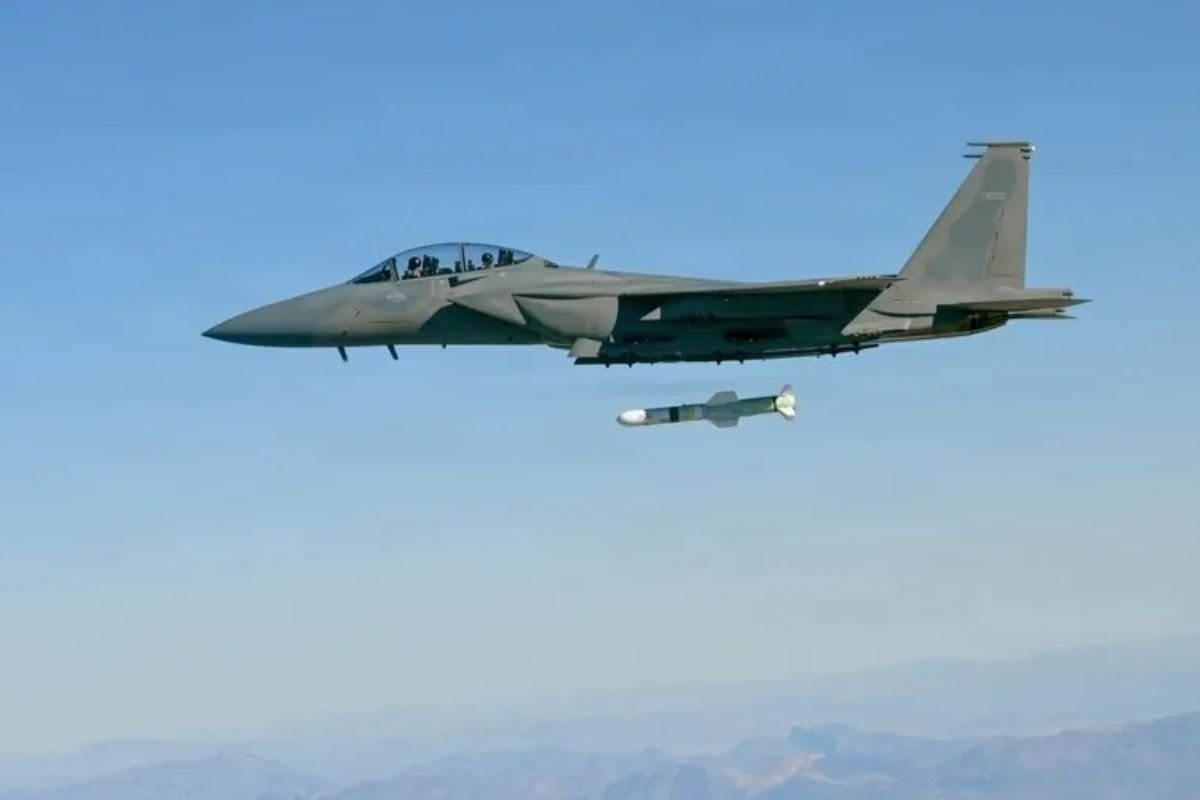
The U.S. Navy is gearing up to extend the combat power of one of its most trusted weapons with a major upgrade to the Harpoon missile system, ensuring its dominance in naval strike capabilities well into the future.
The Harpoon missile, a cornerstone of U.S. naval armaments since the 1970s, is about to receive a significant modernization boost courtesy of Boeing. This upgrade focuses on countering obsolescence while enhancing lethality and versatility. As global maritime threats evolve rapidly, keeping such systems at peak performance is critical for maintaining strategic advantage. The contract awarded to Boeing represents both a commitment to sustaining legacy assets and an effort to equip the Navy with next-generation strike options.
Extending the life of a naval icon with Boeing’s advanced Harpoon overhaul
The Harpoon missile has earned its place as a vital anti-ship asset for the U.S. Navy and allied maritime forces worldwide. Since its first introduction in the 1970s by McDonnell Douglas (now Boeing), it has undergone various iterations to keep pace with changing threat landscapes. Now, Boeing’s latest push is focused on upgrading the Block II variant through the Harpoon Block II Update (HIIU) program, which breathes new life into the aging but reliable missile.
This modernization effort tackles the core challenge many military platforms face: system obsolescence. Components from decades ago—electronics, sensors, propulsion—do not mesh with today’s battlefield demands. The HIIU program aims to replace outdated electronics with modern hardware, upgrade guidance systems, and improve target acquisition capabilities.
One standout feature is the integration of advanced seekers, which can enhance the missile’s precision strike capabilities. Boeing’s collaboration with Raytheon and Norway’s Kongsberg has spurred innovative sensor design, ensuring the missile’s ability to cope with various maritime environments, including the more challenging littoral zones. Together, these upgrades extend the missile’s service life by several decades.
Besides hardware renewals, Boeing has emphasized streamlined software architectures that allow easier upgrades going forward. This ensures that the Harpoon missile can continuously evolve, reducing the need for wholesale replacements as new threats emerge. Operational flexibility has also increased; the missile can be launched from air, surface, and submarine platforms, supporting diverse tactical profiles.
From a strategic perspective, this upgrade reaffirms the Navy’s focus on multi-domain naval warfare. The ability to execute precise anti-ship strikes from various environments boosts deterrence and secures sea lanes essential to U.S. and allied interests worldwide. The revamp is especially timely given rising naval competition in contested waters such as the Indo-Pacific region.
Technical refinements and battlefield implications of the Block II update
The heart of the upgrade lies in the missile’s advanced seeker technology, crucial for tracking and engaging elusive targets. The new seekers provide enhanced radar and infrared detection, improving accuracy against sophisticated countermeasures or stealthy ships. This is a leap forward compared to earlier iterations relying primarily on active radar homing, which can be susceptible to jamming.
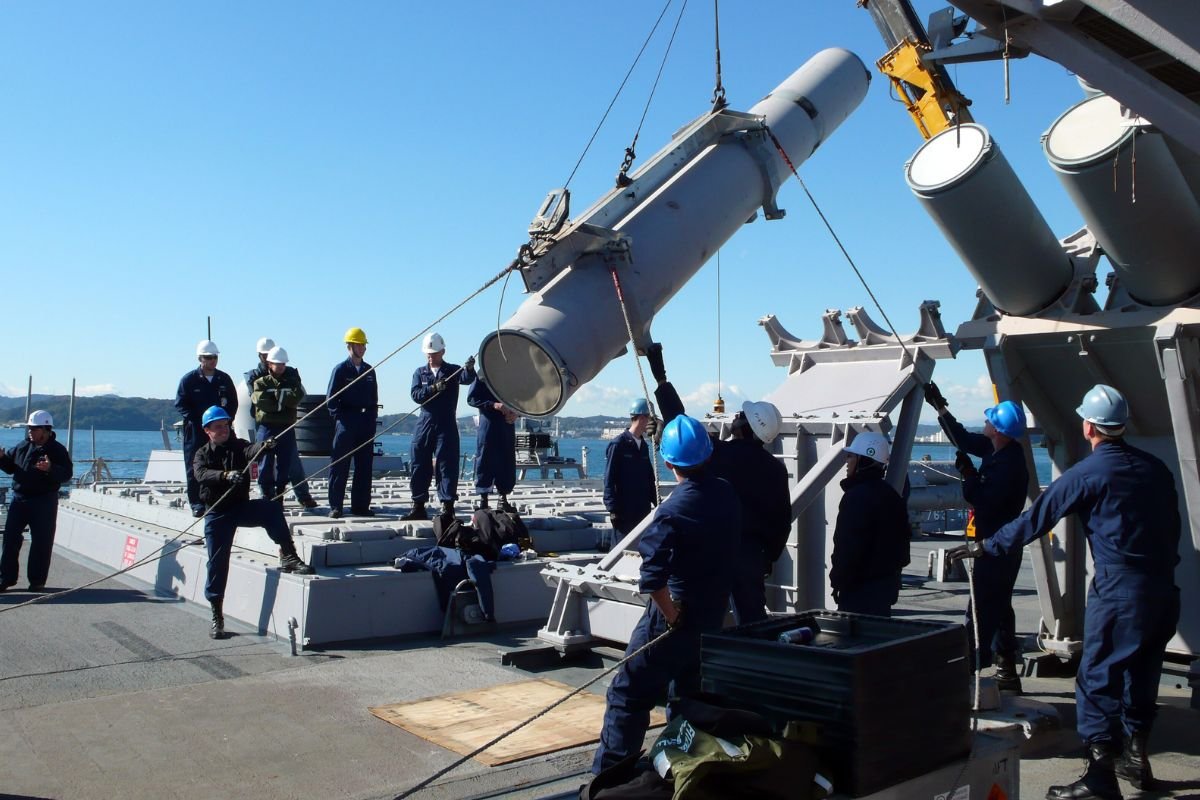
Another pivotal improvement is the capability to modify and launch the updated Harpoon from underwater platforms, reviving a feature the Navy had deprioritized years ago. Submarine-launched versions introduce a strategic depth to naval strike options, making it harder for adversaries to track or anticipate missile launches. This flexibility significantly amplifies threat projection, especially in confined or contested maritime zones.
To support these upgrades, the Navy awarded Boeing a contract worth approximately €1.1 billion to refurbish 400 missiles and supply updated launch and control systems. This investment also includes retrofitting coastal defense systems, particularly for key partners like Taiwan, which is rolling out 100 Harpoon Coastal Defense System launchers.
The program’s careful balancing of modern tech with legacy integration highlights Boeing’s engineering prowess. According to officials, the entire missile airframe retains proven aerodynamic design, minimizing costly requalification. At the same time, the electronics suite has shifted to modular designs, enabling swift maintenance and upgrades in-theater.
Such refinements translate to operational benefits beyond raw firepower. Crew training becomes more efficient with upgraded control interfaces, and maintenance demands drop due to improved system diagnostics. All these factors contribute to greater missile availability and quicker turnaround between missions.
The Block II update also includes enhanced networking capabilities, allowing the missile to share real-time targeting data with other naval assets. This situational awareness fosters coordinated strikes, increasing the chances of mission success while decreasing exposure of the launch platform to enemy fire.
Strategic ramifications for Indo-Pacific security and allied naval forces
The timing of this upgrade resonates loudly in geostrategic circles, especially given the ongoing tensions in the Indo-Pacific. The region is home to crucial sea lanes through which a substantial portion of world trade passes, making their security paramount for global stability. The Harpoon modernization significantly boosts deterrence against potential aggressors looking to challenge naval dominance in these strategic waters.
Allied partners also stand to benefit from the U.S. Navy’s investment. Taiwan’s acquisition of Harpoon Coastal Defense Systems under this upgrade effort underscores regional efforts to shore up defenses against maritime threats. The missile’s proven record combined with fresh enhancements makes it a formidable asset for countries in the Asia-Pacific seeking reliable, interoperable strike capabilities.
Moreover, U.S. allies in Europe and the Middle East continue to operate older Harpoon variants. They now have a path to upgrade their arsenals or coordinate joint training exercises with the U.S. Navy, fostering interoperability and shared defensive strategies. This collaboration extends the missile’s influence beyond American fleets alone.
It’s also worth noting the psychological impact such upgrades have on potential adversaries. Upgrading a weapon system with decades of combat pedigree signals that the U.S. Navy values tried-and-tested solutions while embracing innovation. This dual approach complicates the calculations of rival navies and deters reckless escalation in contested maritime zones.
Furthermore, the flexibility of launch platforms—from aircraft carriers to submarines—means the United States can project power discreetly and rapidly, closing gaps that might otherwise expose vulnerabilities. The upgraded Harpoon system effectively becomes a linchpin of distributed lethality, reshaping naval strike doctrines.
Program challenges, industrial cooperation, and future outlook
Upgrading a missile system as renowned and complex as the Harpoon is no trivial task. One key challenge lies in integrating new technologies with hardware designed in a different technological era. Boeing engineers have had to devise creative solutions to maintain structural integrity while embedding advanced sensors and guidance modules.
The collaborative nature of this modernization is also noteworthy. With Raytheon providing sensor expertise and Norway’s Kongsberg contributing to seeker development, the program benefits from a global engineering ecosystem. This teamwork enables knowledge exchange and cost-sharing, accelerating development cycles and improving final product quality.
Another ongoing hurdle is pace: naval threats evolve swiftly, and upgrades must be deployed rapidly enough to maintain relevancy. Here, software-defined designs prove vital, as many capability improvements can be implemented remotely through updates rather than physical replacements.
Looking forward, the Navy may explore further refinements such as integrating artificial intelligence-assisted target recognition or extending the missile’s range to counter emerging threats. There are also discussions on adapting the missile to fire hypersonic warheads or incorporating more versatile payload configurations.
Ultimately, this modernization underlines the importance of sustaining legacy systems intelligently rather than immediately turning to new weapon designs. It reflects a broader trend in military procurement emphasizing affordability, reliability, and adaptability.
Boeing’s contract to deliver 25 recertified Harpoon missiles as part of this phase highlights a gradual rollout approach, ensuring quality control and client readiness. This method avoids interrupting current operational capabilities while achieving seamless transition.
Key specs and comparative advantages in the naval missile arena
The upgraded Harpoon missile system brings several measurable improvements, positioning it strongly against international competitors. The table below outlines some critical specifications that illustrate these advances:
| Attribute | Current Block II Harpoon | Upgraded Block II Update (HIIU) | Comparable competitor (NSM) |
|---|---|---|---|
| Range (km) | 125 | 150+ | 185 |
| Guidance system | Active radar homing | Advanced multi-sensor seekers | Imaging IR and radar |
| Launch platforms | Air, surface, submarine | Air, surface, submarine (enhanced underwater launch) | Surface and air |
| Warhead | 221 kg blast-fragmentation | Improved lethality warhead | 120 kg blast-fragmentation |
| Networking | Basic target sharing | Enhanced real-time data sharing | Limited |
This combination of improved range, sophisticated guidance, and multi-platform flexibility puts the upgraded Harpoon on a competitive footing with the latest naval strike missiles globally. Its enhanced warhead increases the lethality against well-armored targets, a critical factor given evolving ship defense technologies.
Overall, the modernization effort fortifies the missile’s stature as a cornerstone of maritime strike power, balancing affordability with next-gen capabilities.
A practical checklist for understanding modern naval missile upgrades
The complexity of missile modernization programs can be overwhelming. Here is a clear list of essential elements to grasp when assessing upgrades like Boeing’s Harpoon Block II Update:
- Obsolescence management: Replacing outdated electronic and mechanical parts to extend lifetime.
- Advanced seeker technology: Incorporating multi-sensor guidance for improved target acquisition and counter-countermeasure capabilities.
- Multi-platform launch versatility: Enabling launch from air, surface ships, and submarines.
- Software-defined upgrades: Modular software allowing remote updates and easier future enhancements.
- Enhanced networking: Real-time data sharing to integrate missile strikes with broader fleet tactics.
- International cooperation: Sourcing technology from allied partners to spread costs and leverage joint expertise.
- Incremental rollout: Introducing upgrades in phases to ensure reliability without operational gaps.
This checklist offers a useful framework for understanding how upgraded systems maintain relevance against new threats in a cost-effective manner.
What improvements does the Harpoon Block II Update include?
The update features advanced multi-sensor seekers, improved warheads, enhanced networking capabilities, and underwater launch options, extending range and precision.
How does the upgraded Harpoon compare to competitors?
It offers competitive range, multi-platform launch capability, and modern guidance systems, outperforming many existing missiles like the NSM in networking and lethality.
Which countries are receiving the upgraded Harpoon system?
Besides the U.S. Navy, Taiwan is a significant recipient with plans for coastal defense enhancements; allied navies in Europe and the Middle East may also benefit from upgrades.
What strategic advantages does the upgrade bring?
The modernized system boosts deterrence in key maritime regions, enables more flexible strike options, and enhances interoperability among U.S. allies.
What challenges does the upgrade address?
It tackles system obsolescence, integrates advanced technologies into legacy platforms, and maintains operational readiness during the transition.
Source: https://defence-industry.eu/u-s-navy-completes-final-harpoon-block-ii-missile-update-flight-test-clearing-path-for-deliveries-later-this-year/
