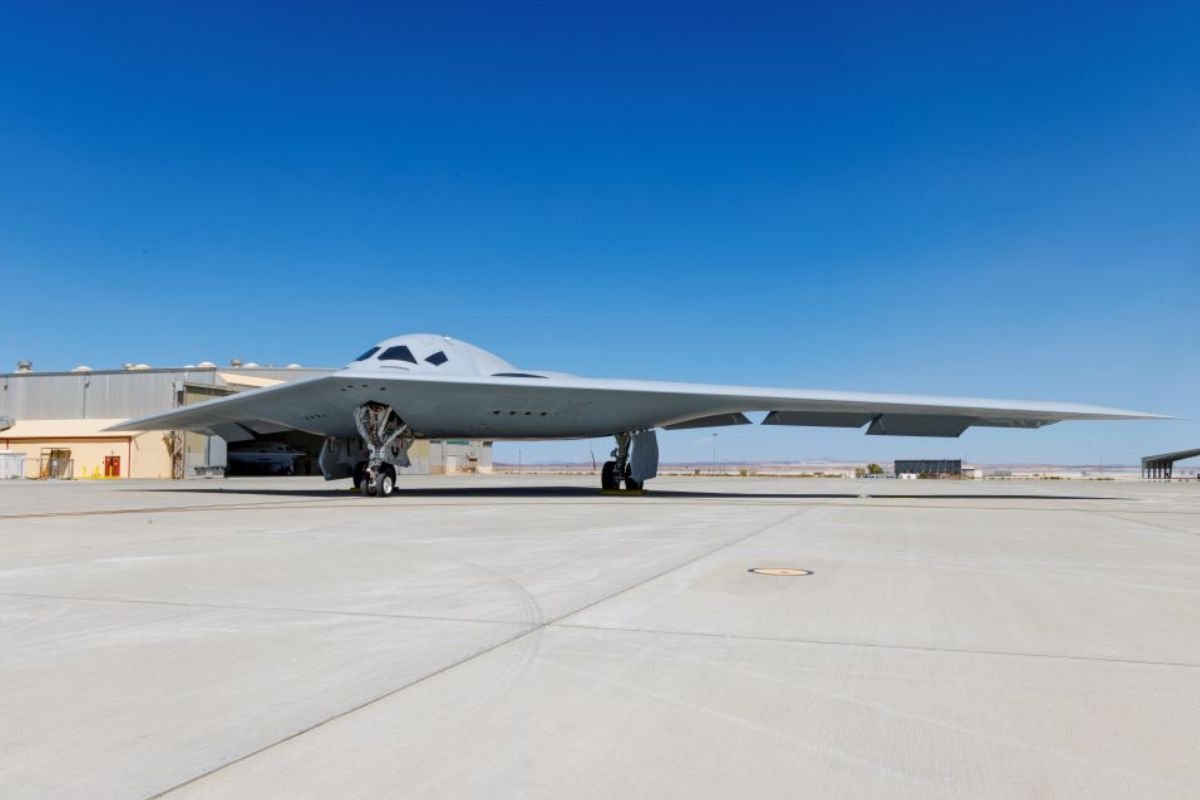
The U.S. Air Force is speeding up the arrival of its next-generation stealth bomber, the B-21 Raider, thanks to Northrop Grumman’s ambitious production acceleration efforts. This move signals a leap forward in modernizing America’s strategic airpower, ensuring the service maintains its edge in the evolving landscape of global military technology. The B-21, representing the future of long-range strike capability, is set to reshape the bomber fleet by replacing aging aircraft and introducing unparalleled stealth and technological sophistication.
Since unveiling the B-21 Raider in late 2022, Northrop Grumman and the U.S. Air Force have intensified cooperation to accelerate the aircraft’s production and deployment. With a substantial investment in digital engineering and manufacturing innovations, the facility in Palmdale, California, has become a hub of cutting-edge aerospace manufacturing. The efforts are geared toward a minimum production target of 100 airframes, reflecting strategic foresight and a robust response to modern challenges.
Northrop Grumman’s digital engineering revolution powers faster B-21 Raider assembly
In the world of military aviation, traditional manufacturing approaches often take years, if not decades. However, Northrop Grumman is breaking this mold by embracing advanced digital engineering and automation technologies. These innovations are central to the accelerated production schedule now underway for the B-21 Raider, enabling a faster transition from concept to fully operational bomber.
Leveraging more than €4.5 billion ($5 billion) invested in the digital engineering and manufacturing infrastructure at its Palmdale, California facility, Northrop Grumman has established an efficient, flexible assembly line. This investment not only reduces production bottlenecks but also introduces precision and repeatability previously unseen in bomber manufacturing.
By integrating augmented reality, robotics, and data-driven processes, technicians can assemble complex components with superior accuracy and speed. For example, technicians utilize augmented reality headsets during the assembly to overlay digital schematics on physical parts, helping detect inconsistencies before they escalate into costly errors.
This digitally enhanced manufacturing ecosystem has allowed Northrop Grumman to bypass the traditional prototype phase, directly building test aircraft to production standards. The strategy minimizes delays between aircraft variants and supports a scalable production plan able to meet increased demand rapidly.
The result is a production rhythm that outpaces expectations, preparing the Air Force for receiving fully ready B-21 Raiders much earlier than predicted. It’s a technological leap that sets a new benchmark in military aerospace manufacturing and positions the U.S. at the forefront of strategic bomber development.
Transforming america’s strategic bomber fleet: B-21’s essential role in national defense
The United States long relies on its trio of strategic bombers: the B-52 Stratofortress, B-1B Lancer, and B-2 Spirit. These aircraft have sustained America’s global reach for decades, but each platform faces challenges linked to age, technology, and evolving threat scenarios.
The B-21 Raider is slated to reshape this landscape by replacing the aging B-1B and B-2 fleets. As of now, the U.S. Air Force fields approximately 19 B-2s and 45 B-1B bombers, while retaining 76 B-52s — affectionately known as “BUFF” (Big Ugly Fat Fellow). Importantly, the B-21 is not meant to substitute the B-52, which remains under significant modernization efforts, including the B-52J upgrade and nuclear certification.
The accelerated production strategy targets building at least 100 B-21 units, aligning with the need to replace 64 B-1B and B-2 bombers while expanding capabilities for future conflicts. The new bomber’s stealth characteristics, survivability in highly contested environments, and ability to carry both conventional and nuclear payloads make it a vital component of America’s long-range strike power.
Ellsworth Air Force Base in South Dakota has been selected to host the first operational B-21, with delivery expected as soon as 2027. This milestone will begin transitioning the bomber fleet toward a technologically superior and strategically lethal force.
The B-21’s design, a flying-wing platform like the B-2 but embedded with advances in propulsion, materials, and avionics, suggests a significant step forward. It is engineered to penetrate advanced adversary air defenses, ensuring that America can project power globally despite increasingly sophisticated hostile capabilities.
Northrop Grumman’s delivery timetable and digital manufacturing capabilities ensure the United States avoids the limitations once suffered during the B-2 program, where high costs and protracted development led to a very limited number of aircraft. The goal: a robust, sustainable bomber fleet prepared for future conflicts and unforeseen challenges.
Financial investments and strategic agreements driving B-21’s production ramp-up
The acceleration of the B-21 Raider production didn’t happen by chance. It reflects deliberate planning, significant financial backing, and strategic alignment between the Department of the Air Force and Northrop Grumman’s leadership.
A cornerstone funding package of more than €4.5 billion has been allocated through the 2025 fiscal reconciliation act, specifically earmarked to increase manufacturing capacity and hasten aircraft delivery schedules. This financial boost underlines the importance of the program amidst current geopolitical tensions and challenges the U.S. faces worldwide.
CEO Kathy Warden of Northrop Grumman has publicly reaffirmed the company’s commitment to this high-priority program. Highlighting the investment in state-of-the-art digital and manufacturing infrastructure, Warden noted the organization’s readiness to scale production speedily.
Additionally, Northrop Grumman’s corporate vice president, Tom Jones, has articulated confidence in meeting or even exceeding the baseline production target of at least 100 B-21 bombers. This projection factors in operational demands while acknowledging the B-21’s role as a central pillar of the Air Force’s future.
Such commitments echo broader military modernization trends, emphasizing rapid acquisition and deployment of advanced systems. The increased production capacity entails hiring skilled workers, upgrading production lines, and enhancing supplier networks to accommodate the intricate components necessary for the Raider’s stealth and avionics systems.
Notably, Ellsworth Air Force Base stands as the symbol of this transformation, with a €1 billion infrastructure investment led by the Air Force Civil Engineer Center (AFCEC) to establish sustainable, cutting-edge facilities preparing for an influx of B-21 bombers and their support crews.
How the B-21 Raider redefines airpower with stealth and technological innovation
The B-21 Raider is not merely an upgrade over its predecessors but a leap into next-generation stealth and combat capabilities. It integrates advanced materials, design philosophies, and systems that enable it to operate in contested environments where older bombers could no longer survive.
A defining feature of the B-21 is its ability to evade sophisticated radar and missile detection systems, owing to its flying-wing shape and radar-absorbent materials. This stealth aspect, combined with improved electronic warfare tools, provides the U.S. Air Force a critical advantage.
Unlike the B-1B Lancer, which stands out as the sole supersonic bomber in the current fleet, the Raider prioritizes stealth and endurance over raw speed. It is optimized for penetrating the increasingly sophisticated integrated air defense systems countries develop worldwide.
The B-21 also incorporates an open architecture design, allowing updates and modifications for emerging threats. This future-proofing means the aircraft can adapt to new challenges and integrate next-wave technologies without lengthy overhauls.
Onboard systems emphasize automation, sensor fusion, and connectivity with other military platforms, enhancing situational awareness and mission flexibility. It can carry both nuclear and conventional payloads, making it a dual-capable strategic asset.
This technological edge is critical for maintaining deterrence. In an era where potential adversaries invest heavily in anti-access/area denial (A2/AD) systems, the B-21’s stealth and reach allow the U.S. to hold distant targets at risk effectively.
Understanding the B-21 Raider’s strategic import involves not just the aircrafts’ specs but the broader defense landscape it enters. This video details how the accelerated production aligns with modern threats and U.S. defense priorities.
Comparing the B-21 Raider production targets with the current bomber fleet capacity
One practical way to understand the scale of the B-21 program is to compare its production goals to existing bomber numbers. The Air Force aims to produce at least 100 B-21 Raiders, a figure reflecting operational needs and plans to retire aging aircraft.
The current bomber fleet includes:
- 19 B-2 Spirits, known for their stealth capabilities but limited in number due to high acquisition costs and operational challenges.
- 45 B-1B Lancers, the only supersonic bombers currently flying but gradually aging and facing maintenance demands.
- 76 B-52 Stratofortresses, a venerable workhorse undergoing upgrades, but not slated for replacement anytime soon.
The B-21 Raider’s primary replacement effort targets the combined 64 B-1B and B-2 bombers, which have operational timelines ending in the coming decades. The 100-unit production minimum allows for operational flexibility, attrition, and the expansion of capabilities.
| Bomber Model | Number Currently in Service | Replacement Status | Role in Future Fleet |
|---|---|---|---|
| B-52 Stratofortress | 76 | Modernized, retained | Long-range heavy bomber, nuclear and conventional |
| B-1B Lancer | 45 | Phased out, replaced by B-21 | Supersonic conventional bomber |
| B-2 Spirit | 19 | Phased out, replaced by B-21 | Stealth strategic bomber |
| B-21 Raider | At least 100 planned | New fleet backbone | Stealth, dual-capable strategic bomber |
This comparative video highlights differences and improvements of the B-21 over the iconic B-2 Spirit. It’s a visual guide to understanding why the accelerated production is a game-changer for the Air Force.
When will the first B-21 Raider be delivered to the U.S. Air Force?
The first B-21 Raider is scheduled for delivery to Ellsworth Air Force Base in South Dakota in 2027, marking the start of operational deployment.
What is the planned production goal for the B-21 Raider?
The U.S. Air Force aims to produce at least 100 B-21 Raiders to replace older bombers and expand modern strategic capabilities.
Will the B-21 replace all current bombers?
No, the B-21 will primarily replace the B-1B Lancer and B-2 Spirit fleets, while the B-52 Stratofortress will remain in service following modernization upgrades.
How does the B-21 maintain its stealth capability?
The B-21 uses a flying-wing design combined with radar-absorbent materials and advanced electronic warfare systems to remain undetected by modern air defenses.
What financial support has been provided for B-21 production?
More than €4.5 billion in funding from fiscal legislation has been allocated to accelerate production capacity and infrastructure upgrades for the B-21 program.
Source: https://news.northropgrumman.com/b-21/northrop-grumman-accelerating-b-21-raider-production
