
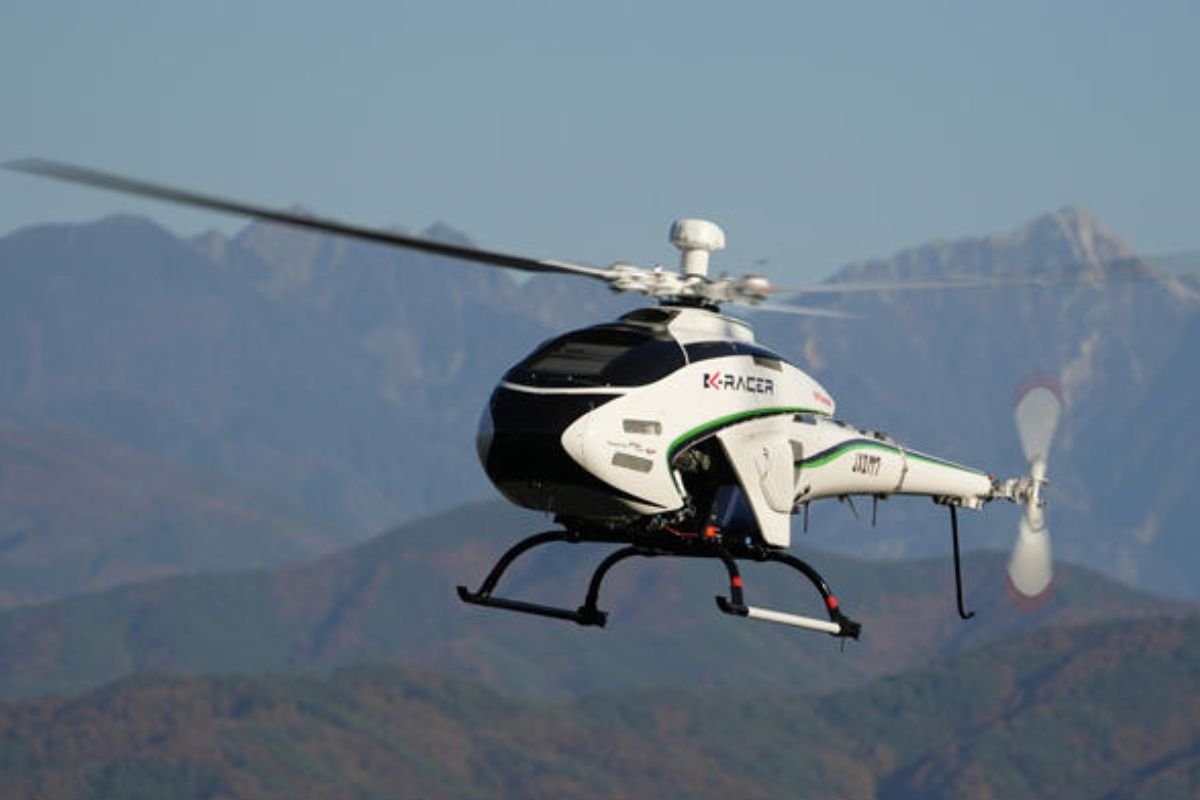
Kawasaki is revolutionizing the drone industry with its latest collaborative system designed to enhance aerial operations through cutting-edge technology and strategic partnerships.
Combining decades of experience in engine development and robotics, Kawasaki Heavy Industries is pushing the boundaries of unmanned aerial vehicles (UAVs) with a system that promises increased efficiency, operational range, and versatility. This innovative approach merges Kawasaki’s renowned engineering with expertise in UAV design and manufacturing, setting a new standard for the future of aerial logistics and surveillance. The unveiling of this advanced drone system marks a significant milestone in aviation technology, underscoring Kawasaki’s pivot from traditional motorbikes and heavy machinery to becoming a leader in next-generation aerial solutions.
Breaking new ground in collaborative drone technology with Kawasaki’s strategic partnerships
The cornerstone of Kawasaki’s latest drone innovation lies in its strategic collaborations, especially the partnership with Dronamics, a specialized UAV design and operation company. By pooling resources and expertise, these industry players combine Kawasaki’s history in reliable engine manufacturing with Dronamics’ agile design and autonomous UAV operations, resulting in a powerful synergy. The collaboration focuses on integrating aero piston engines developed by Kawasaki into civilian cargo drones, such as Dronamics’ flagship Black Swan, which promises long-range flights and high payload capacities that are unmatched at this scale.
The decision to use aero piston engines instead of the more common electric motors is critical. Piston engines, refined by Kawasaki for reliability and power, provide a longer endurance and greater fuel efficiency, essential attributes for commercial drone deployments over vast distances. This makes Kawasaki-powered UAVs particularly attractive for logistics across remote and hard-to-reach regions, where battery-powered drones typically fall short. Additionally, this approach opens the gate for expanded civilian and maritime applications, including transport, monitoring, and emergency response missions.
Examples of collaborative advantages include:
- The ability to develop engines specifically tuned for drone requirements, balancing power output with weight and noise considerations.
- Shared R&D initiatives from conceptual design to rigorous field testing, ensuring every UAV meets practical operational demands.
- Leveraging Kawasaki’s manufacturing scale to produce engines at volumes that meet growing market needs.
- Dronamics’ expertise in autonomous flight systems, enabling precise navigation and safe integration into controlled airspaces.
This partnership is more than a technological exercise; it represents a paradigm shift in how multiple disciplines converge to create UAVs that are not only innovative but also imminently practical for commercial use.
How Kawasaki’s K-RACER-X2 UAV helicopter is setting new standards in remote cargo delivery
The K-RACER-X2, Kawasaki’s newly unveiled unmanned vertical takeoff and landing (VTOL) helicopter, is designed to operate in complex environments where traditional aircraft cannot. This VTOL UAV is engineered to serve cargo transport needs in remote, rugged terrains, often plagued by poor infrastructure or high-risk factors that hamper conventional delivery methods.
Unlike fixed-wing drones, the K-RACER-X2 combines rotary-wing agility with advanced aerodynamic design to take off and land vertically, making it ideal for pinpoint deliveries without a need for runways. Its innovative design draws from Kawasaki’s experience in motorcycles and robotics, producing a UAV that balances speed, maneuverability, and heavy payload capacity. This is especially critical in sectors like disaster relief, offshore resupply missions, and military logistics where agility and reliability can save lives and reduce costs.
Specific features that distinguish the K-RACER-X2 include:
- A sophisticated flight control system that adapts to wind and weather instability, maintaining stability and precision.
- Long endurance enabled by fuel-efficient piston engines, allowing sustained missions without frequent refueling.
- Modular cargo bays adaptable for various payloads, from medical supplies to electronic equipment.
- Integration with real-time data analytics for optimized flight paths and mission planning.
- Enhanced safety systems to mitigate risks of collision and failure during complex maneuvers.
Operational testing at challenging sites has demonstrated the K-RACER-X2’s capability to access isolated regions quickly and reliably. For example, a recent trial in rugged mountain areas showed the UAV successfully delivering essential supplies across 150 km without interruption, outperforming traditional transport methods in speed and cost-efficiency.
These developments highlight Kawasaki’s commitment to transforming aerial cargo by addressing critical social issues like labor shortages and geographical barriers with technological innovation.
Innovations in piston engine technology powering the next generation of unmanned aerial vehicles
The heart of Kawasaki’s aerial breakthrough lies in its sophisticated piston engine technology, tailored for UAV operations. Unlike conventional piston engines used in motorcycles or cars, these specialized engines are engineered for lightweight efficiency, durability, and minimal fuel consumption—qualities indispensable for drone endurance and reliability.
Kawasaki has revamped its engine designs by incorporating advanced materials and precision manufacturing processes honed over decades in its powersports division. The engines deliver a remarkable balance of power and efficiency, with outputs fine-tuned for the aerodynamic and weight constraints unique to UAVs.
Key technical advancements include:
- Lightweight aluminum alloys reducing engine weight without sacrificing strength.
- Enhanced combustion systems that maximize fuel efficiency while lowering emissions.
- Integrated cooling technologies that maintain optimal engine temperatures during extended flights.
- Modular engine designs facilitating rapid maintenance and customization for diverse drone models.
This level of engine innovation not only extends the operational radius of drones but also reduces the cost per flight hour, making UAV missions economically viable for industries such as cargo delivery, aerial surveillance, and emergency services. Illustratively, piston-engine-powered UAVs have demonstrated flight durations exceeding 12 hours with payloads upwards of 200 kg, a substantial leap beyond battery-driven systems.
The strategic focus on piston engines reflects Kawasaki’s intent to secure a competitive edge by reviving and modernizing aviation propulsion technology tailored for a 21st-century UAV market.
Expanding maritime and civilian applications with Kawasaki’s new drone technology
Beyond cargo delivery, Kawasaki is actively showcasing the maritime potential of its UAV systems, especially the K-RACER-X2, which aims to change the way coastal surveillance, search and rescue, and offshore operations are conducted. Maritime environments present unique challenges: unpredictable weather, vast operational zones, and the need for autonomous navigation over open water. Kawasaki’s drones are designed with these obstacles in mind, leveraging their VTOL capability and endurance to provide continuous, reliable aerial coverage.
For example, in coastal policing, these UAVs can monitor large areas for illegal fishing or unauthorized vessels in real time without risking crew safety or requiring costly manned patrols. Similarly, search and rescue teams can deploy these drones quickly to locate persons or vessels in distress, feeding live aerial imagery directly to command centers.
On the civilian front, Kawasaki’s drones hold promise in agriculture, environmental monitoring, and infrastructure inspection. Their ability to cover large tracts of land efficiently makes them perfect for crop health mapping, wildlife census, and pipeline surveillance. The drones’ modular payload system also allows for interchangeable sensors, enhancing versatility.
Key civilian and maritime benefits include:
- Reduced operational costs compared to manned aircraft and ground patrols.
- Minimized environmental impact due to fuel-efficient engines and reduced noise.
- Improved mission safety by limiting human exposure to hazardous conditions.
- Higher data accuracy with real-time aerial imaging and sensor integration.
These applications exemplify how Kawasaki’s drone innovation transcends logistics, creating new opportunities for safer, greener, and more efficient aerial services across multiple sectors.
Comparing Kawasaki’s UAV system performance and operational milestones
Since the public debut of the K-RACER-X2 and related UAV initiatives, Kawasaki has logged impressive milestones demonstrating the system’s operational capabilities. This table summarizes key performance indicators gathered from ongoing tests and deployments, illustrating how this technology measures against existing drones and traditional aircraft.
| Metric | Kawasaki K-RACER-X2 | Standard Electric VTOL UAV | Conventional Small Cargo Aircraft |
|---|---|---|---|
| Maximum Range (km) | 550 km | 150 km | 400 km |
| Maximum Payload (kg) | 200 kg | 50 kg | 500 kg |
| Flight Duration (hours) | 12+ | 1-2 | 5-7 |
| Takeoff/Landing Capabilities | Vertical | Vertical | Runway Required |
| Fuel Efficiency (km/liter) | 18 km/l | n/a | 12 km/l |
These figures place Kawasaki’s UAV at the forefront of medium-range cargo and utility drones, offering extended flight capabilities without sacrificing the flexibility of vertical takeoff and landing. Its performance addresses common UAV limitations related to range, payload, and mission duration, positioning Kawasaki as a key influencer in shaping future unmanned aviation trends.
The impact of Kawasaki’s drone advancements extends beyond technical specs, influencing industry standards and inspiring other manufacturers to explore hybrid propulsion and multi-disciplinary collaborations for UAV development.
What advantages do Kawasaki’s piston engines bring to drones?
Kawasaki’s piston engines offer greater flight endurance, improved fuel efficiency, and enhanced reliability compared to typical electric drone motors, enabling longer-range missions and higher payload capacities.
How does the K-RACER-X2 differ from other VTOL UAVs?
The K-RACER-X2 combines vertical takeoff versatility with advanced engine technology and modular payload systems, allowing extended flight times, heavier loads, and operation in harsh environments where other drones struggle.
What industries stand to benefit most from Kawasaki’s drone technology?
Logistics, maritime surveillance, disaster relief, agriculture, and environmental monitoring are among the sectors where Kawasaki’s UAV systems can deliver cost-effective, efficient, and safer aerial solutions.
Can Kawasaki’s drone systems operate autonomously?
Yes, through its partnership with Dronamics, Kawasaki leverages autonomous flight control technologies that enable precise navigation, obstacle avoidance, and mission planning without continuous human intervention.
What is the expected operational range of the Black Swan drone powered by Kawasaki engines?
The Black Swan drone is designed for a maximum range of approximately 550 km, capitalizing on Kawasaki’s fuel-efficient piston engines to support long-distance cargo delivery operations.
Source: https://global.kawasaki.com/en/groupvision2030/K-RACER.html
