
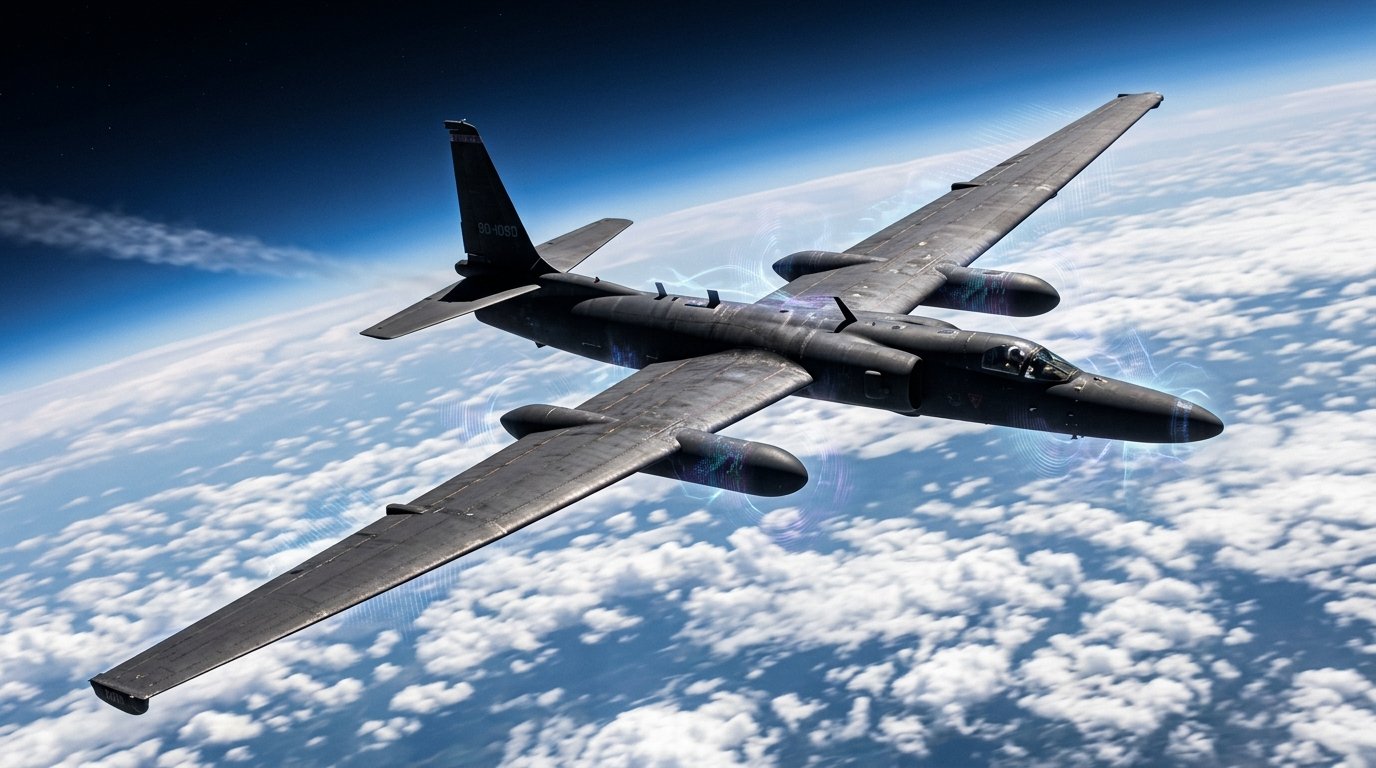
The U.S. Air Force is pushing the boundaries of electronic warfare by upgrading the legendary U-2 Dragon Lady’s capabilities to maintain its edge in the growing complexity of modern aerial reconnaissance missions.
As electronic warfare (EW) becomes a cornerstone of modern military operations, the Air Force is breathing new life into the iconic U-2 spy plane by enhancing its electronic defense systems. These upgrades come amid rising challenges from highly contested airspaces where traditional reconnaissance platforms face unprecedented threats. The U-2’s advanced electronic warfare suite is now being modernized to boost survivability, situational awareness, and mission effectiveness for continued dominance at extreme altitudes.
Modernizing the U-2’s electronic warfare suite for contested airspace
The U-2 Dragon Lady, famed for its high-altitude intelligence, surveillance, and reconnaissance (ISR) missions, has seen significant enhancements in its electronic warfare systems. Central to this upgrade is the AN/ALQ-221 Advanced Defensive System (ADS), a sophisticated suite designed for electronic attack and defense. The system employs cutting-edge sensors and jamming capabilities to disrupt enemy radar and missile threats, enabling the U-2 to operate safely in environments saturated with electronic countermeasures.
Continuous maintenance and software updates secured by BAE Systems
The U.S. Air Force has partnered with BAE Systems to provide ongoing field support, repairs, and software improvements for the AN/ALQ-221 ADS. This collaboration ensures that the U-2 stays ahead of evolving electronic threats by integrating the latest in EW technology and operational tactics. Continuous sustainment is crucial for maintaining the aircraft’s integrity and mission readiness.
The strategic importance of disaggregated electronic warfare
One of the emerging trends in the Air Force’s approach to EW involves “disaggregation,” spreading electronic attack and defense capabilities across multiple platforms like fighters, drones, and loyal wingmen. Instead of relying solely on specialized aircraft, this networked approach enhances agility and resilience. The U-2’s advanced EW suite plays a pivotal role within this ecosystem, feeding real-time intelligence and electronic countermeasures that protect allied assets and degrade adversary capabilities dynamically.
Role of the U-2 in the future electronic warfare landscape
The U-2 remains essential as a high-altitude sensor platform with electronic warfare roles expanding beyond its traditional reconnaissance mandate. Its ability to blend high-altitude ISR with integrated EW capabilities allows it to act as both an intelligence gatherer and an electronic disruptor. This dual role is invaluable in modern battlefields where electromagnetic dominance can dictate the outcome of aerial confrontations.
Key features of the AN/ALQ-221 Advanced Defensive System
The AN/ALQ-221 protects the U-2 by leveraging a broad array of cutting-edge components. Its capabilities include:
- Radar warning receivers that detect hostile radar emissions in real-time.
- Electronic countermeasures that jam or deceive enemy sensors and missiles.
- Signal analysis software that continuously updates threat libraries and response tactics.
- Automated threat responses that reduce pilot workload during high-stress encounters.
Timeline of critical electronic warfare updates and contracts
| Date | Event | Location | Significance |
|---|---|---|---|
| 2024 | BAE Systems awarded EW sustainment contract | Robins Air Force Base, Georgia | Ensures continuous field support and system modernization of AN/ALQ-221 |
| 2025 | Software updates rolled out | U.S. Air Force maintenance depots | Improves threat detection and jamming capabilities |
| 2026 | Disaggregated EW network initiative launched | Multiple Air Force bases | Expands integrated EW collaboration among drones, fighters, and support aircraft |
Challenges and opportunities in electronic warfare for high-altitude reconnaissance
Operating in heavily defended airspace poses significant risks that the enhanced EW suite aims to mitigate. The U-2 faces the challenge of modern integrated air defense systems with advanced radar and surface-to-air missile technology. However, technological advances in electronic warfare allow the aircraft to detect, evade, and counter these threats effectively.
Moreover, continual software improvements and field maintenance provide flexibility to adapt rapidly to new threats, making the U-2 a resilient asset in intelligence and electronic attack roles.
How EW upgrades impact broader Air Force operational strategy
This upgrade reflects a broader shift in the Air Force’s doctrine toward electronic dominance as a key warfare domain. By modernizing legacy platforms like the U-2, the Air Force optimizes its fleet for multi-domain operations where electronic warfare is interwoven with air, cyber, and space capabilities. The enhanced U-2 serves not only as a high-value ISR asset but also as a cornerstone in the orchestration of electromagnetic battlefield control.
What is the AN/ALQ-221 Advanced Defensive System?
The AN/ALQ-221 is an electronic warfare suite installed on the U-2 spy plane that detects and jams hostile radar and missile threats to protect the aircraft during missions.
How does disaggregation improve electronic warfare?
Disaggregation spreads EW capabilities over multiple platforms, improving flexibility and survivability by avoiding dependency on a single aircraft or system.
Why is the U-2 still relevant in 2026?
Despite its age, the U-2’s high-altitude capabilities combined with upgraded EW systems allow it to operate effectively in contested environments where stealth and intelligence gather crucial advantages.
What role does BAE Systems play in the U-2’s EW upgrades?
BAE Systems provides continuous field service, maintenance, repairs, and software updates for the U-2’s AN/ALQ-221 system, ensuring its operational readiness.
How do software updates enhance the U-2’s defensive capabilities?
Regular software upgrades improve threat detection algorithms, jamming effectiveness, and adaptability to emerging electronic threats, keeping the U-2 ahead in electronic warfare.
