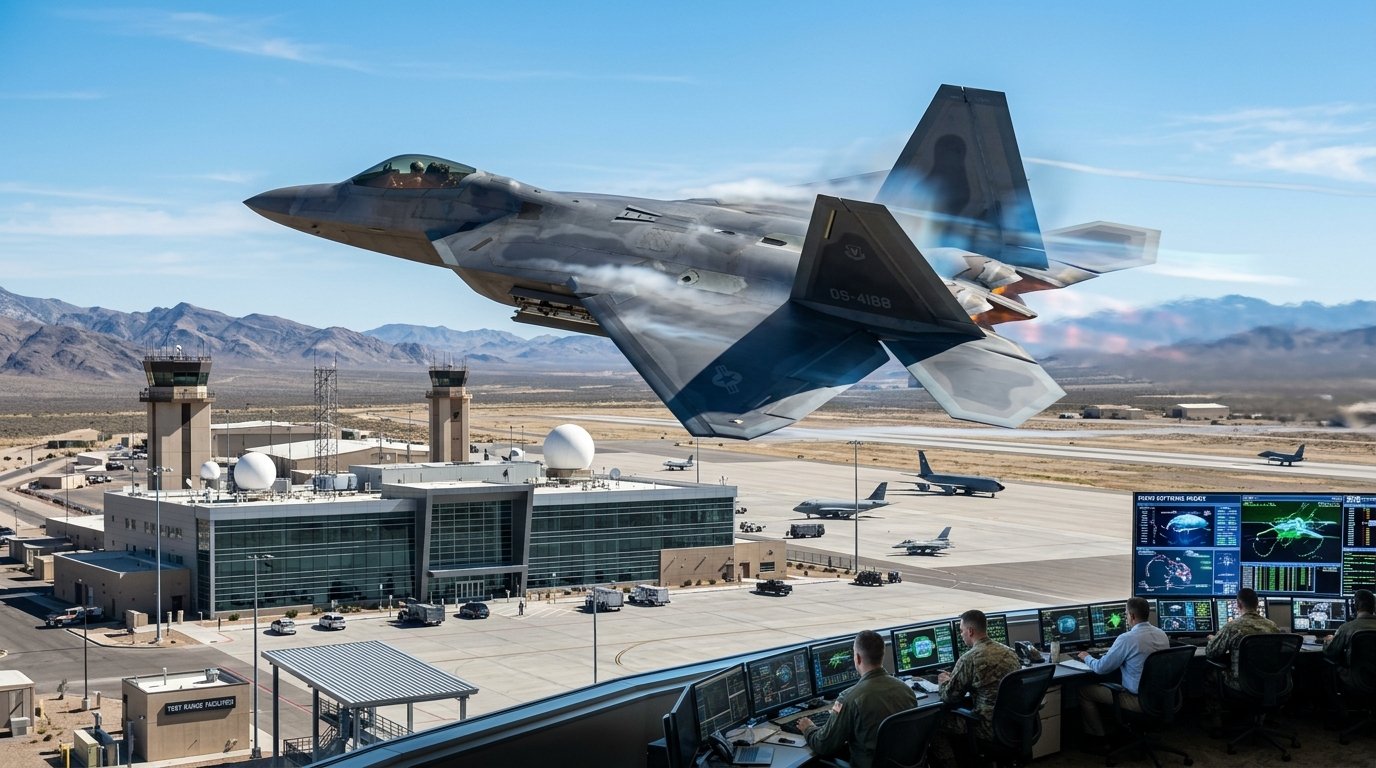
The U.S. Air Force is transforming fighter jet maintenance with a groundbreaking rapid software update system designed specifically for the F-22 Raptor, pushing the boundaries of how quickly critical upgrades can be deployed in combat scenarios.
As technology evolves, the need for swift and efficient software updates on military aircraft has become crucial. The F-22 Raptor, known for its stealth and agility, stands to benefit immensely from a pioneering system enabling rapid software delivery. This innovation promises to enhance operational readiness and keep the fighter at the cutting edge of warfare technology.
How rapid software updates revolutionize fighter jet readiness
The new system developed by the U.S. Air Force Sustainment Center (AFSC) Software Directorate alongside Defense Unicorns enables dramatically faster installation and upgrade of software on the F-22 Raptor. Traditionally, software upgrades required lengthy downtime on the ground, impacting mission availability. Now, the rapid update process slashes this downtime, significantly improving the jet’s operational flexibility and adaptability during fast-changing combat environments.
Open-source and third-party software integration: a game changer
The breakthrough includes the first-ever integration of third-party software applications on a fifth-generation fighter jet like the F-22. This shift allows the Air Force to incorporate innovations from a broader ecosystem of developers, speeding up deployment of vital electronic warfare and combat capabilities. The open-source container orchestration environment tested during in-flight demonstrations exemplifies this shift towards more agile, software-driven warfare.
What the rapid software system means for the future of air combat
By enabling quick updates, the Air Force can respond to emerging threats faster than ever. The rapid software delivery system supports continuous upgrades to radar warning receivers, electronic warfare modules, and other mission-critical applications. This means the F-22’s stealth and combat effectiveness can be maintained and enhanced long after its initial deployment, keeping it competitive against evolving global threats.
Cross-platform software sharing between F-22 and F-35 fighters
An additional groundbreaking feature is the ability to use common tactical software applications across both F-22 and F-35 platforms. This unification reduces development and maintenance complexity while maximizing the operational synergy between these key stealth fighters. The Air Force’s successful testing of shared applications marks a major step toward streamlining the modern air combat fleet’s software ecosystem.
Technical milestones achieved during in-flight demonstrations
On August 24, test pilots at Edwards Air Force Base collaborated with software engineers to complete multiple milestones proving the system’s in-flight capabilities. Among these, the first flight demonstration of third-party software actively running on an F-22 showcased the system’s reliability and practical utility. This milestone highlights the significant collaboration between military and civilian tech communities to push fighter jet software innovation.
Advantages of airgap-native technology for cybersecurity
Crucial to the system’s success is the use of airgap-native technologies, which ensure that software updates are installed in highly secure environments free from external cyber threats. This preserves the integrity of mission software, a non-negotiable factor in the high-stakes world of military aviation where vulnerabilities can have catastrophic consequences.
Implications for global air force fleets and allies
The ability to rapidly deploy software updates on advanced fighters sets a new standard worldwide. As allies and partners watch these developments, their own air forces may pursue similar rapid update capabilities, potentially reshaping the strategic balance. This technology not only sustains U.S. air dominance but may drive new collaborative software development paradigms among allied nations.
Key benefits summarized
- Reduced maintenance downtime allowing faster return to combat readiness
- Enhanced software flexibility through third-party and open-source integration
- Improved cybersecurity via airgap-native update environments
- Unified software across fighter platforms simplifying upgrades and cross-compatibility
- Rapid response to emerging threats for sustained air superiority
Timeline and future outlook for rapid software updates on the F-22
| Date | Event | Location |
|---|---|---|
| August 24, 2025 | First in-flight demonstration of third-party software on F-22 | Edwards Air Force Base |
| Early 2026 | Initiation of full operational use of rapid software update system | Various Air Force bases |
| Mid 2026 | Integration with F-35 common software platform | Joint fighter operations |
What makes the new rapid software update system different?
It allows much faster installation of updates and third-party apps directly on F-22 jets, reducing maintenance time drastically.
How does the system improve cybersecurity?
By utilizing airgap-native update methods, it ensures updates occur in secure environments, preventing cyber threats.
Can the same software be used for F-22 and F-35?
Yes, shared tactical applications streamline development and operational use across both fighter jets.
What operational advantages does rapid updating bring?
It allows the Air Force to quickly adapt the F-22’s capabilities in response to new threats and technological advances.
