
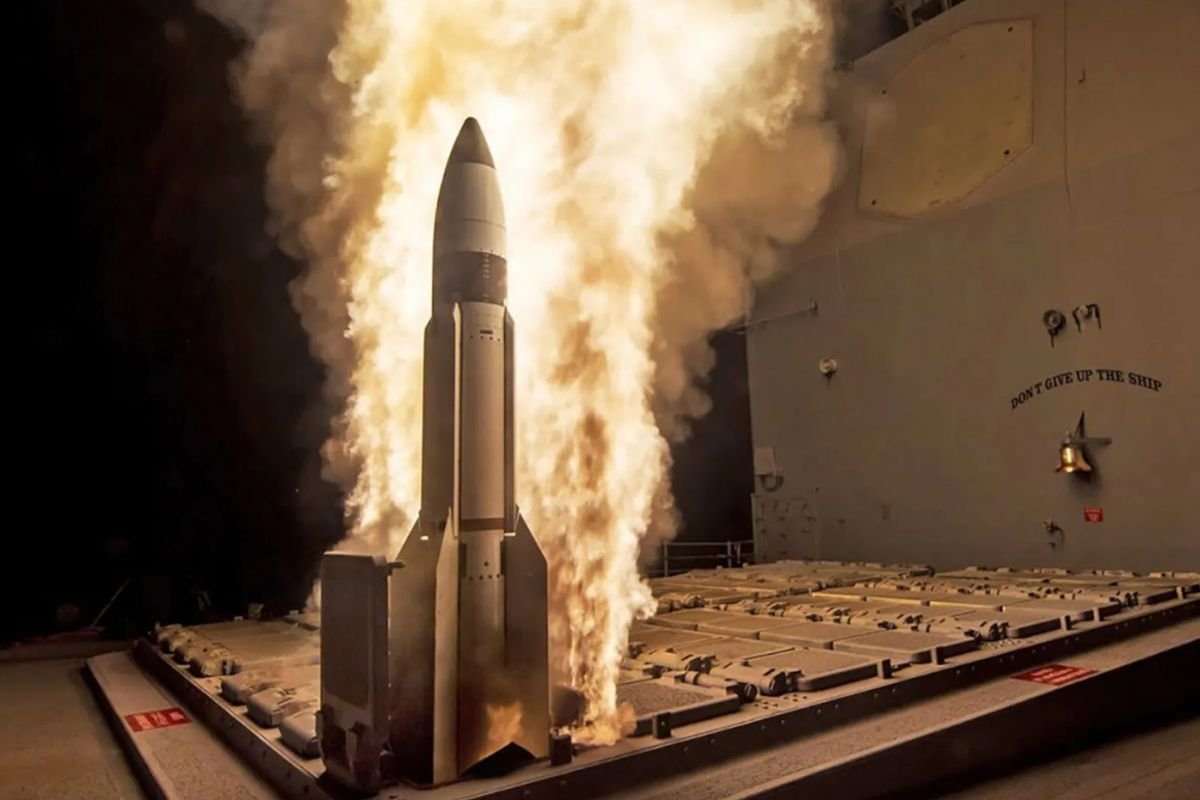
The United States has just secured an unprecedented €8.4 billion contract to accelerate the development of the SM-3 missile interceptor, setting the stage for a new era in missile defense technology.
The U.S. Department of Defense recently awarded a massive contract aimed at advancing the capabilities of the SM-3 missile interceptor. This move highlights the growing importance of missile defense systems in today’s increasingly complex global security landscape. The SM-3 interceptor, a key component of ballistic missile defense, is set to see significant upgrades intended to extend its reach and precision. This ambitious project not only reflects strategic priorities but also signals technological leaps with a global impact. Here’s a detailed look at what this contract means, how it affects defense dynamics, and the future of missile interception technology.
Understanding the strategic role of the SM-3 missile interceptor in U.S. defense
The SM-3 interceptor plays a pivotal role in the U.S. ballistic missile defense system, designed to detect, track, and intercept short- to intermediate-range ballistic missiles. Its importance lies in its ability to protect both military assets and civilian populations from potential missile threats. With the €8.4 billion contract, the U.S. is doubling down on improving the SM-3’s performance to address evolving missile threats more effectively. This development underlines the increasing priority given to missile defense systems as new challenges emerge on a global scale.
Key enhancements expected in the SM-3 interceptor program
Several targeted upgrades are planned to boost the SM-3’s operational capacity. These include improving the interceptor’s range, increasing its speed, and enhancing its guidance systems through new sensor technologies. Incorporating cutting-edge propulsion techniques will allow the missile to reach higher altitudes and engage targets faster. Furthermore, advancements in software algorithms will provide better target discrimination, making the system more effective even against emerging complex threats. The contract aims to bring this interceptor to a level where it can counter long-range ballistic missiles with unprecedented accuracy.
Unpacking the €8.4 billion contract: what it means for U.S. defense procurement
This substantial investment represents one of the largest contracts in recent years dedicated to missile defense development. It underscores the U.S. commitment to maintaining technological superiority in defense systems. By channeling significant resources into the SM-3 program, the government signals its anticipation of missile threats that could destabilize global security. The contract covers research, development, testing, and initial production phases, reflecting a holistic approach to ensuring the interceptor meets stringent operational criteria.
Major contractors and timelines involved in the SM-3 interceptor upgrade
Key defense contractors with expertise in missile technology will spearhead this initiative, collaborating closely with the Department of Defense. Boeing and Raytheon, known for their contributions to missile defense, are expected to take lead roles in this development effort. The timeline projects phases extending from rapid prototyping to field testing over the next five to seven years. Early flight tests are planned within two years, with progressive integration into military assets to follow. This structured timeline aims to balance speed and thorough evaluation.
The global implications of the advanced SM-3 interceptor technology
The enhanced SM-3 system is set to influence missile defense doctrines worldwide. Its improvements could shift the strategic balance by providing the U.S. and its allies with a more reliable shield against missile attacks. NATO members and allied countries may also benefit from collaborative deployment or technology sharing, enhancing collective defense. Additionally, rivals monitoring these advances might adjust their missile strategies, sparking a new phase of missile technology competition globally.
How allies could integrate enhanced missile defense systems
Enhanced missile interceptor systems such as the SM-3 are often bundled into broader allied defense frameworks. Countries in Europe and the Asia-Pacific may incorporate upgraded interceptors into their own defense infrastructures. Through joint exercises and intelligence sharing, these systems improve readiness and interoperability. The €8.4 billion boost for U.S. SM-3 technology development will likely catalyze similar advancements among partner nations seeking to upgrade their missile defense capabilities.
Challenges and controversies surrounding missile interceptor deployment
Despite its strategic advantages, missile interceptor programs also generate debate. Critics argue about the escalating arms race and possible destabilizing effects. High costs and technological complexity pose additional hurdles, underscoring the importance of rigorous testing and effective resource allocation. The planned upgrades to the SM-3 must address these concerns by maximizing efficiency and ensuring reliability. Moreover, political dialogue remains essential to manage the implications of such missile defense expansions on international security dynamics.
Environmental and budgetary considerations in large-scale defense projects
The €8.4 billion contract is not only a technological investment but also a commitment with environmental and financial implications. Environmental impact assessments are crucial during development phases to minimize risks related to testing and production. Budget oversight bodies are closely monitoring expenditures to ensure optimal use of funds. Balancing these factors is part of the broader challenge in advancing missile defense technologies responsibly.
How the SM-3 interceptor upgrade fits into the broader missile defense strategy
The SM-3 upgrade is a critical element within a comprehensive, multilayered missile defense strategy that includes other interceptors, sensors, and defense satellites. Its enhancements complement systems like the Ground-Based Midcourse Defense (GMD) and Aegis Ashore installations. This layered approach increases the probability of intercepting hostile missiles during different flight phases. The €8.4 billion investment highlights the strategic importance of maintaining fluid integration among varied defense components to create a resilient defense shield.
Future prospects: toward 2030 and beyond
Looking ahead, the development path for SM-3 suggests continuous upgrades aligned with emerging threats and technological innovations. Focus areas include artificial intelligence for faster target analysis, hypersonic missile interception, and enhanced networked defense capabilities. These advances could redefine missile defense paradigms by 2030, establishing a new benchmark for global security architecture.
Key milestones and international collaboration in missile interceptor technology
| Phase | Milestone | Target Date | Significance |
|---|---|---|---|
| Research and development | Initial prototype design completion | Q3 2026 | Framework for new interceptor technology |
| Testing | First flight test of upgraded interceptor | Q2 2028 | Validation of new systems and performance |
| Production | Start of limited initial production | Q4 2029 | Deployment preparation and operational trials |
| Full operational capability | Integration into standard defense units | Q1 2031 | Enhanced missile defense readiness |
What is the SM-3 missile interceptor?
The SM-3 is a missile defense system designed to intercept short- to intermediate-range ballistic missiles during their midcourse phase using a kinetic hit-to-kill approach.
Why is the €8.4 billion contract significant?
This contract represents a major financial commitment to upgrading missile defense capabilities, emphasizing the strategic priority of countering evolving missile threats.
Which companies are leading the SM-3 upgrade?
Major U.S. defense contractors like Boeing and Raytheon are spearheading the research, development, and production efforts for the SM-3 interceptor enhancements.
How will the upgraded SM-3 impact global missile defense?
The improved SM-3 system will provide enhanced interception range and precision, strengthening defense postures for the U.S. and its allies, while potentially prompting strategic shifts worldwide.
What challenges come with missile interceptor development?
Challenges include managing high costs, technological complexity, environmental impact considerations, and international political tensions related to arms races.
Source: https://www.marketwatch.com/story/raytheon-gets-8-4b-increase-to-missile-defense-contract-cea0befd?mod=markets
