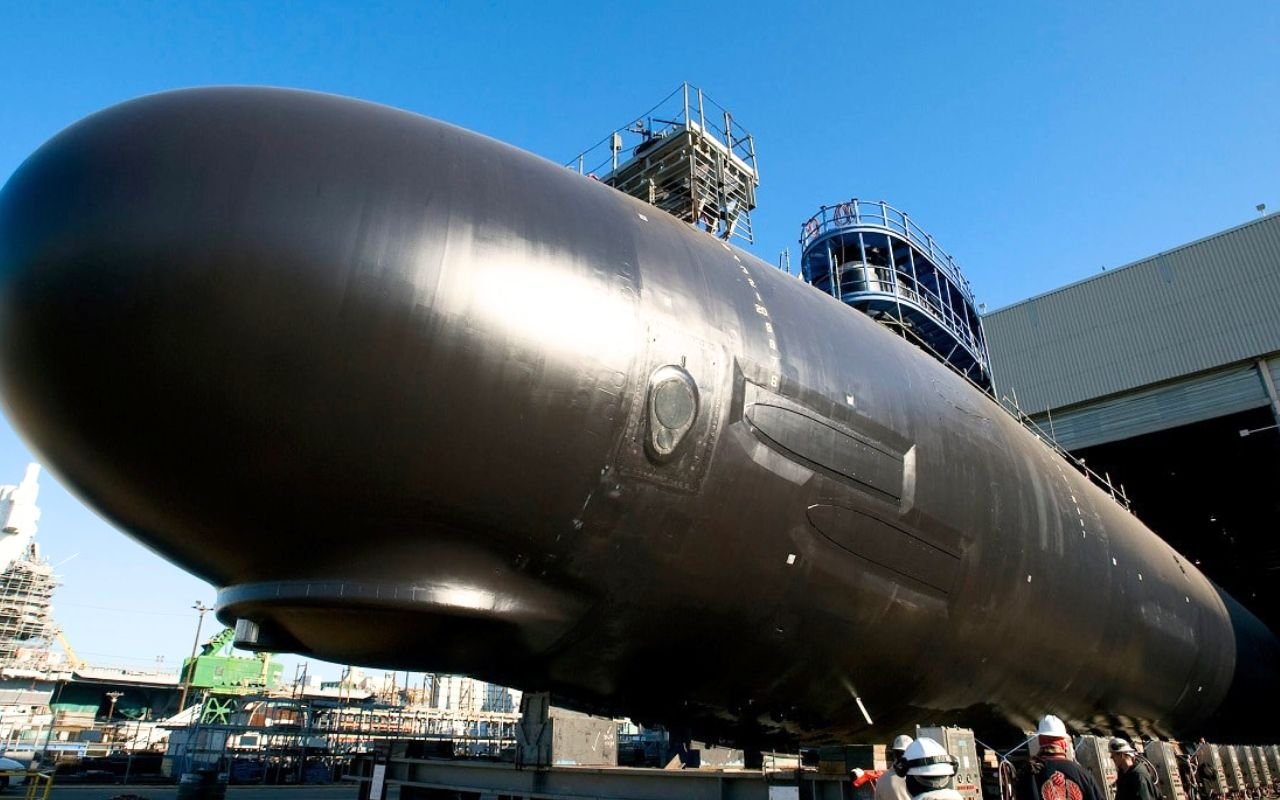
The U.S. Navy’s ambitious SSN(X) stealth submarine, dubbed the “Apex Predator,” is trapped in a costly and prolonged development crisis, threatening America’s naval supremacy well into the 2040s.
The Navy’s next-generation attack submarine program has been heralded as a revolutionary leap forward, meant to blend the stealth and tactical prowess of previous classes into an unmatched maritime force. But as budget constraints and technical debates mount, the SSN(X)’s first delivery is now projected for the early 2040s—five years past the original 2035 goal. This delay risks leaving a dangerous undersea capability gap just as rival powers accelerate their submarine advancements.
Escalating costs and staggering delays define the SSN(X) program
The SSN(X) is projected to cost around €8 billion per hull, making it one of the most expensive submarines ever designed. Initially planned for procurement to begin in 2031, the timeline slipped first to 2035, and—according to the 2025 fiscal budget—has now extended to 2040. This costly delay is primarily driven by a “shipyard doom loop,” where limited industrial capacity, overlapping projects, and budget reallocations have gradually pushed the program out.
Managing resources between the SSN(X), the ongoing Virginia-class buildouts, and the critical Columbia-class ballistic submarine program leaves little room for acceleration. Congress remains wary of the ballooning expenses, intensifying scrutiny.
Maintaining undersea superiority amid emerging submarine rivals
The SSN(X) is envisioned as a true “Apex Predator” of the seas, designed to outpace and outgun near-peer adversaries like Russia and China. By combining Seawolf-class firepower with Virginia-class stealth capabilities, it aims to dominate underwater conflict zones. Yet the long 14-year construction gap threatens the U.S. Navy’s edge just when competitors are closing the technological gap swiftly.
Emerging Chinese and Russian submarines boast quieter propulsion technologies and sophisticated anti-submarine warfare systems, challenging U.S. invulnerability beneath the waves. Without the SSN(X), the Navy may face a strikingly vulnerable period in undersea dominance.
Projected timeline shifts exacerbate industrial challenges
Building these advanced submarines demands highly specialized shipyards, skilled workers, and complex supply chains. The 14-year delay jeopardizes the industrial base’s continuity, risking loss of expertise and disrupting production momentum.
Experts warn this gap could erode the Navy’s ability to produce future subs at the required pace, lessening overall national security readiness against underwater threats.
Technological debates stall nuclear reactor innovations
A major technical hurdle revolves around the type of nuclear fuel for the SSN(X). The project faces pressure to switch from highly enriched uranium (HEU), traditionally used for long-life cores, to low enriched uranium (LEU). LEU reactors reduce proliferation risks but often come with compromises like the need for refueling and potentially increased costs and reactor size.
Choosing between these fuel types creates significant program uncertainties. The Navy must balance security advantages of LEU against operational performance and lifecycle costs of HEU.
Revolutionizing underwater warfare with unprecedented capabilities
The SSN(X) promises a leap beyond evolutionary changes in U.S. attack submarines, featuring:
- Revolutionary stealth propulsion systems quieter than current pump-jet designs
- Enhanced speed and agility to outmaneuver threats
- Larger and diverse weapons payload to address complex mission demands
- Full-spectrum undersea warfare abilities including anti-submarine and anti-surface operations
- Support for unmanned underwater vehicles (UUVs) and advanced sensors
Rear Admiral Thomas Ishee highlights these features as vital for maintaining dominance, noting the integration of artificial intelligence to enhance combat decision-making under extreme conditions.
Lessons from past submarine classes feed into SSN(X) design
The SSN(X) draws from the strengths of legacy classes:
| Legacy Class | Key Strengths | Contribution to SSN(X) |
|---|---|---|
| Seawolf-class | High speed, heavy firepower | Increased payload and operational range |
| Virginia-class | Acoustic superiority, sensors | Advanced stealth and sensor suites |
| Columbia-class | Operational availability, endurance | Maximized mission readiness and endurance |
The SSN(X) is thus a culmination of proven technology, enhanced by the experiences of decades of American undersea warfare innovation.
The industrial bottleneck: shipyards stretched to their limits
The U.S. shipbuilding industry is grappling with unprecedented demands. Aging Los Angeles-class submarines require replacement, Virginia-class production is strained, and now the SSN(X) demands immense resources. Without expanding shipyard capacity and skilled labor pools, all programs risk further slips and compromised quality.
This “shipyard doom loop” is a core reason for procurement delays and rising costs. Political and budgetary constraints complicate efforts to speed production or allocate funds more freely.
Forecasting undersea power: what the next two decades may hold
Should current projections hold, the Navy faces a significant capabilities gap between retiring older submarines and the late arrival of SSN(X) vessels. Russia and China’s rapid submarine advancements threaten to exploit this vacuum.
Efforts to maintain older subs beyond planned service lives and extend Virginia-class builds are stopgap measures but cannot fully compensate for the absence of a modern, highly capable next-generation hunter.
Addressing these intertwined issues — technical innovation, budget priorities, industrial capacity — will be critical as the U.S. Navy aims to secure undersea dominance well past 2040.
Why has the SSN(X) submarine program been delayed so significantly?
Budget limitations, shipyard capacity issues, and technical debates over nuclear fuel type have combined to push back the SSN(X) program timeline from 2035 to 2040.
What makes the SSN(X) submarine different from earlier classes?
It combines the heavy payload and speed of the Seawolf-class with the stealth and sensor technology of the Virginia-class, plus extended operational availability inspired by the Columbia-class.
How could delays in SSN(X) impact U.S. naval power?
A 14-year production gap risks eroding the U.S. Navy’s undersea superiority as rival nations improve their submarine fleets and technology.
What are the challenges with switching from HEU to LEU nuclear fuel?
LEU is safer and less prone to proliferation risks but may require refueling and larger reactor designs, increasing complexity and cost.
How does the SSN(X) plan to incorporate unmanned systems?
The submarine will serve as a ‘mothership’ for deploying unmanned underwater vehicles and naval mines, expanding its flexibility and mission scope.
