
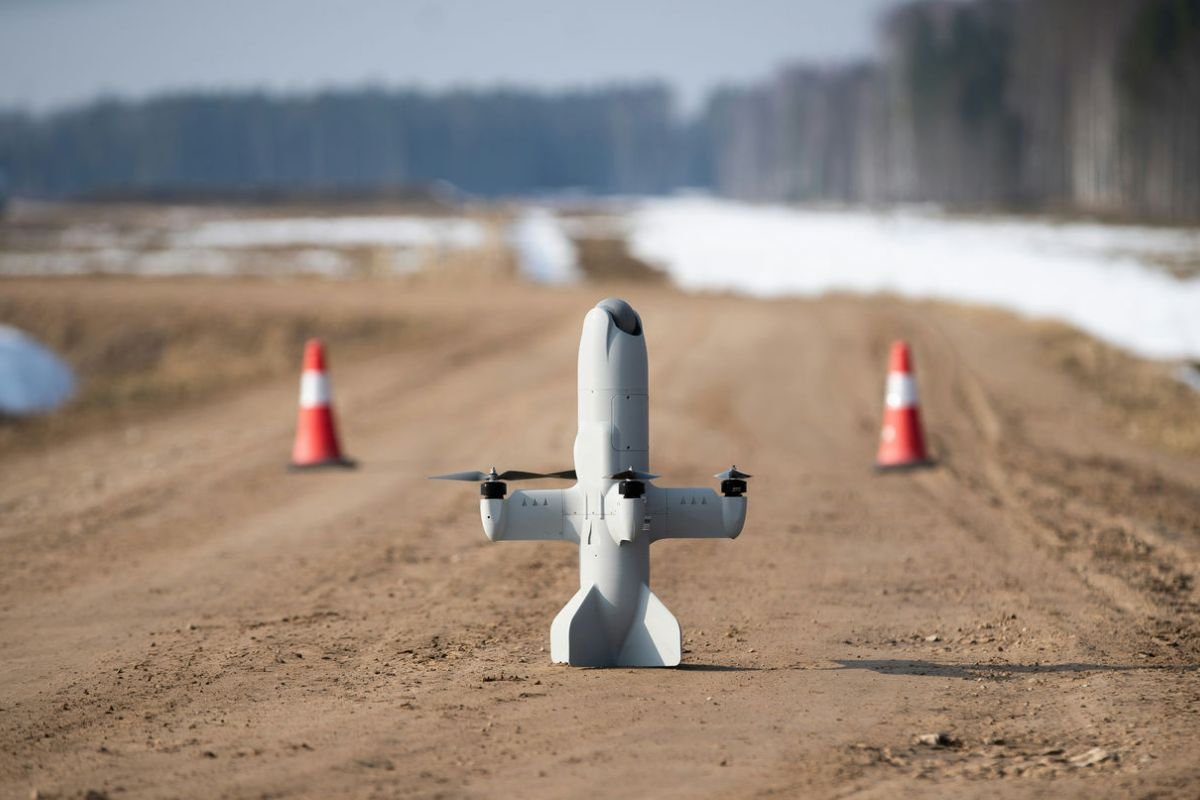
NATO is pushing the boundaries of aerial defense with state-of-the-art drone interception trials in Latvia, setting the stage for a new era in unmanned defense technology amid rising global threats.
Latvia has become the focal point for NATO’s largest and most sophisticated military experimentation to date. This groundbreaking initiative involves testing cutting-edge drone interception systems, artificial intelligence-assisted target recognition, and enhanced collaborative defense networks that collectively aim to modernize the Alliance’s aerial protection capabilities.
Why Latvia is the perfect location for drone defense trials
NATO’s choice of Latvia is strategic, given the country’s geographic position at the Alliance’s eastern frontier. Latvia offers a unique environment to simulate complex operational scenarios involving multiple drone types and electronic warfare challenges. Its existing military infrastructure supports extensive live-fire exercises and technology demonstrations under realistic conditions. These factors make Latvia an ideal proving ground for developing the Alliance’s future drone countermeasures.
Collaborative air defense exercises involving NATO members
Latvia’s drone interception trials are not happening in isolation. Countries such as Czechia, Slovakia, and several Baltic allies are actively participating in coordinated air defense exercises. These drills improve interoperability by integrating various sensor and weapon systems from different manufacturers and nations. For example, live firing during the Tobruq Arrows multinational exercise allowed defense units to test drone detection and neutralization techniques during night operations, sharpening reflexes for real-world threats.
Innovative digital backbone unifying NATO’s defense assets
A core achievement of the Latvian experiments is the development of a unified “digital backbone.” This advanced network seamlessly connects diverse data streams—from drone sensors, radars, and command systems—into a coherent, real-time operational picture. By integrating cutting-edge communication protocols and AI-powered analysis tools, this backbone dramatically accelerates decision-making and response times, vital for countering fast-moving aerial threats.
AI’s role in next-gen aerial threat identification
Artificial intelligence emerges as a game-changer in the trials, enhancing target identification and threat prioritization. AI algorithms process massive data inputs from various sensors to quickly distinguish between friendly, neutral, and hostile drones. This reduces operator workload and improves accuracy during high-pressure engagements, enabling NATO forces to respond swiftly to unpredictable drone swarm tactics deployed by potential adversaries.
Technologies tested: drone interceptors, missiles, and electronic warfare
Several advanced counter-drone technologies have been trialed. These include:
- Drone interceptors designed to physically disable hostile UAVs mid-flight.
- Missile systems capable of precision targeting small, fast-moving drones at extended ranges.
- Electronic warfare suites that disrupt enemy drone communications and navigation.
The combination of kinetic and non-kinetic solutions reflects NATO’s layered defense approach, maximizing flexibility against diverse aerial threats.
Impact on NATO’s strategic deterrence and regional security
By refining these technologies, NATO strengthens its deterrence posture in Eastern Europe, particularly against adversaries who increasingly deploy drones for reconnaissance or attack missions. Enhanced drone defenses reassure member states like Latvia and its neighbors that the Alliance can effectively safeguard airspace sovereignty, bolstering regional stability and cohesion.
Timeline and schedule of NATO’s drone defense exercises in Latvia
| Event | Date | Location | Details |
|---|---|---|---|
| Initial drone interception trials | March 9-13, 2026 | Innovation Range, Latvia | Testing C-UAS systems with NATO and Ukrainian defense firms |
| Tobruq Arrows air defense exercise | Mid-September 2026 | DoupoV, Czechia | Combined live firing and night operations among NATO Allies |
| NATO Digital Backbone final demonstration | October 2026 | Adazi Military Base, Latvia | Integration of drone, counter-drone, and communications systems |
Challenges and future directions in drone defense experimentation
While progress is impressive, the trials also expose ongoing challenges: scaling AI-driven decision systems without bias, ensuring cross-border data sharing while preserving security, and adapting to the rapid evolution of drone swarm tactics. NATO continues to refine algorithms and operational doctrines to stay ahead in the drone countermeasure race. Future experiments will likely involve even greater AI autonomy, enhanced cyber-defense capabilities, and integration with satellite surveillance for a truly multi-domain defense posture.
How NATO’s drone trial success influences global defense trends
NATO’s high-profile drone interception trials set a precedent influencing allied and rival nations alike. By showcasing advanced digital network integration and AI-enhanced interception methods, these experiments push the global arms race for unmanned aerial defense. International defense industries now focus heavily on similar research, accelerating the development of counter-UAV solutions worldwide to protect critical infrastructure, military forces, and civilian populations.
The broader impact on NATO’s defense modernization
These drone trials fit into a larger NATO strategy emphasizing modernization through technology. The Alliance’s commitment to a “digital backbone” helps future-proof its forces, enabling rapid adaptation to emerging threats. The success in Latvia signals that unmanned systems and AI will be pillars of defense policy, shifting away from traditional platforms toward more agile, networked solutions.
What types of drones are being tested in Latvia?
The trials include a variety of unmanned aerial vehicles (UAVs), ranging from small reconnaissance drones to larger systems simulating attack capabilities, to evaluate interception effectiveness against diverse threats.
How does AI improve drone interception capabilities?
AI enhances the speed and accuracy of identifying hostile drones by analyzing data from multiple sensors in real time, enabling quicker and more precise responses in complex operational environments.
Are other NATO countries involved in the Latvian experiments?
Yes, member states such as Czechia, Slovakia, and Baltic nations collaborate extensively, sharing systems and participating in joint exercises to boost interoperability.
What is the NATO digital backbone?
It’s an integrated communication and sensor network that combines different military technologies and data sources to create a unified operational picture for faster and smarter decision-making.
What challenges remain in drone countermeasure development?
Key challenges include managing AI decision-making biases, secure international data sharing, and countering rapidly evolving drone swarm tactics which require continuous technological and operational updates.
Source: https://www.nato.int/en/news-and-events/articles/news/2026/03/18/new-nato-innovation-range-starts-counter-drone-technology-testing-in-latvia
Credit: Ministry of Defence of Latvia
