France did not just sell submarines to the Netherlands—it quietly secured control over how those submarines will fight.
In 2024, The Hague made a strategic choice. It entrusted Naval Group with the construction of four Orka-class submarines, a contract worth roughly $6.1 billion. At the time, the headlines focused on industry, jobs, and European cooperation.
But the real story was incomplete.
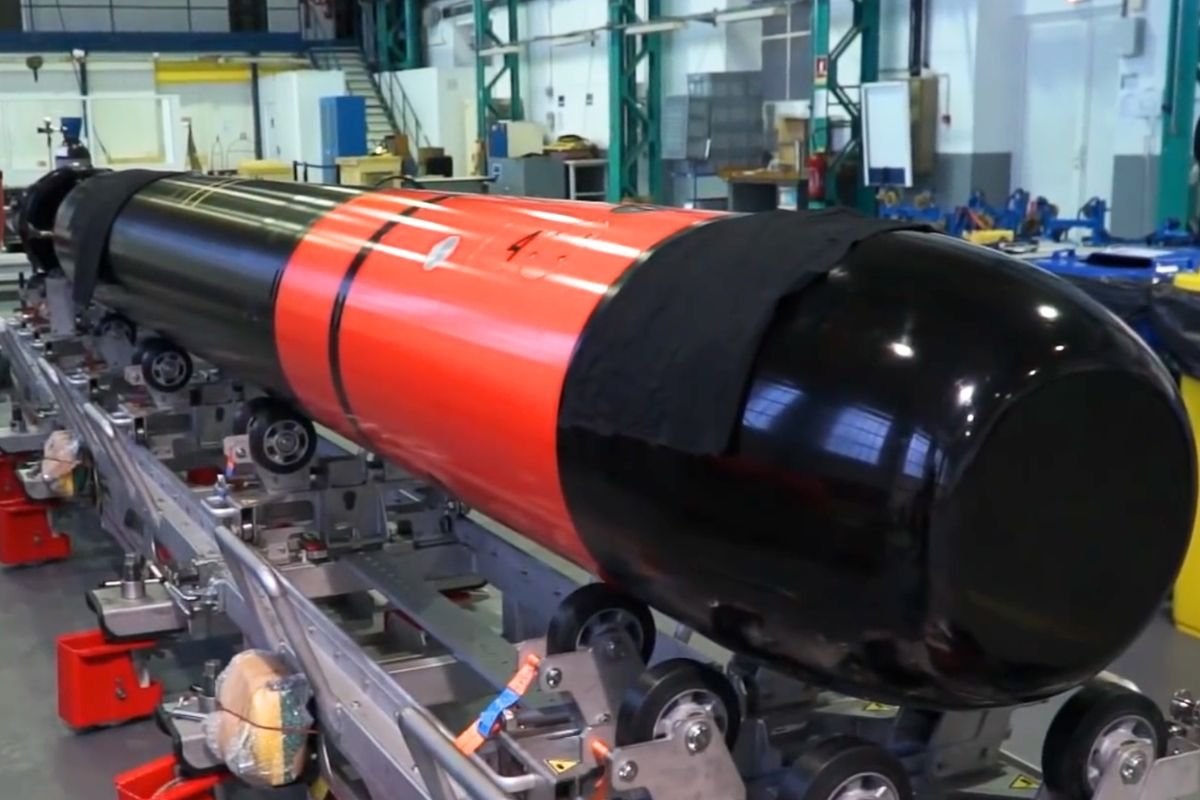
On March 3, 2026, the Dutch Ministry of Defense confirmed that these future submarines will carry the French F21 heavyweight torpedo, rather than the American Mk48 already in Dutch service.
It is a detail that changes everything because a submarine is not defined by its hull. It is defined by what it can do in silence, far below the surface. And that depends, above all, on its weapons.
For decades, the Netherlands relied on its Walrus-class submarines. They were discreet, capable, and respected within NATO. Crews knew how to use them. Allies knew what they could deliver.
But time has a way of eroding even the best platforms.
Built in the early 1990s, the Walrus boats now belong to another technological era. Sensors have evolved. Underwater detection has become more sophisticated. The ocean itself has grown more crowded, more contested.
The Orka program is not simply a replacement. It is a reset.
Naval Group’s design, derived from the Barracuda family, will remain diesel-electric—quieter, in many ways more suitable for the shallow and complex waters of Northern Europe.
And their mission profile reflects a world where ambiguity dominates:
- Tracking adversary submarines without being seen
- Listening more than striking
- Deploying special forces in contested zones
- Holding surface ships at risk without revealing position
In this environment, the torpedo is not just a weapon. It is the final sentence in a long, silent conversation.
Choosing a weapon—and a doctrine
The decision between the American Mk48 and the French F21 was not merely technical. It was doctrinal.
The Mk48 is a known quantity. It has been used for decades by the U.S. Navy and its allies. It is powerful, reliable, designed for deep-water engagements where range and brute force matter.
The F21 comes from a different tradition.
By selecting it, the Netherlands is doing more than changing suppliers. It is aligning itself with a different way of thinking about underwater warfare—one that prioritizes discretion over raw power.
There is also a logic that is almost mundane, but decisive: integration.
By designing the submarine and its primary weapon together from the beginning, the Dutch Navy avoids the friction that often comes with mixed systems. Training becomes simpler. Maintenance becomes predictable. Tactics become shared.
And quietly, a deeper relationship forms between two navies that will now operate with the same tools.
The F21: a weapon built for silence
If you strip the F21 down to its essence, you find a single guiding principle: reduce noise, reduce signature, reduce predictability.
Here is what defines it:
| Specification | F21 Torpedo |
| Length | ~19.7 ft |
| Diameter | 21 inches |
| Weight | ~3,400 lbs |
| Warhead | ~440 lbs explosive |
| Speed | ~58 mph |
| Range | Up to ~35 miles |
| Propulsion | Electric (silver-aluminum battery) |
Unlike older Western torpedoes, the F21 does not rely on a thermal engine. It uses electric propulsion, powered by aluminum-silver oxide batteries.
That choice has consequences.
It makes the torpedo quieter. Not silent—nothing in the ocean truly is—but quieter in a way that matters when detection means survival.
The dual counter-rotating propellers further reduce turbulence, smoothing its movement through the water.
In a confined environment—the North Sea, a narrow strait, a coastal approach—this discretion becomes a tactical advantage.
How a torpedo thinks
When the F21 leaves its tube, it does not immediately become autonomous. There is a moment of control, almost of dialogue, between the submarine and its weapon.
Through a guidance wire, operators can adjust its path:
- Redirect it toward a new contact
- Refine its search pattern
- Abort or delay engagement
Then, at a certain point, the torpedo is on its own.
Its acoustic sensors begin to interpret the ocean—listening for the signature of a hull, the rhythm of a propeller, the faint disturbances that betray movement.
In the final phase, the attack is calculated. The detonation is not random. It is designed to strike where the target is weakest—often beneath it, where structural integrity can be broken in an instant.
This is not spectacle. It is precision.
Two weapons, two philosophies
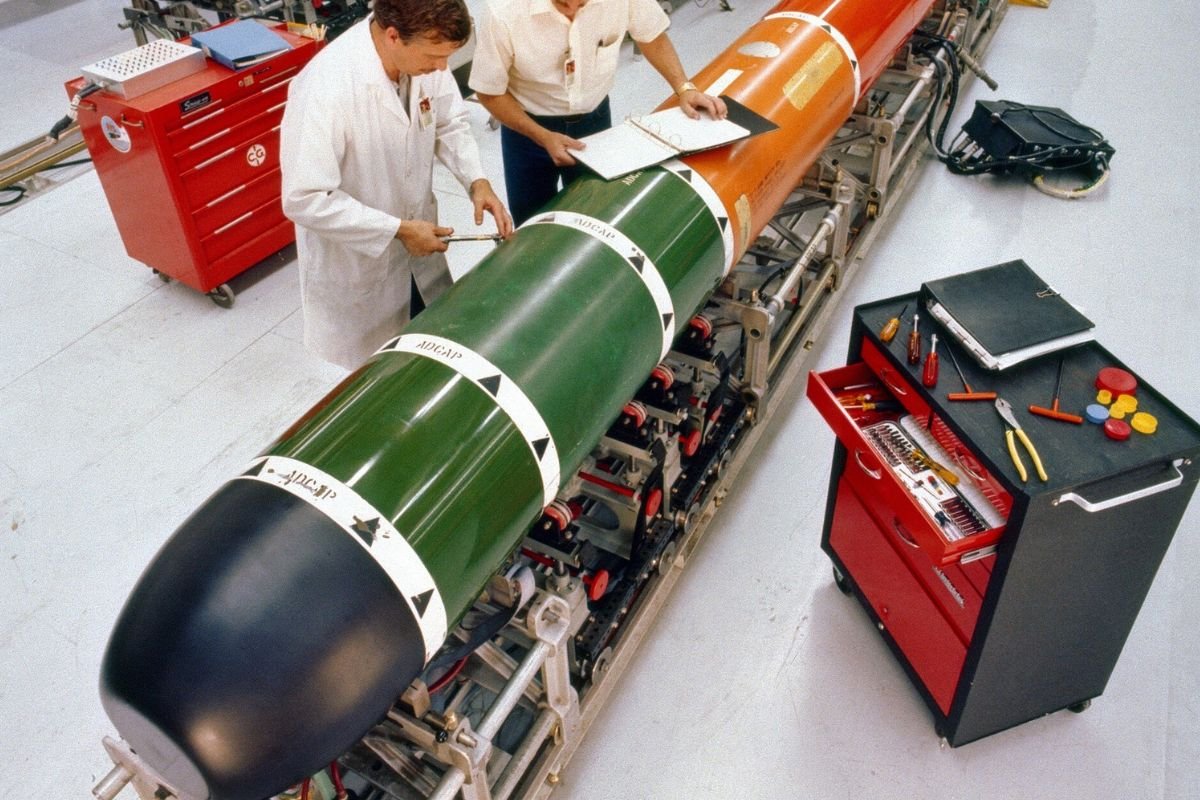
The contrast with the Mk48 is instructive.
| Feature | F21 | Mk48 |
| Propulsion | Electric | Thermal (Otto II fuel) |
| Acoustic signature | Low | Higher |
| Strength | Stealth, confined waters | Power, open ocean |
| Speed | Comparable | Comparable |
| Range | Comparable | Comparable |
The Mk48 reflects a navy built for global reach—deep oceans, long distances, overwhelming force.
The F21 reflects a different geography. One of constrained seas, layered acoustics, and encounters decided in close quarters.
Neither approach is superior in absolute terms. Each belongs to a strategic culture.
By choosing the F21, the Netherlands signals where it expects to operate—and how it intends to fight.
A European thread beneath the surface
The F21 program itself tells a quieter story about Europe.
Launched in the late 2000s, it survived shifting partnerships, industrial tensions, and the usual frictions of defense cooperation. It was tested at sea from 2013, fully qualified in 2017, and gradually introduced into French service.
Its development cost—around $530 million—and its unit price—roughly $2.5 million per torpedo—place it firmly in the category of high-end, but not extravagant, systems.
Brazil has already adopted it. Now the Netherlands follows.
This is how industrial influence spreads: not through declarations, but through compatibility.
Sources:
- Dutch Ministry of Defence (Defensie.nl), New submarines to be equipped directly with advanced torpedoes (March 3, 2026),
https://www.defensie.nl/actueel/nieuws/2026/03/03/nieuwe-onderzeeboten-direct-voorzien-van-geavanceerde-torpedo
Official announcement detailing the integration of next-generation heavyweight torpedoes into upcoming Dutch submarines, emphasizing enhanced combat capabilities, interoperability with allied systems, and the modernization of undersea warfare assets. - Naval Group, Euronaval 2024 – F21R underwater weapons: a top-tier heavyweight torpedo (2024),
https://www.naval-group.com/fr/euronaval-2024-armes-sous-marines-f21r-une-torpille-lourde-au-top-de-sa-categorie
Industrial presentation of the F21R heavyweight torpedo, outlining its technical characteristics, guidance systems, propulsion, and operational advantages, positioning it as one of the most advanced torpedoes currently available for modern submarine fleets.
