
Europe’s largest missile maker has doubled output in two years, is investing $6.3 billion over the next five, and has stopped waiting for purchase orders before it starts building. That last part is the one worth paying attention to.
There’s a phrase that Eric Béranger, CEO of MBDA, used on Radio Classique this week that cuts straight to the point: “changement d’époque” — a change of era. It’s the kind of language executives reach for when they want to signal that they’re not talking about a temporary demand spike or a favorable contract cycle. They’re talking about something structural. And given what MBDA has done to its production lines over the past two years, the numbers back him up.
Related articles:
MBDA: Doubling Output in Two Years — and Calling It Insufficient
Between 2023 and 2025, MBDA doubled its total missile production. Béranger himself called it “phenomenal for an industrial operation” — which is accurate, because retooling a precision weapons manufacturer at that pace requires supply chain coordination, capital investment, and workforce expansion that can’t be improvised.
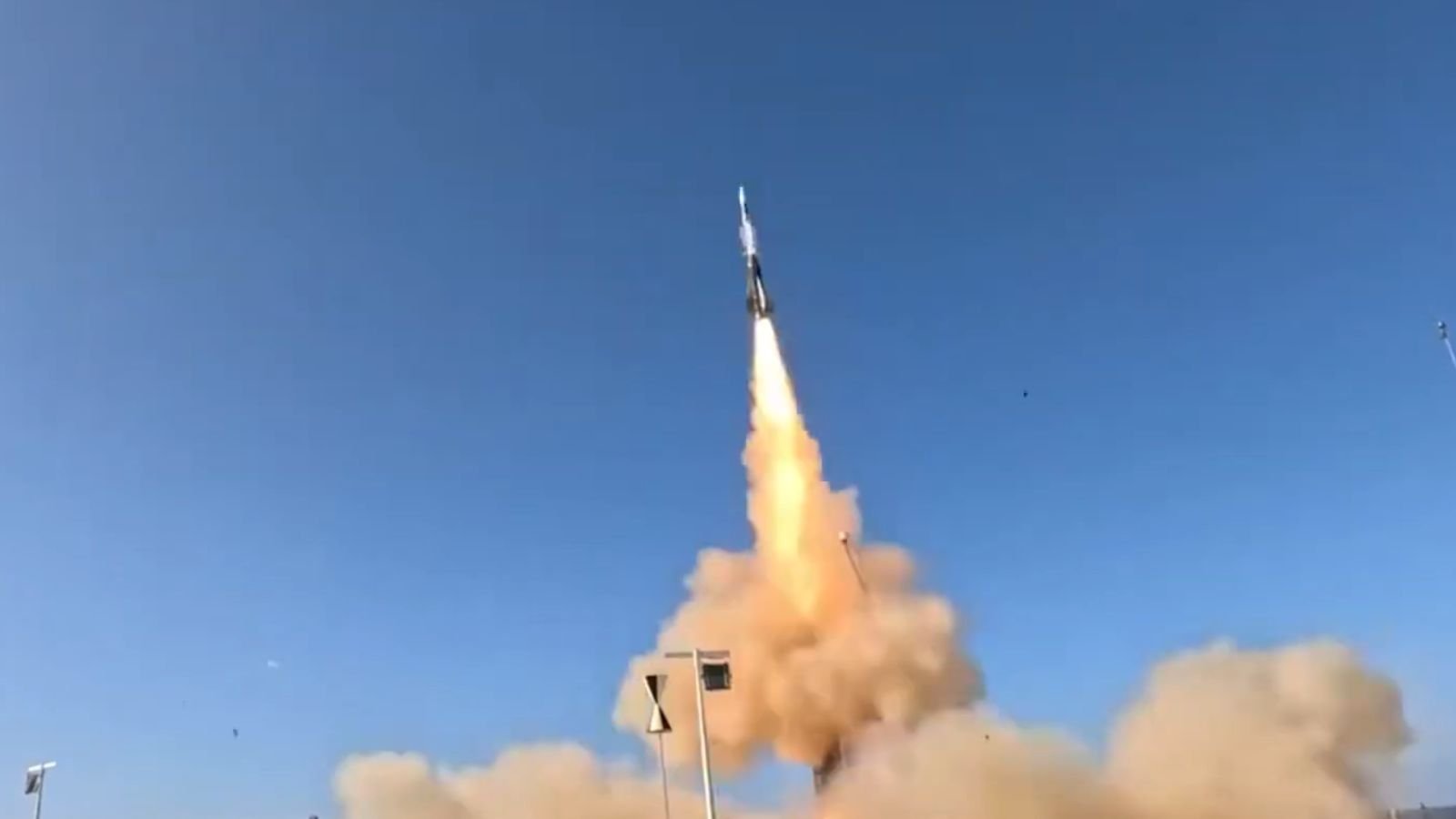
The details are starker still. Annual Mistral production has been multiplied by four. Aster deliveries last year came in at five times what had been planned — and next year’s output is set to double again from that already elevated baseline. These aren’t rounding errors. They represent a fundamental reconfiguration of what the company can produce and how fast.
And yet, in the same breath, Béranger said plainly: “It’s not enough.”
That assessment matters. MBDA isn’t a company with an incentive to undersell its capabilities — it’s the largest missile manufacturer in Europe, with $6.4 billion in revenue in 2025 and 19,000 employees across France, the U.K., Germany, and Italy. When its CEO says current output falls short, he’s describing a threat environment, not managing expectations.
Building Before the Orders Arrive
The most consequential shift MBDA has made isn’t on the factory floor — it’s in the business logic that governs what gets built and when.
Traditionally, defense manufacturers operate on a pull model: a government places an order, a contract is signed, production begins. Lead times stretch across years. By the time a weapon reaches the field, the strategic moment that justified its procurement may have already passed.
MBDA has abandoned that model. Béranger was explicit: “We start manufacturing, procuring components, before we even have contracts.”
That’s an extraordinary statement from the head of a company that builds some of the most complex weapons systems on the planet — Storm Shadow cruise missiles, Meteor beyond-visual-range air-to-air missiles, Exocet anti-ship missiles, Aster air defense interceptors, and the airborne nuclear component of France’s deterrent. These are not cheap products to stockpile speculatively. The decision to build ahead of demand reflects a bet that the orders will come — and that arriving late to fill them carries costs that outweigh the financial risk of producing without a contract in hand.
To back that conviction, MBDA has doubled its investment budget, committing $5.5 billion over the next five years, up from its previous five-year envelope.
Two Wars, Two Very Different Cost Structures
The operational context driving all of this isn’t abstract. MBDA’s missiles are being used right now — in Ukraine, where Aster interceptors and Storm Shadow cruise missiles have become critical assets, and in the Gulf, where a different and thornier problem has emerged.
Iran has deployed Shahed drones by the thousands in the ongoing Gulf conflict. Each Shahed carries a few dozen pounds of explosives and costs a fraction of what it takes to shoot it down. The missiles used to intercept them — including MBDA’s MICA — cost orders of magnitude more than their targets.
Béranger addressed the cost asymmetry directly: “When a MICA destroys a Shahed, it prevents the destruction of equipment that is itself extremely expensive, and more importantly, it saves human lives. Yes, there is this question of proportion, and yes, we need to find more economical solutions — but let’s not forget that in the end, the object does the job it was asked to do.”
It’s a defense that is both honest and slightly uncomfortable. The missile-versus-drone cost equation is a genuine strategic problem that no Western manufacturer has fully solved. Shooting $1 million rounds at $20,000 targets is sustainable only for so long, and everyone in the defense industry knows it. MBDA’s answer — for now — is that precision beats attrition, and that the alternative to an expensive intercept is an even more expensive consequence.
U.S. Marines Just Fought Under Swedish Command in the Arctic — and NATO Wants More of It
The Industrial Logic Behind the Numbers
| System | Category | Current Status |
| Mistral | Short-range air defense | Production ×4 since 2023 |
| Aster | Medium/long-range air defense | ×5 deliveries in 2024 vs. plan; ×2 again in 2025 |
| Storm Shadow | Long-range cruise missile | Active in Ukraine |
| Meteor | Beyond-visual-range air-to-air | Active in Gulf conflict |
| Exocet | Anti-ship | Full production maintained |
MBDA’s product range covers virtually the entire spectrum of modern missile warfare, which gives it an unusual vantage point on where demand is actually pressing hardest. Right now, that pressure is concentrated on air defense — Aster in particular — and on standoff strike capability. Both reflect the same underlying lesson that Ukraine has hammered home for three years: in a high-intensity conventional conflict, you burn through precision munitions at rates that peacetime production lines were never designed to sustain.
Europe spent most of the post-Cold War era treating defense industrial capacity as a cost to be managed rather than a strategic asset to be maintained. MBDA’s current sprint — doubling output, front-loading production, committing billions before the contracts are signed — is the industrial consequence of abandoning that assumption. Whether the rest of Europe’s defense ecosystem moves at the same speed is the question that will define the continent’s security posture for the decade ahead.
The Next Generation Is Already in the Pipeline
MBDA’s production surge isn’t just about building more of what already exists. At DSEI in London last September, the company unveiled STRATUS — the new name for the Franco-British-Italian Future Cruise/Anti-Ship Weapon program that has been quietly advancing for years. It’s the clearest signal yet that MBDA isn’t simply scaling up its current catalog to meet present demand; it’s engineering the weapons that will replace legacy systems well into the 2060s.
STRATUS comes in two distinct variants built around two different threat philosophies. STRATUS LO — Low Observable, formerly designated TP15 — is a subsonic cruise missile optimized for deep-strike and land-attack missions in heavily contested airspace, where a low radar signature matters more than raw speed. Think Storm Shadow’s successor, designed for the kind of environments where getting there undetected is half the mission. STRATUS RS — Rapid Strike, formerly RJ10 — takes the opposite approach: a high-supersonic weapon capable of Mach 3 to 5, built for anti-ship strikes, SEAD/DEAD operations, and time-sensitive high-value targets where speed and a compressed reaction window for the enemy are the decisive factors. Both variants are designed for multi-platform deployment — air, sea, and land — giving operational planners the flexibility that fixed-platform weapons have never offered.
Together, they are slated to replace SCALP, Storm Shadow, and Exocet in French, British, and Italian service. That’s a significant portion of Western Europe’s precision strike and anti-ship capability transitioning to a single next-generation family. The program is currently advancing toward full development — meaning the production infrastructure MBDA is building right now isn’t just feeding today’s conflicts. It’s laying the foundation for the weapons that will define European power projection for the next four decades.
Source: MBDA press conference
Image: MBDA FRANCE – Missile ASTER 30 – credit: French Army
