Four RAF Regiment gunners have been credited with shooting down five or more Iranian one-way attack drones during operations in the Middle East, earning them the label “drone aces” for the first time in military history.
The term “ace” has traditionally applied to fighter pilots who downed at least five enemy aircraft, a World War II benchmark now being applied to ground-based air defenders as drone warfare reshapes the battlefield.
The achievement comes amid stepped-up attacks on UK and allied personnel, infrastructure, and assets, with RAF units working alongside engineers and air surveillance specialists to track and defeat persistent aerial threats. The Ministry of Defence has highlighted a particularly intense period on March 23 and 24, described as the most effective defensive outcome achieved in a single night to date, during a conflict that began in late February 2026.
Related articles:
- US-based Kraus Hamdani unveils the record-breaking K1000ULE electric drone redefining ISR missions
- European missile maker MBDA has doubled its production in two years, and with a $6.3 billion investment, it’s only the beginning
RAF Regiment credits four gunners with five-plus drone shootdowns
The RAF says four RAF Regiment personnel reached “ace” status by destroying five or more hostile drones each during base-defense operations in the Middle East. That threshold deliberately mirrors the historic definition used for aerial combat, when a pilot who shot down five enemy aircraft was recognized as an ace. This time, the accolade is attached to ground-based specialists whose job is to keep airfields and deployed forces safe.
The operators are described as gunners from a force-protection unit, working in a high-threat environment where one-way attack drones have been used repeatedly against coalition sites. The targets are not abstract, they include living quarters, runways, fuel storage, and the infrastructure that allows aircraft to launch and recover. In that context, a successful intercept is not only a tactical win, it can prevent casualties and preserve operational tempo.
Officials have emphasized the pace of the threat, with drones appearing “night after night” and defenders having to maintain vigilance under pressure. That phrasing matters because it points to endurance as much as marksmanship. Unlike a single dramatic engagement, this is repetitive, grinding defense work, with crews rotating through watches, verifying tracks, and making split-second decisions when an incoming object is assessed as hostile.
The “drone aces” label also signals a cultural shift inside air forces. For decades, the romance and recognition of air combat centered on pilots in cockpits. Now, the people earning the newest version of that status are soldiers operating sensors and missiles from the ground. It is a notable change in what modern “protecting the skies” looks like when the most common intruders are small, unmanned, and relatively cheap.
March 23-24 saw the most effective single-night defense, RAF says
The RAF has singled out the night of March 23-24 as the strongest defensive performance “to date,” delivered by a ground-based counter-drone unit in the Middle East. The statement frames it as a measurable outcome, not only as a morale-boosting narrative. One reason that matters is that drone defense is often judged in percentages and probabilities, how many threats are detected, how many are engaged, and how many are prevented from reaching their aim point.
The broader timeline is also specific. The RAF describes the campaign as beginning in late February 2026, when persistent one-way attack drones started targeting UK and allied personnel and assets in the region. That date marker places the “ace” achievement inside an ongoing operational rhythm. It is not a one-off exercise or a short spike, it is a sustained period in which defenders have had to adapt to repeated attempts to probe base defenses.
In practical terms, a “most effective” night can mean multiple things at once, coordinated early warning, smooth handoffs between surveillance and shooters, and disciplined fire control so that missiles are used against the right targets at the right time. In drone warfare, attackers often rely on quantity, hoping a few drones slip through. The defensive goal is to break that logic by reducing the attacker’s success rate to near zero.
There is also a nuance worth stating plainly, a public claim about the “most effective” night does not automatically reveal how many drones were launched, how many were intercepted, or what damage might have occurred elsewhere. Militaries routinely protect operational details. That makes the “drone aces” distinction symbolically powerful, but it also leaves outside analysts with limited data to independently quantify the full scale of the engagement.
Rapid Sentry and Lightweight Multirole Missiles shape UK counter-drone tactics
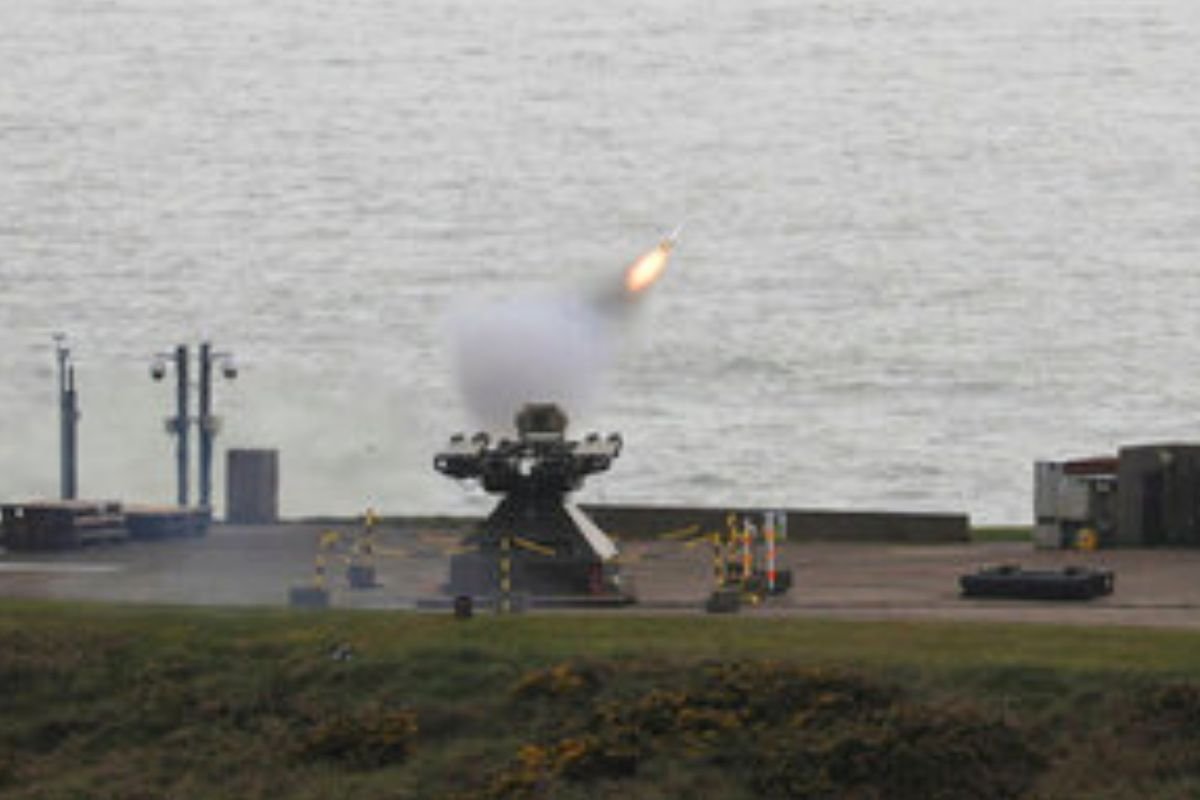
Officials and reporting around the engagement describe a mix of sensors and effectors used to counter incoming drones, including Rapid Sentry and Lightweight Multirole Missiles. The emphasis on a layered toolkit reflects the reality that drones vary in speed, altitude, and flight profile. Defenders need time to detect and classify an object, then a reliable way to bring it down before it reaches a protected area.
Drone threats in this context are often described as “Shahed-style” and “one-way attack” systems, designed to be expendable and to overwhelm defenses through numbers. That approach forces defenders into a resource-management problem, because missiles and trained crews are not limitless. A short-range missile system can be highly effective, but commanders also have to think about how many interceptors are available and how quickly they can be resupplied.
Alongside missiles, the RAF has pointed to supporting capabilities such as electronic warfare and early warning sensors. That matters because not every drone has to be destroyed by a missile. Some can be disrupted, diverted, or forced to fail. In a dense threat environment, those non-kinetic options can preserve missiles for the drones most likely to reach their targets or those that cannot be safely neutralized any other way.
The operational picture also highlights coordination between different RAF specialties. The RAF has described RAF Regiment personnel being supported by engineers and air surveillance officers, a reminder that counter-drone defense is a system, not a single weapon. A gunner may get the credit for a shootdown, but the chain includes detection, identification, command authorization, and the technical teams keeping radars, launchers, and communications running in harsh conditions.
Iranian one-way attack drones drive a new kind of “ace” status
The drones being intercepted are described as Iranian one-way attack systems, a category that has become central to modern regional conflicts because it is cheaper than cruise missiles and easier to deploy in volume. That cost asymmetry is why defenders invest in layered defenses and constant readiness. Even a relatively unsophisticated drone can be dangerous if it reaches a fuel depot, aircraft parking area, or crowded living space.
Calling ground defenders “aces” is also a way of translating a new kind of combat into language the public recognizes. In World War II, an ace was a pilot in a fast-moving duel. Here, the “duel” is often a radar screen, a track file, and a launch decision in seconds. The skill is not aerobatics, it is identification, timing, and discipline, especially when multiple objects may be in the air and the penalty for delay is severe.
Armed forces minister Al Carns publicly praised the teams for operating in demanding conditions and for protecting British lives and interests under threat. That political recognition serves a purpose, it reinforces that base defense, often treated as routine, is front-line combat when drones are regularly incoming. It also acknowledges that the people doing this work are not anonymous technicians, they are exposed to risk and pressure.
Still, there is an uncomfortable strategic question behind the celebration. If relatively low-cost drones can force high-cost defensive postures night after night, the burden on defenders can grow even when intercepts are successful. The “drone aces” story highlights tactical competence, but it also underlines how persistent drone campaigns can strain personnel, consume interceptors, and keep bases on edge for weeks at a time.
RAF force protection shifts from airbase security to constant counter-UAS combat
The RAF Regiment’s core mission is protecting airbases, and the current operations show how that role has expanded into constant counter-UAS combat. In earlier eras, airbase defense centered on perimeter security, patrols, and protection against sabotage or indirect fire. Now, the threat often arrives from above, small, hard to spot, and capable of striking with little warning if detection fails.
The RAF has described its units as being at the forefront of countering persistent drones targeting UK and allied personnel and assets. That phrasing suggests a tempo where force protection is no longer a supporting activity that happens in the background. It becomes a central operational line, because aircraft operations, logistics, and even medical evacuation can be disrupted if a base is repeatedly attacked or forced into sheltering procedures.
There is also a broader implication for training and recognition. If “ace” status can be earned by ground-based defenders, militaries may build new pathways to reward and retain specialists who master sensors, electronic warfare, and short-range air defense. The four gunners’ milestone creates a reference point that could influence how future counter-drone roles are described, resourced, and valued inside the RAF.
For the public, the story offers a rare view into a job that is usually invisible unless something goes wrong. The RAF Regiment gunners are not flying sorties, but they are shaping whether sorties can happen at all. Their “drone aces” label is a headline-friendly way to describe a serious operational reality, modern airpower depends on defending the ground infrastructure that makes flight possible.
Source:
UK Government (GOV.UK), “RAF personnel become first ever drone aces during operations in the Middle East” (published March 28, 2026),
https://www.gov.uk/government/news/raf-personnel-become-first-ever-drone-aces-during-operations-in-the-middle-east
official government release announcing that Royal Air Force personnel have been recognized as the first-ever “drone aces,” detailing their operational achievements in the Middle East, the criteria for this designation, and the broader implications for modern air warfare and remotely piloted systems.
