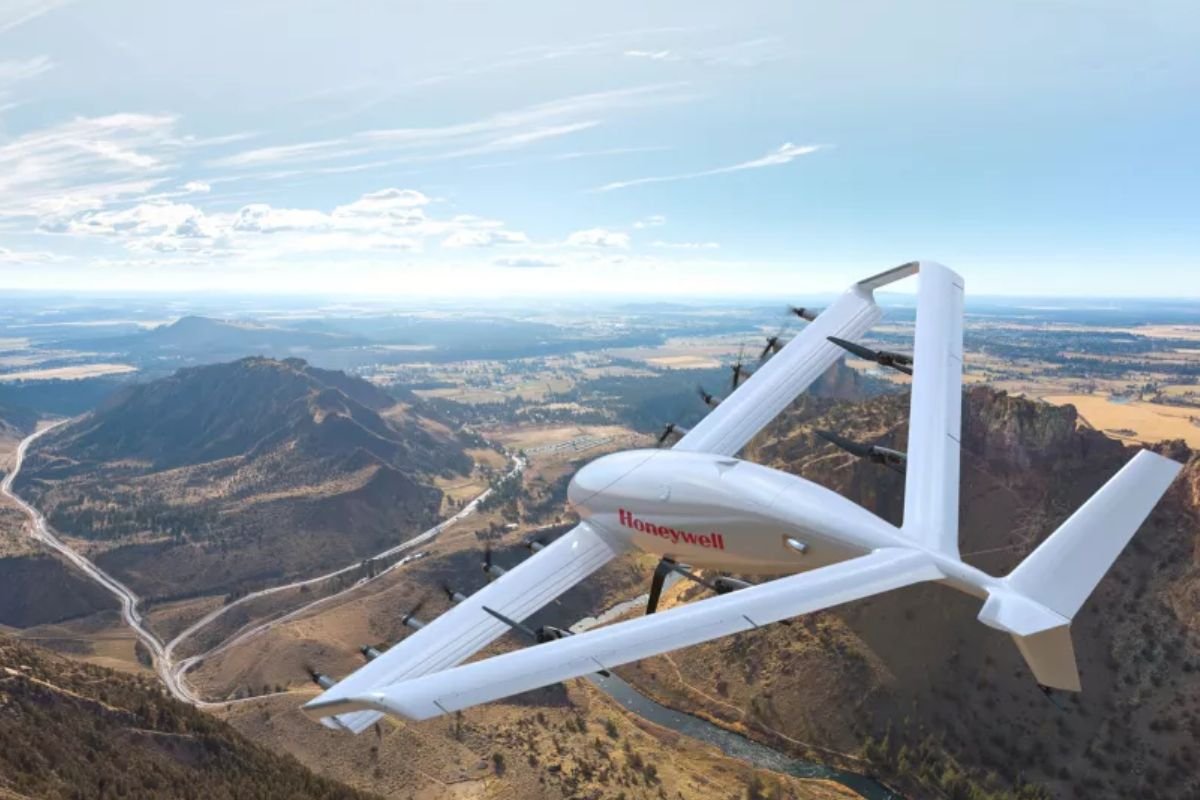
Honeywell Aerospace and Odys Aviation have spent more than a year integrating an airborne counter-unmanned aerial system designed to protect critical infrastructure and strategic assets from drone threats.
The concept pairs Honeywell’s Stationary and Mobile UAS Reveal and Intercept platform, known as SAMURAI, with Odys’ long-range Laila unmanned aircraft to push detection and engagement farther from the site being defended.
The pitch is straightforward: move counter-drone coverage off the fence line and into the air, where a persistent platform can patrol wide areas and respond as threats evolve. The companies describe a system built to be modular and scalable, with software-led integration and layered options for detecting, tracking, identifying, and defeating hostile drones, a design that targets both fixed sites and mobile missions.
Related articles:
- Germany’s largest defense company teams up with Boeing to explore how to equip the country with a drone fleet based on the MQ-28 Ghost Bat
- The European Union finally appears to be grasping the stakes around military drones, committing $132 million across more than 20 projects under AGILE
Honeywell and Odys Aviation announce SAMURAI integration on Laila UAV
The collaboration was announced as a joint effort between Honeywell Aerospace and Odys Aviation to deliver a persistent airborne counter-drone capability. The core technical move is adapting Honeywell’s SAMURAI autonomous airborne platform for deployment on Odys’ Laila UAV. Both companies frame the system as a new airborne layer that complements ground-based defenses rather than replacing them.
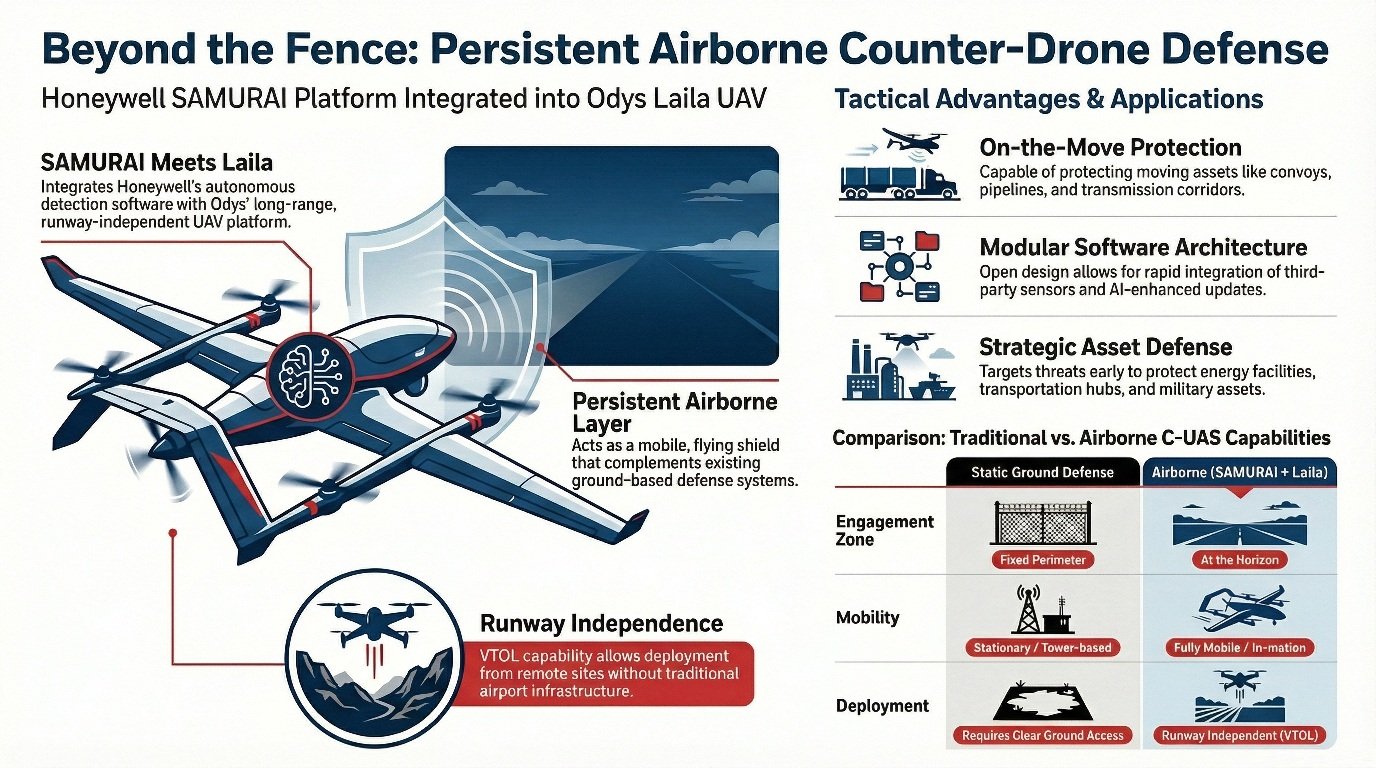
Odys positions Laila as a long-range, runway-independent aircraft with onboard power capacity, characteristics that matter when you’re trying to keep sensors and effectors running for extended periods. In practical terms, that means a platform that can loiter, reposition, and keep coverage over large areas without relying on a traditional runway network. For critical infrastructure operators, that runway independence is not just a convenience, it can define where the system can be staged.
James Dorris, Odys Aviation’s CEO, argues that drone threats have changed the economics and operational requirements of air defense. His point is about scale and persistence: large facilities and dispersed assets are hard to protect with purely static systems, especially when small drones can approach from different directions and at low altitude. The stated goal is to engage threats “at the horizon,” buying time before a drone is close enough to disrupt operations.
Honeywell’s public messaging emphasizes that the work supports a broader U. S. push to strengthen domestic leadership in advanced aviation and speed deployment of American-built drone technologies. That policy framing matters because procurement and adoption often follow national strategy language. It also signals the intended customer set: defense users, infrastructure operators, and agencies that want a deployable capability with a domestic industrial base.
Honeywell SAMURAI architecture targets modular counter-UAS missions on the move
Honeywell describes its counter-UAS offering as software-centric and designed for easy integration, with a platform-agnostic approach that can be adapted to different vehicles and mission profiles. The system is intended to detect, track, identify, and defeat hostile drones by combining scalable sensors, AI-enhanced detection, and layered effectors into an integrated package. In the field, that combination is meant to reduce the time from first detection to a decision on what to do next.
A key differentiator in Honeywell’s framing is mobility. Traditional counter-drone systems often assume a fixed perimeter and a static set of sensors. Honeywell argues its approach can operate while in motion, which is relevant for convoy protection, border patrol units, or infrastructure operators managing long linear assets like pipelines and transmission corridors. With an airborne host platform, that “on-the-move” idea extends beyond vehicles to an aircraft that can shift coverage quickly.
Honeywell also highlights an open, modular architecture that is configurable and vendor-agnostic. That matters for buyers who want to avoid being locked into a single proprietary stack, because counter-drone technology changes quickly and threat tactics evolve. If a site operator needs to integrate third-party sensors or update effectors, a modular design is supposed to make that less disruptive. The promise is upgradeability without rebuilding the whole system.
There’s a nuance worth stating plainly: modularity can be a selling point and a risk. Integration is hard, and “open” architectures still require careful testing to avoid gaps between sensors, software, and effectors. A layered defense only works if detection, classification, and response are synchronized under real operating conditions, including cluttered RF environments and complex airspace rules. The companies are effectively betting that software-led integration can keep pace.
Odys Aviation’s Laila UAV brings runway independence and onboard power
Odys Aviation markets itself as a dual-use company building hybrid-electric VTOL aircraft, and it emphasizes missions where infrastructure is limited and urgency is high. In the counter-drone partnership, the spotlight is on Laila as a long-range UAV with runway independence and onboard power capability. Those attributes are directly tied to persistent airborne defense, because endurance and electrical power determine how long sensors and mission systems can run.
In practical deployment terms, runway independence can broaden basing options. A system meant to protect critical infrastructure might need to operate near remote energy facilities, coastal installations, or industrial sites where a runway is not available or not secure. A VTOL-capable platform can potentially stage closer to the protected asset, reduce transit time, and keep coverage tighter. That also helps when a response needs to be repositioned quickly after a threat pattern changes.
Odys’ broader messaging about aviation inefficiencies, including the scale of air-transported goods globally, is not directly about defense, but it explains the company’s focus on long-range, flexible aircraft. A platform designed to move cargo into hard-to-reach areas tends to prioritize range, payload, and operational independence. Those same design priorities can translate into defense utility when the payload becomes sensors and counter-UAS mission equipment rather than freight.
Odys also argues that modern airspace security demands moving the engagement zone outward, not waiting until a drone is near the target. That is the conceptual heart of an airborne counter-UAS layer. Still, the real-world value will depend on how the system performs against different drone profiles, including small, low-flying aircraft and coordinated swarms. Endurance and power help, but they do not eliminate the need for robust detection and reliable defeat options.
Critical infrastructure protection shifts toward persistent airborne counter-drone coverage
Critical infrastructure is a broad category, and the partnership’s language is intentionally wide: “critical infrastructure and strategic assets.” That could include energy sites, transportation hubs, industrial facilities, and forward-operating locations. The common problem is that drones can be cheap, fast to deploy, and difficult to spot early, especially when they approach at low altitude. A persistent airborne layer is meant to extend the defended perimeter beyond the immediate site boundary.
Honeywell frames its counter-UAS system as suitable for defense and infrastructure protection, with real-time protection against evolving threats in fixed positions or while moving. That dual framing is important because infrastructure operators often face different constraints than military users, such as regulatory limits, safety considerations, and the need to avoid disrupting legitimate air traffic. A system designed to be modular can, in theory, be configured to match those constraints.
The partnership also lands in a moment when “swarming drone threats” are a core concern in defense planning. Honeywell has publicly emphasized layered defense against swarms, pairing AI-driven detection and tracking with a suite of effectors. Swarms stress systems by creating multiple simultaneous tracks and forcing rapid prioritization. For infrastructure, the scenario may not always look like a battlefield swarm, but the underlying challenge, many small targets, limited reaction time, is similar.
There is also an operational question that infrastructure executives will ask, and it’s not glamorous: staffing and sustainment. Persistent airborne coverage implies maintenance cycles, trained operators, and clear rules for engagement. A mobile, airborne system can reduce the need for fixed towers and static sensor networks in some areas, but it introduces aviation logistics. The trade-off is between a wider protective bubble and the ongoing cost of keeping an aircraft mission-ready.
US strategy for American-built drones shapes adoption of airborne C-UAS systems
The companies explicitly connect the program to a broader U. S. strategy to strengthen domestic leadership in advanced aviation and accelerate deployment of American-built drone technologies. That matters because counter-drone capabilities sit at the intersection of defense procurement, homeland security needs, and industrial policy. For vendors, aligning a product with national strategy can influence which programs get attention, funding, and pilot deployments.
Honeywell’s defense and space leadership has described counter-UAS as an agile, mobile, AI-powered system that supports military, border, and critical infrastructure missions. That range suggests a market where buyers want a common core that can be tailored by mission, rather than separate bespoke systems for every use case. A software-led architecture is a way to sell that idea, because software updates can add features faster than hardware refresh cycles.
The competitive landscape is crowded, with many counter-drone offerings emphasizing sensors, jamming, kinetic intercept, or integrated command-and-control. Honeywell’s bet is integration and mobility, and Odys’ bet is a host platform that can stay aloft and operate without runway constraints. The pairing is designed to offer a “persistent” layer, not just a point defense. That is a meaningful distinction when the threat is a drone that can launch from miles away.
One more nuance: adoption will depend on how clearly the system fits into existing airspace management and safety rules. Infrastructure operators do not want a counter-drone system that creates new risks to nearby communities or legitimate aviation. That means the most persuasive demonstrations will likely be those that show controlled detection, accurate identification, and disciplined response options, with clear coordination among security teams. The technology narrative is strong, but operational integration will decide the pace.
A European answer built around cost and volume
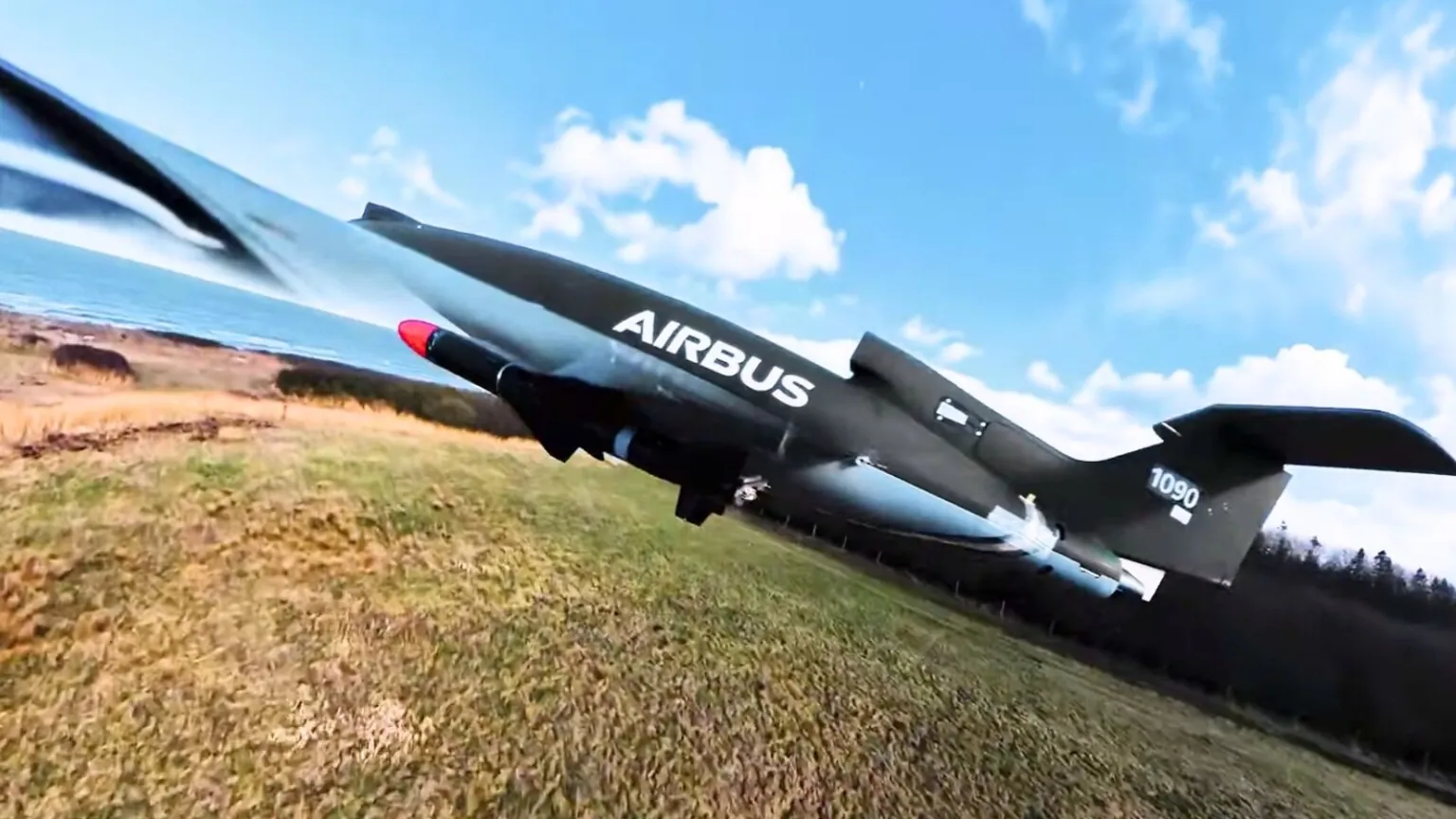
At the same time, Airbus is pursuing a different path with its Bird of Prey interceptor, one shaped less by reach than by economics. Drawing on battlefield lessons, particularly in Ukraine where tens of thousands of drones have been launched in saturation waves, Airbus is addressing a simple imbalance: using expensive air-defense missiles against cheap drones is not sustainable. Instead of pushing the defensive perimeter outward like the Honeywell–Odys concept, Airbus focuses on absorbing the shock at close range, with a compact, reusable interceptor capable of autonomously detecting and engaging targets using small, low-cost missiles. The objective is not perfect interception, but repeatable interception at scale, allowing defenses to endure prolonged attacks without collapsing under cost or tempo. It is a more reactive model, integrated into a broader network, where speed and volume matter as much as precision—another way of adapting to a battlefield where drones are no longer exceptional, but constant.
Sources:
- Airbus, “Successful first demo flight for Airbus uncrewed ‘Bird of Prey’ interceptor” (published March 2026),
https://www.airbus.com/en/newsroom/press-releases/2026-03-successful-first-demo-flight-for-airbus-uncrewed-bird-of-prey-interceptor
official Airbus press release detailing the first demonstration flight of its “Bird of Prey” uncrewed interceptor, outlining the system’s role as a cost-effective countermeasure against kamikaze drones, its operational concept, and its positioning within evolving counter-UAS strategies. - Honeywell Aerospace, “Honeywell Aerospace and ODYS Aviation partner on airborne counter-UAS defense” (published March 2026),
https://aerospace.honeywell.com/us/en/about-us/press-release/2026/03/honeywell-aerospace-odys-aviation-airborne-counter-uas-defense
official corporate announcement presenting a partnership between Honeywell Aerospace and Odys Aviation to develop airborne counter-UAS capabilities, highlighting system integration, sensor and avionics contributions, and the broader ambition to compete in next-generation aerial drone defense solutions.
