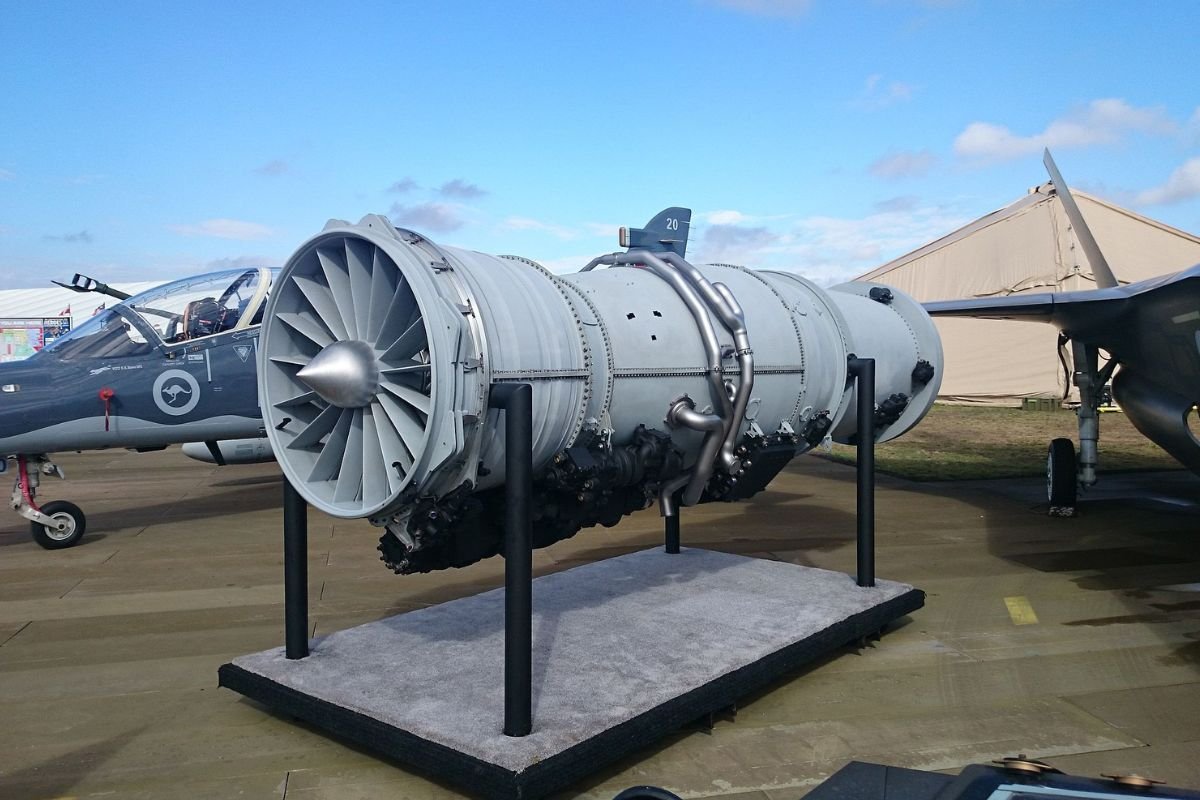
Pratt & Whitney, an RTX business, has been awarded a $6.6 billion contract tied to production of the F135 engine for lots 18 and 19 of the F-35 Lightning II program. The award includes a $3.8 billion contract modification that definitizes lot 18 propulsion system production and provides for production supporting lot 19 aircraft.
The deal matters beyond one line item on a Pentagon ledger. It bundles full-rate production engines with initial spares, modules, engineering resources, program oversight, and dedicated production support services. Investors noticed, with RTX shares rising after the announcement. The award also lands in the middle of a broader push to stabilize output and delivery timing for a program that spans US services and a large international customer base.
Related articles:
- F-22 vs F-35 at Red Flag 21: inside the stealth-on-stealth dogfights that forced U.S. pilots to rewrite modern air combat tactics
- A US F-35 made an emergency landing after a combat mission over Iran, and the incident is raising new questions about stealth
Pratt & Whitney’s $6.6 billion award locks in F135 lots 18-19
The new award centers on the F135, the engine that powers all three variants of the F-35 Lightning II. The government action takes the form of a $3.8 billion contract modification that definitizes lot 18 production, while also providing for production tied to lot 19 aircraft. Put together, the total value for lots 18 and 19 reaches $6.6 billion, a scale that signals the program’s continuing cadence.
What’s being purchased is not just hardware. The contract includes full-rate production engines, initial spares, key modules, engineering resources, program oversight, and dedicated production support services. In practical terms, that means the agreement is designed to cover the engine as a system, plus the early sustainment pieces that keep aircraft available for training and operations once they hit squadrons.
Company leadership framed the award around performance and readiness. Jill Albertelli, president of Military Engines at Pratt & Whitney, described the F135 as the most advanced military engine in the world, highlighting thrust, reliability, and mission readiness for the United States and allied operators. The messaging is familiar for a defense prime, but it also reflects the reality that the F-35 enterprise is judged heavily on availability rates and maintenance burden.
There’s also a logistical angle baked into the language of the award. The contract is meant to ensure capacity, tooling, and uninterrupted manufacturing and supply chain operations for both US military services and international customers. That phrasing points to a key pressure point: even when aircraft orders are stable, production can still get constrained by long-lead parts, shop capacity, and the timing of module deliveries across a wide supplier base.
New U.S. Counter-Drone Concept Challenges Airbus and Europe’s Lead
RTX and Wall Street react as the award lifts shares and forecasts
Markets treated the award as a positive signal for RTX, with the stock rising after the announcement. One report pegged the move at about 1.2%, with shares closing at $112.45, ahead of an aerospace and defense index that gained about 0.4% on the day. The immediate reaction reflects a basic investor preference: multi-billion-dollar production awards reduce uncertainty around near-term revenue and factory utilization.
Analyst notes also leaned into the “validation” narrative. JPMorgan raised its RTX price target to $125 from $118, describing the contract as confirmation that manufacturing expansion efforts are translating into booked work. Separately, RBC Capital Markets focused on the scope of the contract, pointing to the inclusion of full-rate production, spares, and engineering support as meaningful for addressing bottlenecks that can ripple across the F-35 supply chain.
Forecasts moved in response. Consensus 2026 adjusted EPS estimates for RTX were cited at $6.12 after the award, a small but measurable reset that can influence how generalist investors, not just defense specialists, think about the company’s earnings power. The important detail is not the penny-level precision, it’s that the award is being treated as earnings-relevant rather than just headline noise.
Still, the market optimism comes with a built-in caveat. The same commentary that praised the contract’s breadth also flagged ongoing scrutiny over engine sustainment costs. That’s the tension for the F-35 ecosystem: production awards are large and visible, but long-term affordability is driven by maintenance, spares consumption, depot throughput, and the cost of keeping engines on-wing. A production win does not automatically settle those debates.
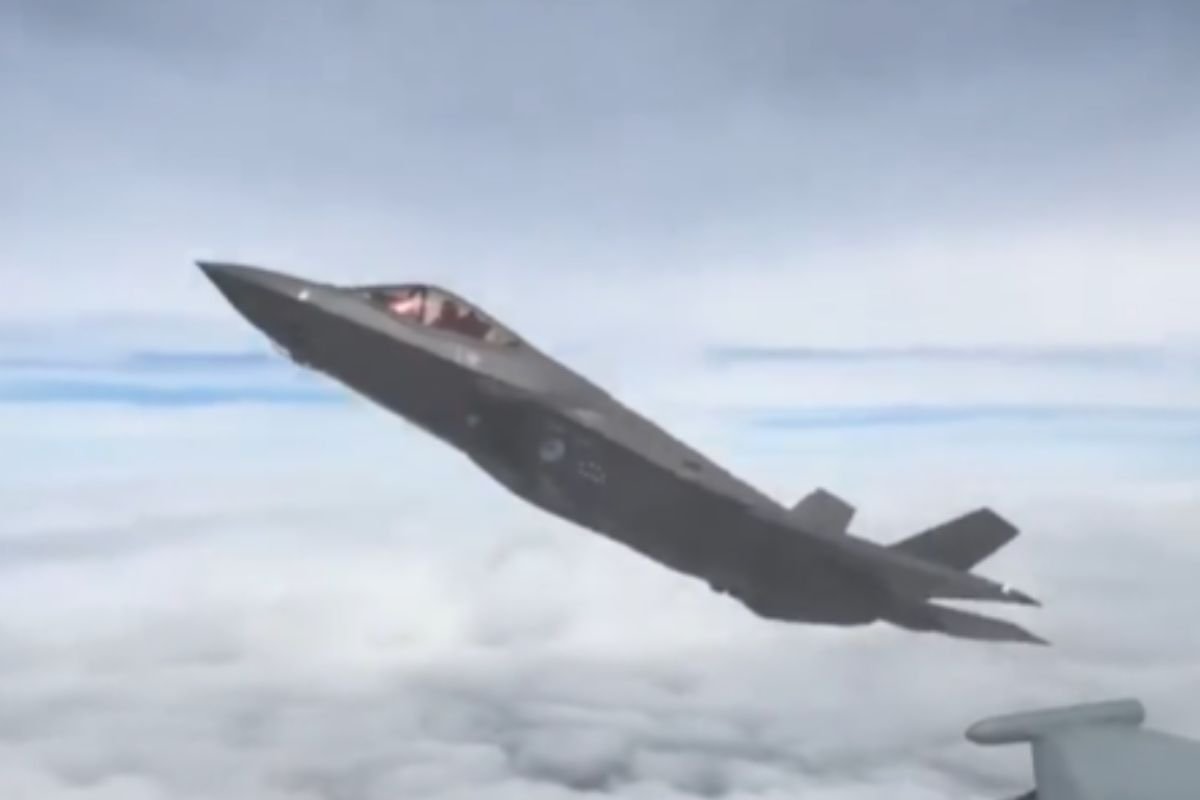
Pratt & Whitney cites $1B investment and a 20% jump in F135 output
The award lands after a period of heavy industrial spending by Pratt & Whitney. The company says it has committed more than $1 billion over the past five years to expand and modernize production capacity. That kind of capital investment typically targets machine tools, test capability, digital tracking, floor layout changes, and supplier development, all aimed at moving engines through assembly and acceptance faster.
Those investments are being tied to a concrete output claim: current F135 production rates are up 20% compared with previous contract rates. For a high-complexity military turbofan, a 20% increase is not a rounding error. It can translate into more aircraft delivered on schedule, fewer “engine-less jets” waiting for powerplants, and improved predictability for training pipelines that depend on steady fleet growth.
The company also put a marker down on scale and maturity. It says it has delivered more than 1,400 production F135 engines for the F-35 program. That figure matters because it signals a long-running production base with lessons learned, supplier relationships, and quality systems that have been stress-tested over years. It also gives context to the lots 18 and 19 award, which sits on top of an already-large installed fleet.
Albertelli’s statement also emphasized investment “across our global production base and supply chain” to increase production and accelerate engine delivery and sustainment to meet growing global demand for the F-35 program. The phrase “global production base” is doing work here: the F-35 is flown by multiple allied nations, and the industrial footprint, from parts to maintenance pathways, is built to support a multinational fleet rather than a purely domestic one.
The F135’s sole-supplier status and Engine Core Upgrade shape long-term planning
One reason this award draws attention is the sole supplier dynamic. Pratt & Whitney is described as the only engine supplier for all F-35 variants, with no competing engine currently certified for the platform. For program managers, that concentrates risk and leverage in one place. For the contractor, it creates a durable franchise, but it also places the company under a brighter spotlight when cost, readiness, or delivery schedules become political issues.
Long-term planning is also being shaped by the Engine Core Upgrade, a modernization path selected in 2023 over next-generation alternatives. The upgrade is designed to enable F-35 Block 4 improvements, including gains in thrust and fuel efficiency. While the lots 18 and 19 award focuses on production and near-term support, it sits within a broader arc where propulsion has to keep pace with evolving aircraft requirements.
For operators, the practical question is how production and upgrades coexist. A fleet that keeps expanding needs engines delivered on time, but it also needs a roadmap for performance and efficiency improvements without creating a maintenance nightmare of mixed configurations. The contract’s inclusion of engineering resources and modules hints at a system-level approach, but it does not eliminate the complexity of managing upgrades across a multinational fleet with different budgets and timelines.
There’s also a policy angle that rarely gets spelled out in press releases. When a platform has a single certified engine, industrial disruptions can cascade quickly. That reality increases the value of “capacity, tooling, and uninterrupted manufacturing” language in the award. It also explains why investors view production stability as a financial positive, while governments view it as a readiness imperative tied to allied commitments and operational planning.
Jobs, economic impact, and the supply chain pressure behind lot contracts
The company points to a major domestic footprint. The F135 program is said to support more than 66,000 jobs across 47 states and territories. In defense procurement, those statistics are not just trivia, they are part of the political architecture that helps sustain funding through multiple budget cycles. A program that touches dozens of states tends to build a broad coalition of interest in Congress.
Pratt & Whitney also cited more than $9 billion in domestic economic impact in 2025. That figure, while often debated in terms of methodology, is meant to capture the supply chain effect: direct labor, supplier purchases, and induced spending in local economies. For communities with specialized manufacturing, steady lot awards can mean stable hiring, apprenticeship pipelines, and long-term investment in advanced machining and quality roles.
The international dimension is also explicit. The F-35 program includes 20 allied nations worldwide, and the contract language references support for both US military services and international customers. That matters because international deliveries can be tied to alliance commitments and regional deterrence strategies. When engine deliveries slip, the impact can show up in training hours, deployment schedules, and the pace at which partner nations stand up operational squadrons.
Still, supply chain stability is a constant fight, not a box you check once. The contract’s structure, with spares, modules, and dedicated production support services, is designed to reduce friction. But the critique remains fair: a lot award does not automatically fix bottlenecks if sub-tier suppliers face capacity limits or if sustainment costs keep drawing scrutiny. The value of the deal is clear, and the execution risk remains part of the story.
Comparison with main competitors in the world :
| Engine | Country | Generation | Max Thrust (Afterburner) | Thrust-to-Weight Ratio | Aircraft Examples |
|---|---|---|---|---|---|
| F135-PW-100 | 🇺🇸 USA | 5 | 43,000 lbf (191 kN) | 6.7 | F-35A Lightning II |
| AL-51F1 | 🇷🇺 Russia | 5 | 39,566 lbf (176 kN) | ~10.0 | Su-57 (next-gen variant) |
| F119-PW-100 | 🇺🇸 USA | 5 | 35,000 lbf (156 kN) | 7.0 | F-22 Raptor |
| AL-41F1 | 🇷🇺 Russia | 5 | 33,000 lbf (147 kN) | 10.54 | Su-57 (early production) |
| F110-GE-132 | 🇺🇸 USA | 4.5 | 32,500 lbf (144.6 kN) | 8.48 | F-16 Block 60 (UAE) |
| F414-INS6 | 🇺🇸🇮🇳 USA / India | 4.5 | 22,000 lbf (98 kN) | 9.1 | HAL Tejas Mk2 (planned) |
| EJ200 | 🇪🇺 Europe | 4.5 | 20,000 lbf (90 kN) | 9.09 | Eurofighter Typhoon |
| M88-2 | 🇫🇷 France | 4.5 | 16,860 lbf (75 kN) | 8.52 | Dassault Rafale |
| F110-GE-129 | 🇺🇸 USA | 4 | 29,500 lbf (131.2 kN) | 7.57 | F-16C/D, F-15 variants |
| AL-31F | 🇷🇺 Russia | 4 | 27,557 lbf (122.6 kN) | 7.14 | Su-27, Su-30, Su-33 |
| RD-33 | 🇷🇺 Russia | 4 | 18,300 lbf (81.4 kN) | 6.67 | MiG-29, MiG-35 |
Sources:
- PR Newswire, “RTX’s Pratt & Whitney awarded $6.6 billion F135 production contract to definitize Lots 18–19” (published March 31, 2026),
https://www.prnewswire.com/news-releases/rtxs-pratt–whitney-awarded-6-6-billion-f135-production-contract-to-definitize-lots-18-19–302729613.html
press release detailing the $6.6 billion contract awarded to Pratt & Whitney for the production of F135 engines powering the F-35, covering Lots 18 and 19, with information on contract scope, production volumes, and the role of the engine in sustaining the global F-35 fleet. - RTX, “RTX’s Pratt & Whitney awarded $6.6 billion F135 production contract to definitize Lots 18–19” (published March 31, 2026),
https://www.rtx.com/news/news-center/2026/03/31/rtxs-pratt-whitney-awarded-6-6-billion-f135-production-contract-to-definitize
official corporate communication confirming the contract award, providing additional details on industrial execution, supply chain involvement, and the strategic importance of the F135 engine program within RTX’s defense portfolio and long-term support of fifth-generation fighter operations.
