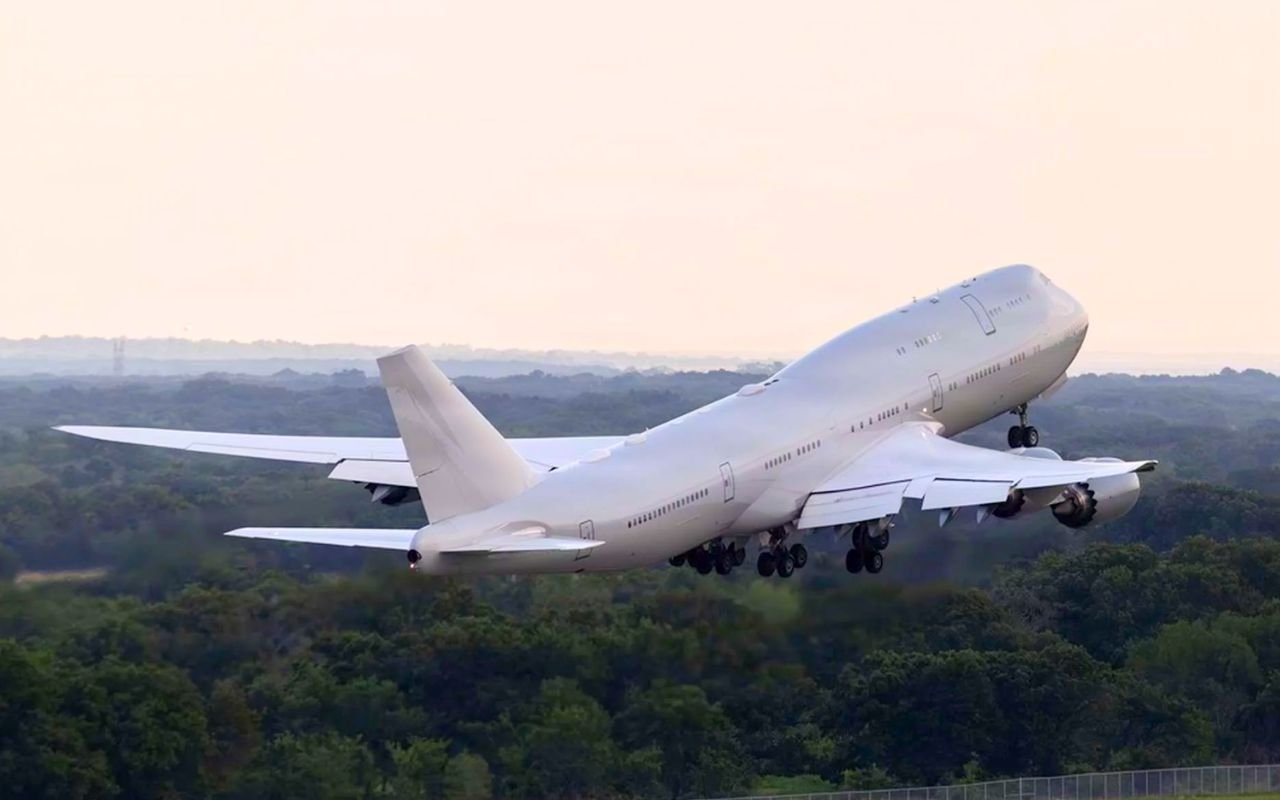
The U. S. Air Force says its interim VC-25B “Bridge” aircraft, a Boeing 747-8 originally gifted by Qatar’s rulers, has completed modifications and flight testing and is being prepared for a summer debut.
The jet is intended to relieve operational strain on the current presidential airlift fleet while the long-delayed replacement program continues to slip. The stopgap matters because the two existing VC-25A aircraft, based on the 747-200, have been flying presidents since the era of George H. W. Bush. The Air Force has not announced plans to retire those aircraft until two full-up VC-25B replacements are operational, a milestone now projected for 2028, after years of schedule pressure and cost growth.
Gen. Dale R. White oversees a fast-tracked “Bridge” turnaround
Air Force leaders have framed the “Bridge” effort as proof that a different management model can move faster. The program sits under a Direct Reporting Program Manager approach that consolidates major efforts under Gen. Dale R. White, who reports directly to Deputy Secretary of Defense Steve Feinberg. In the Air Force’s telling, clearer accountability helped align stakeholders behind one outcome: get a usable interim aircraft into the fleet quickly.
The timeline is the headline. The Pentagon officially accepted the donated 747-8 in May 2025, and the Air Force did not publicly announce that work had begun until September, signaling that the modifications and testing wrapped in under a year. For a jet that must be safe, secure, and connected enough for presidential travel, that pace is notably brisk when compared with typical defense aviation schedules.
Cost is where the picture stays incomplete, and that uncertainty is worth flagging. Air Force Secretary Troy E. Meink previously suggested the conversion would come in under $400 million, and he said the service used excess funding from a delayed new nuclear missile program that was “early to need.” But the Air Force has not provided a final number, leaving outside analysts to guess how much of the bill is airframe work versus mission-specific upgrades.
Texas flight tests and a new red-white-blue livery for the interim jet
Operationally, the Air Force says the aircraft has finished its modification package and flight testing in Texas. That testing phase is a key gate for any aircraft expected to carry the president, since the platform must demonstrate reliability and predictable performance before it ever takes on the added complexity of secure communications and contingency procedures.
Visually, the “Bridge” aircraft is also slated to look different. The Air Force says it is being painted in a red, white, and blue livery sought by President Donald Trump, a departure from the light blue-and-white scheme associated with the Kennedy era. The paint step can sound cosmetic, but it is also a practical milestone because it typically comes after major structural work and system changes are complete.
One detail that still has not been pinned down is exactly when the interim jet will start carrying the president. The Air Force has said it will be delivered to the Presidential Airlift Group this summer, but it has not offered a public schedule for first operational missions. That gap leaves room for speculation and criticism, especially because the aircraft’s origin as a gift has already generated legal and ethical questions outside the Air Force’s technical messaging.
VC-25B delays to 2028 keep the VC-25A fleet flying longer
The reason the Air Force is accepting a stopgap at all is the slow grind of the permanent replacement program. The two purpose-built VC-25B aircraft are based on the 747-8, with modifications that go well beyond a VIP interior. The Air Force has described requirements that include upgraded mission communications, increased electrical power, a medical facility, self-defense systems, and autonomous ground operation capability, essentially a flying command post.
Those ambitions have collided with reality. The VC-25B effort, agreed to in 2018, is now projected to deliver operational aircraft in 2028. That means the VC-25A jets will remain in service longer, with the familiar problems of aging fleets: rising maintenance demands, parts obsolescence, and the creeping risk that availability drops at the exact moment national leaders need predictable airlift.
The Air Force is also widening its options on airframes. It has confirmed it is buying two 747-8 airliners from Lufthansa, a sign it wants more flexibility than a two-jet future fleet plus a single stopgap. A retired Air Force logistics officer, Mark Reynolds, put it bluntly in an interview: “You can’t run a presidential mission on hope. You need margin, spare parts, and an aircraft you can actually generate.” The “Bridge” jet buys time, but it does not erase the underlying schedule risk.
Sources
- New ‘Bridge’ Air Force One Finishes Testing Ahead of Debut
- New VC-25B Air Force One “Bridge” Aircraft Now Fully Modified And Flight Tested
- Why America’s New Air Force One Has Been Delayed for Years
- Ready For Summer: Ex-Qatari 747 Completes Testing Ahead Of Air Force One Paint Job
- Why the New “Air Force One” Planes Are Running Later and Later – The National Interest
